
Raja Parba – Odisha’s Festival of Womanhood, Earth and Monsoon
Celebrating Mother Earth, Womanhood and the Arrival of the Rains
When the first signs of the monsoon begin to appear across Odisha, homes fill with the aroma of traditional food, colourful swings appear in villages and towns, and the sound of laughter and folk songs fills the air.
This is Raja Parba (ରଜ ପର୍ବ)—one of Odisha’s most beloved cultural festivals.
Celebrated over three days, Raja is a unique festival that honours Mother Earth and womanhood. It is traditionally associated with the belief that the Earth undergoes her annual menstruation during these days and is given a period of rest before the agricultural season begins.
Raja is not simply a festival—it is a beautiful expression of Odisha’s connection with nature, agriculture, family and feminine strength.
What Does Raja Mean?
The word Raja is traditionally associated with the idea of menstruation. During Raja Parba, Mother Earth, or Bhumi Devi, is believed to undergo her annual menstrual cycle.
Just as women are traditionally given rest during menstruation, the Earth is symbolically given a period of rest during Raja.
For these three days, agricultural activities such as ploughing and sowing are traditionally avoided. The pause reflects an old agrarian understanding: before the soil produces a new crop, the Earth deserves time to rest and rejuvenate.
Three Days of Raja
Raja Parba is celebrated over three main days, each with its own significance.
1. Pahili Raja
The first day is known as Pahili Raja, meaning the first day of Raja.
It marks the beginning of the festival. Homes are cleaned and decorated, women and girls dress in new clothes, and traditional swings are prepared.
The atmosphere becomes especially lively as friends and family gather to celebrate.
2. Mithuna Sankranti
The second day is Mithuna Sankranti, which marks the beginning of the solar month of Mithuna.
It is traditionally regarded as the central day of Raja and is associated with the onset of the monsoon and the fertility of the Earth.
3. Bhudaaha or Basi Raja
The third day is commonly known as Bhudaaha or Basi Raja.
After three days of celebration and rest, the festival moves towards its conclusion.
The fourth day, known as Basumati Snana, is associated with the ceremonial bathing of Mother Earth. In many traditions, a grinding stone representing Bhumi Devi is cleaned and worshipped with turmeric, flowers and other offerings.
The Joy of Raja Swings
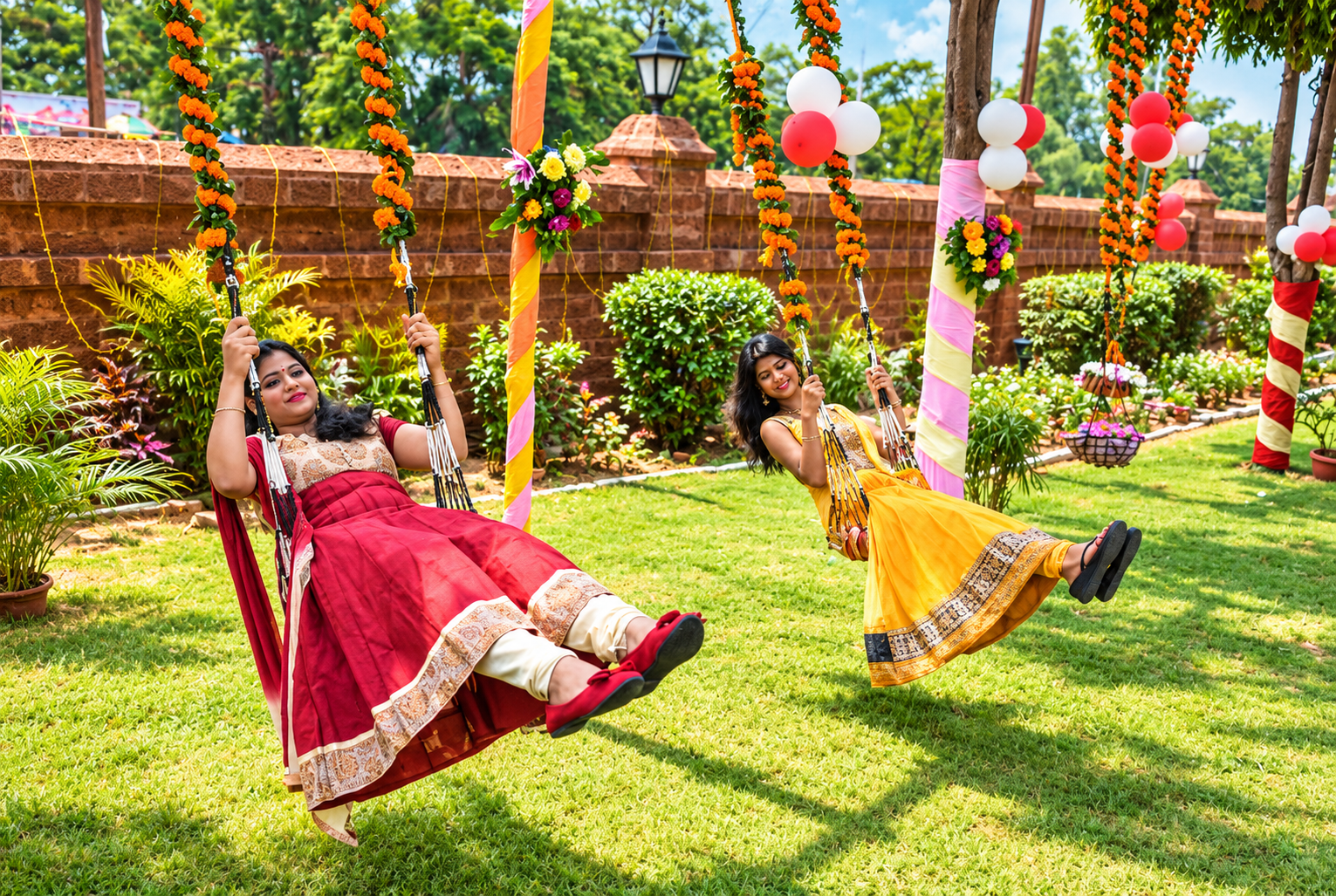
One of the most recognisable sights of Raja Parba is the traditional swing.
Colourfully decorated swings are hung from large trees, and women and girls gather to enjoy them while singing traditional Raja songs.
Different types of swings may be seen during the festival, including:
Doli
Ram Doli
Charki
Patta Doli
The swings transform courtyards, gardens and village spaces into joyful gathering places.
For many people in Odisha, the swing is one of the most nostalgic symbols of Raja.
Raja and Traditional Food
No Raja celebration is complete without delicious Odia food.
The festival is particularly famous for Poda Pitha, a traditional rice-based cake prepared with ingredients such as rice, jaggery, coconut and spices.
Other popular foods associated with Raja include:
Poda Pitha
Raja Pitha
Manda Pitha
Kakara Pitha
Arisa Pitha
Chhena Poda
Seasonal fruits
Various traditional sweets
Raja is also known for Raja Paan, traditionally enjoyed during the festival.
Food is an important part of the celebration because Raja is a time for families, friends and neighbours to come together.
New Clothes and Traditional Jewellery
During Raja, women and girls traditionally wear new clothes and dress up for the celebration.
Colourful sarees, bangles, anklets, flowers and traditional jewellery add to the festive atmosphere.
In many households, girls and women are treated with special care during the festival and are encouraged to enjoy themselves without their usual household responsibilities.
This gives Raja a distinctive character among Odisha’s festivals.
A Festival of Rest
Perhaps the most meaningful tradition of Raja is the idea of rest.
During the festival, agricultural work is traditionally paused. The soil is not ploughed, and activities that disturb the Earth are avoided.
The tradition reflects Odisha’s deep agricultural roots.
The message is simple yet powerful:
The Earth gives us life, so the Earth too deserves rest.
This connection between human life, agriculture and nature makes Raja particularly relevant even today.
Raja and Womanhood
Raja is also widely celebrated as a festival of womanhood and femininity.
Girls and women become the centre of the celebration. They wear new clothes, enjoy swings, sing songs, visit friends and relatives, and take a break from routine household work.
The festival acknowledges an important natural aspect of women’s lives—menstruation—through the symbolic connection between a woman’s cycle and the Earth’s fertility.
This makes Raja one of Odisha’s most distinctive cultural traditions.
Raja Songs and Folk Traditions
Traditional Raja songs form an important part of the festival.
Many songs describe friendship, love, family, village life, nature and the experiences of young women.
The songs are often accompanied by playful gatherings around swings and village courtyards.
Although modern celebrations have changed in many places, Raja songs continue to preserve memories of Odisha’s rural cultural traditions.
Raja in Modern Odisha
Today, Raja Parba is celebrated across urban and rural Odisha.
While traditional village celebrations remain important, cities such as Bhubaneswar and Cuttack also host Raja events, cultural programmes, competitions and community gatherings.
Shopping malls, cultural organisations and local communities often organise swing festivals, traditional food events and Raja-themed programmes.
Even as lifestyles change, the central spirit of Raja remains alive:
celebrating women, respecting nature and welcoming the monsoon.
Why Raja Parba Is Special
Raja is different from many other festivals because it brings together several ideas at once:
🌿 Nature – Mother Earth is honoured and allowed to rest.
👩 Womanhood – Women and girls are celebrated and given special importance.
🌧️ Monsoon – The festival welcomes the beginning of the agricultural season.
🍚 Food – Traditional Odia pithas and seasonal delicacies bring families together.
🎶 Culture – Folk songs, swings, clothing and customs preserve Odisha’s heritage.
❤️ Community – Families, friends and neighbours come together to celebrate.
A Celebration That Swings with the Monsoon
As colourful swings move beneath green trees and the first monsoon clouds gather over Odisha, Raja Parba brings a special kind of happiness.
It is a festival of laughter and food, songs and swings, new clothes and old traditions.
But beneath all the celebration lies a deeper message—the recognition that nature and human life are deeply connected.
Raja reminds us to celebrate womanhood, respect the Earth and welcome the rains that nourish Odisha’s fields.
From the joyful swing to the humble Poda Pitha, Raja Parba is a celebration that captures the heart, culture and spirit of Odisha.



October 8, 2026