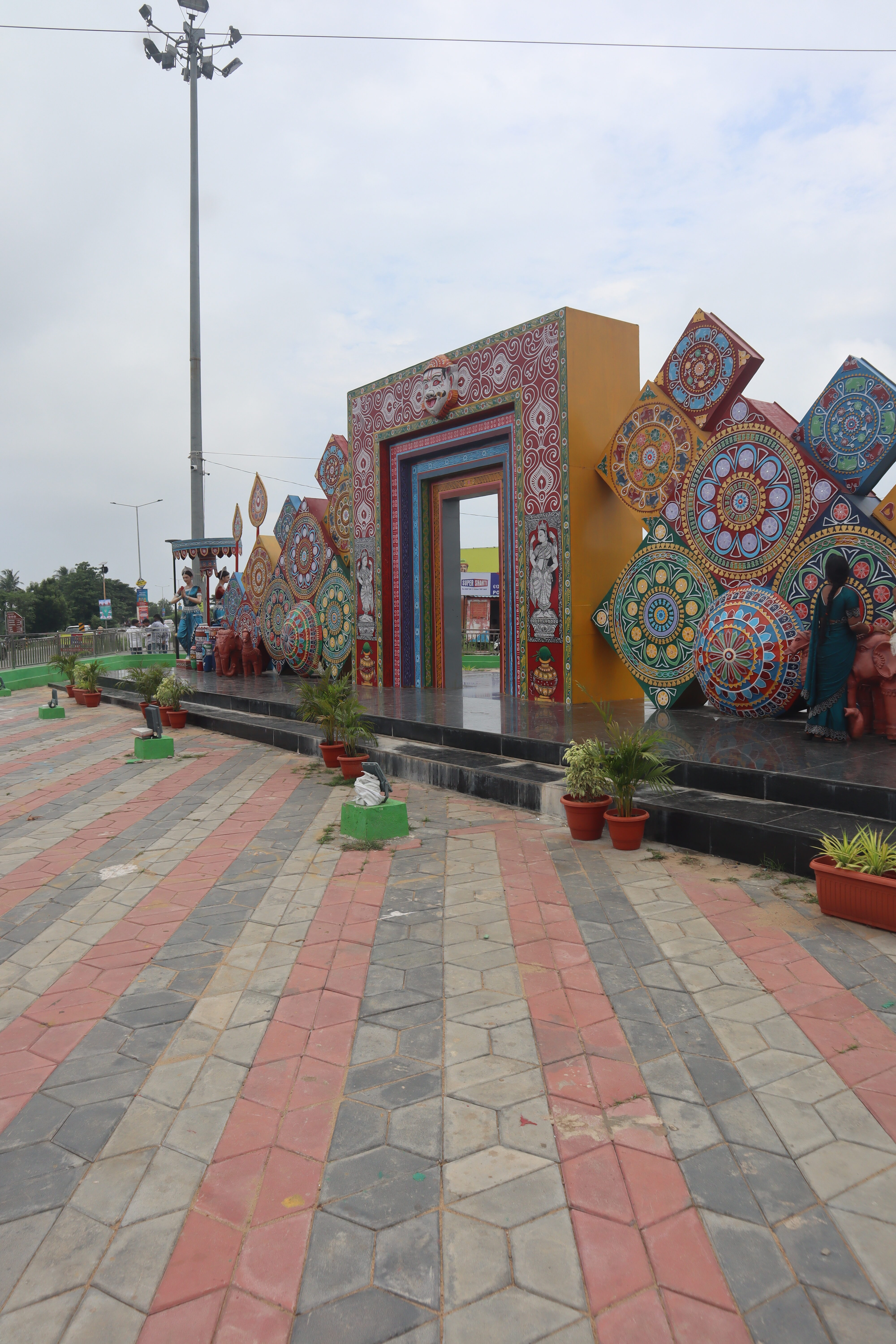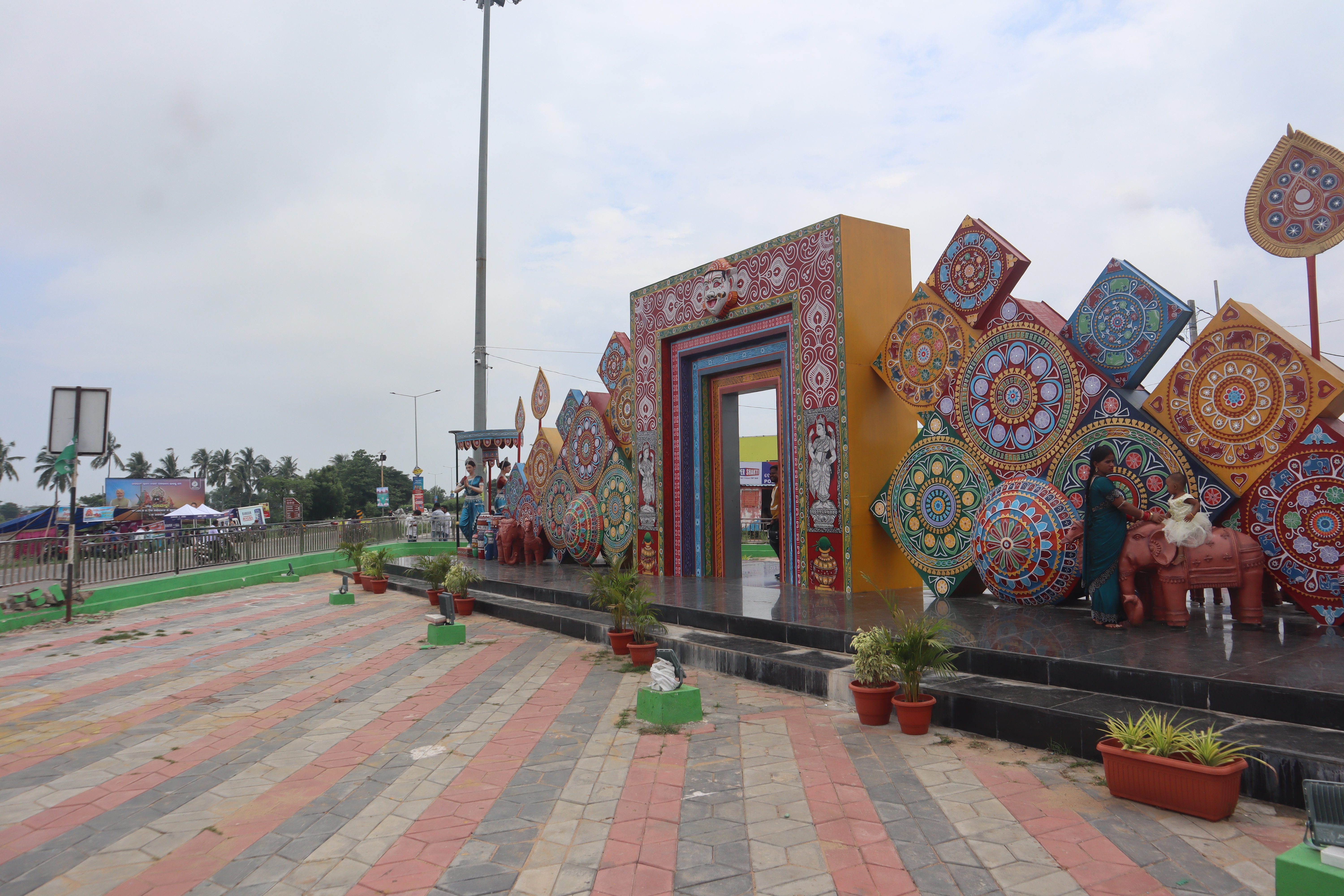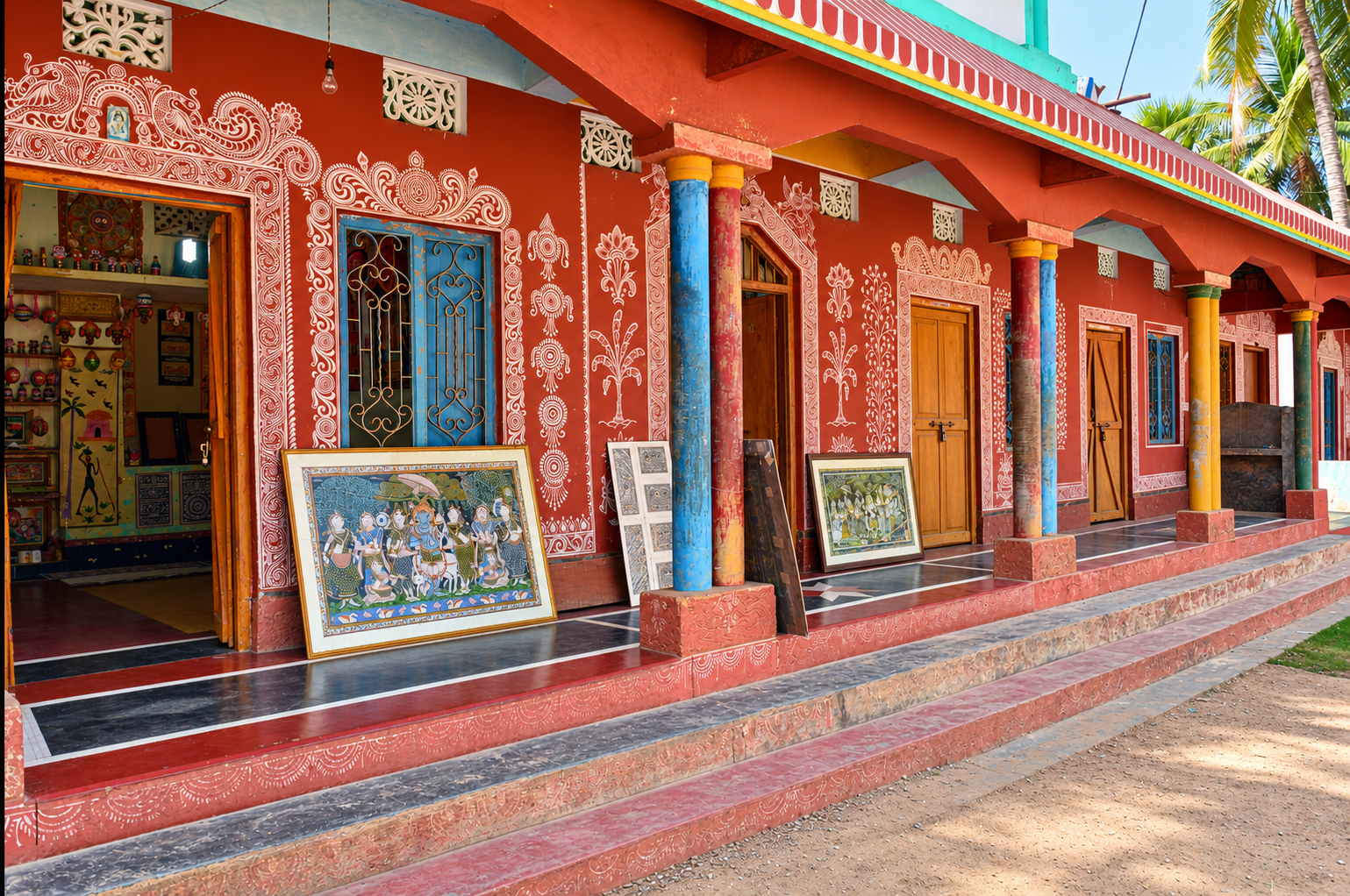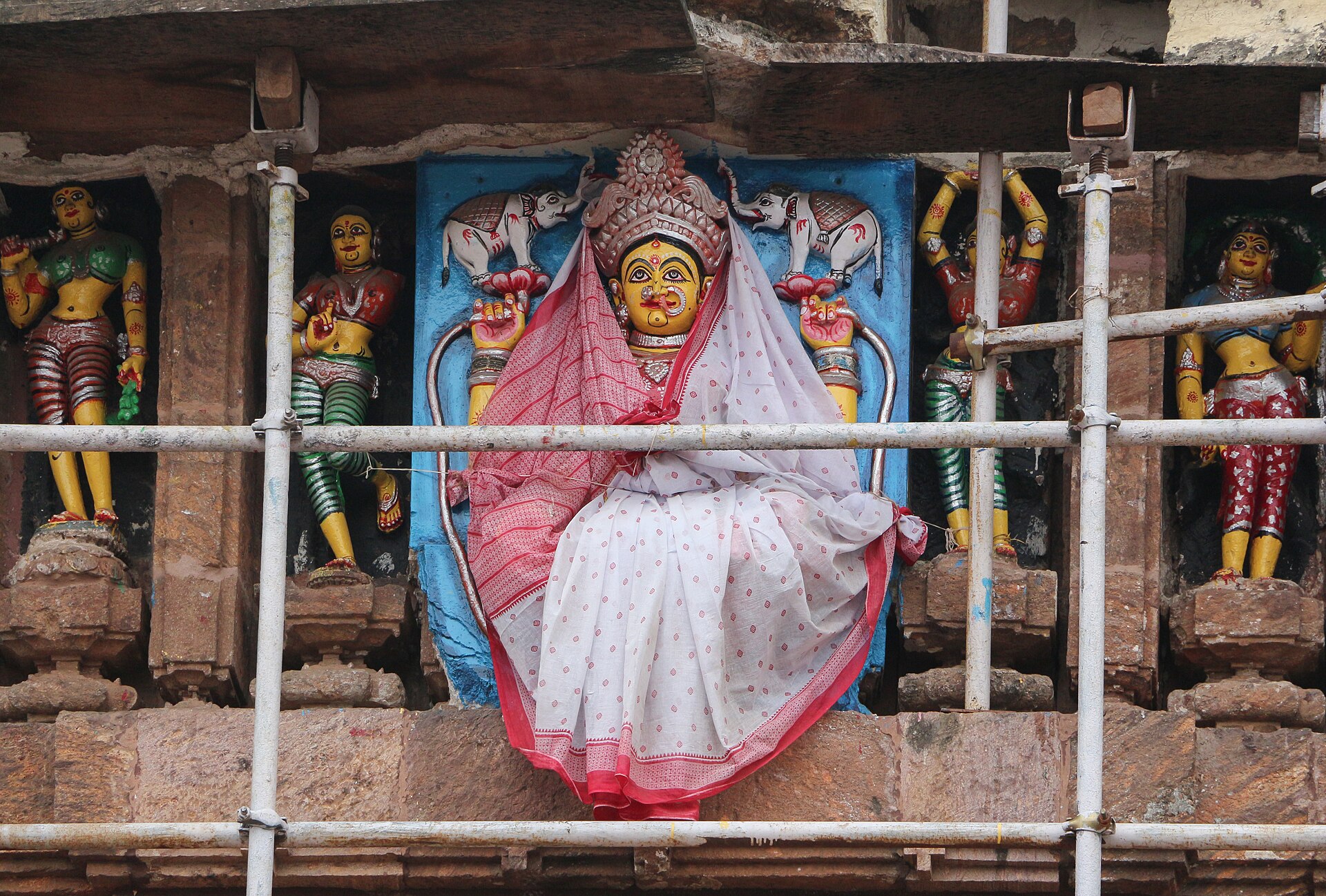
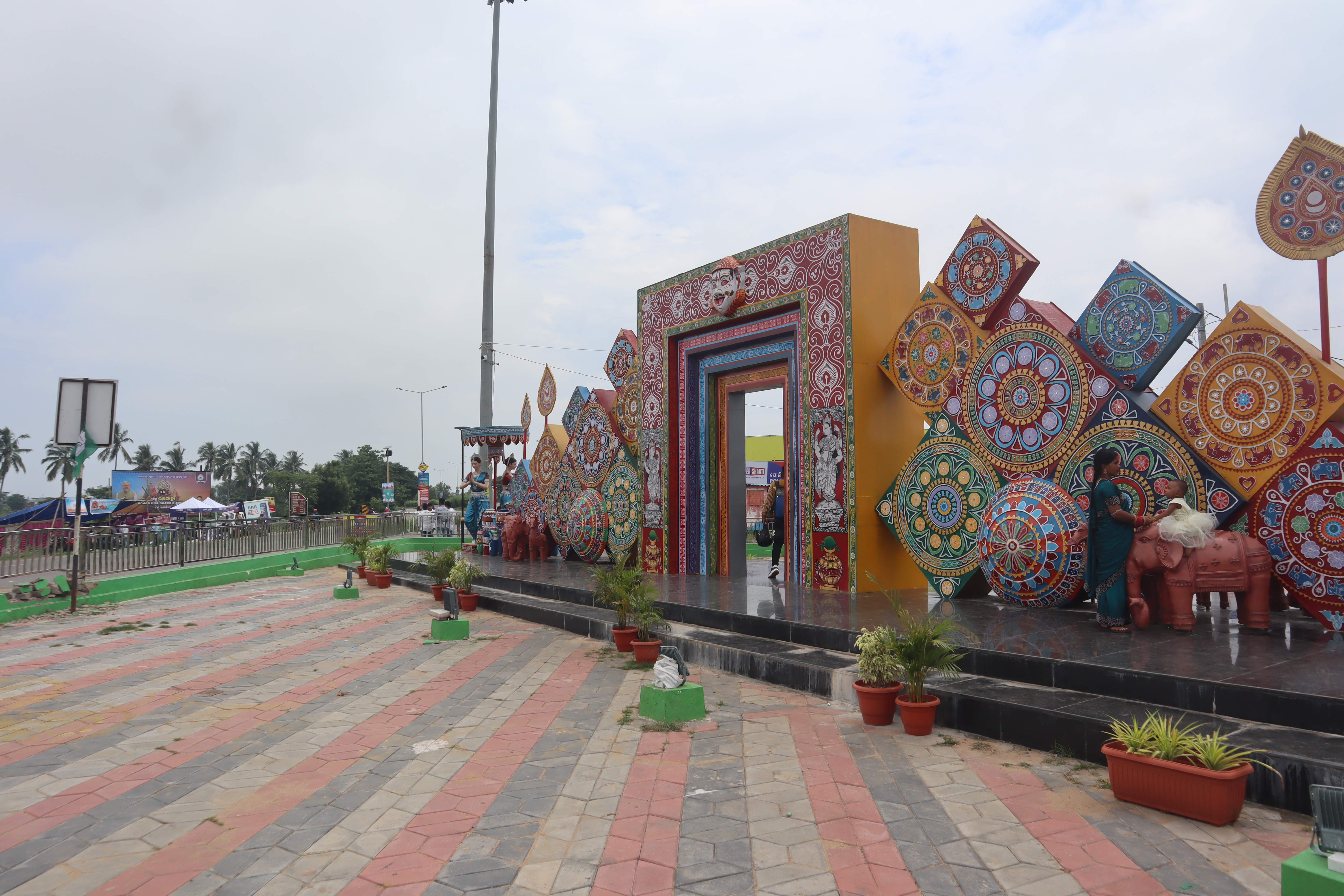
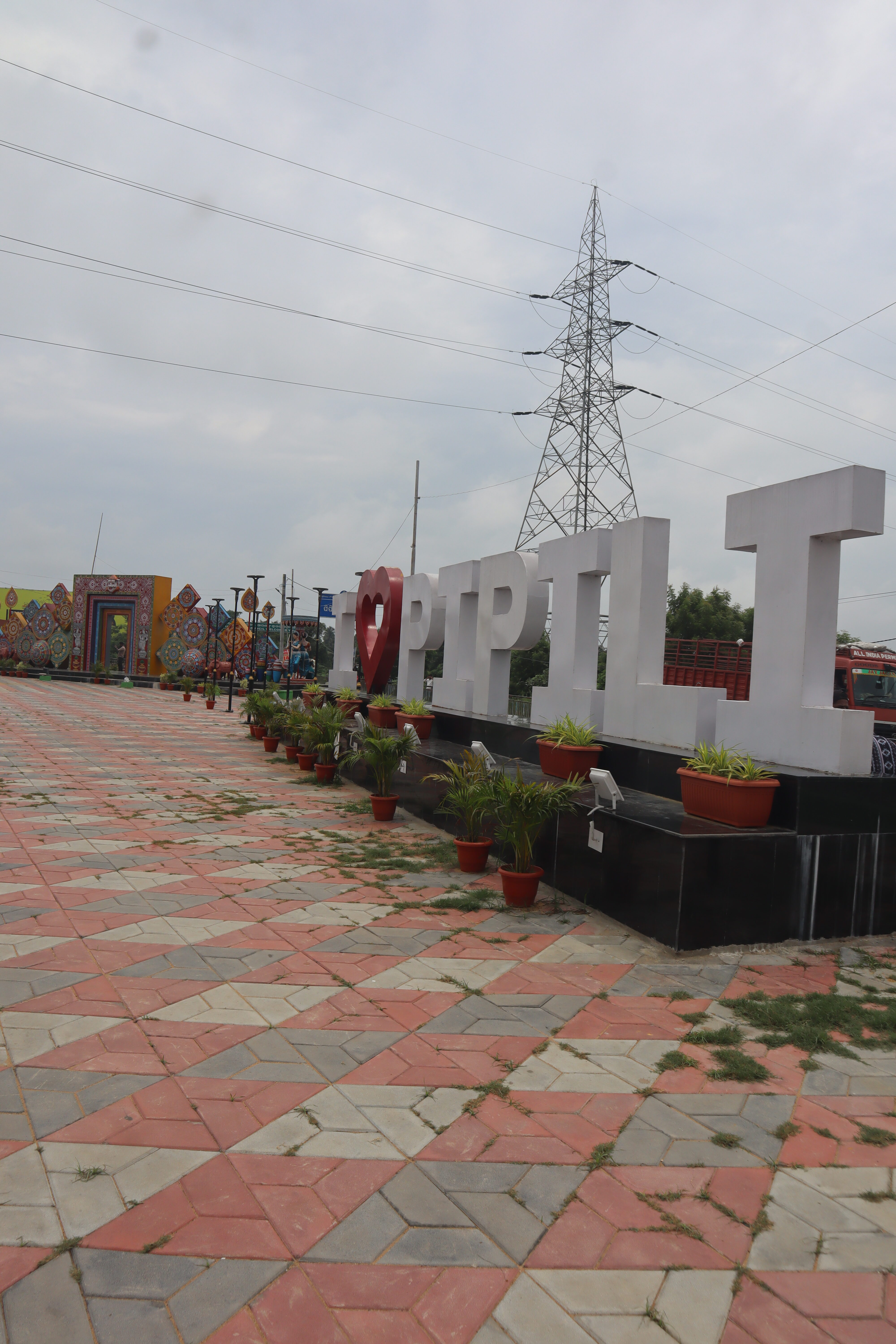
The Pipili applique village is one of the most colourful stops in Puri district – a small town on the Bhubaneswar–Puri road whose main street is lined end to end with shops hung with bright umbrellas, canopies and wall hangings. If you are driving between Bhubaneswar and Puri, this is where the road suddenly turns into a riot of red, yellow, green and black.
Pipili sits roughly 20 km from Bhubaneswar and about 40 km from Puri, right at the point where the road to Konark branches off. That makes it an easy and rewarding halt on any Golden Triangle trip, whether you are heading to the sea, the Sun Temple or the temples of the capital.
History of the Pipili Applique Village
Appliqué work in Odisha is known locally as chandua, a word linked to the Sanskrit idea of a canopy or awning. The craft grew up around the worship of Lord Jagannath, and tradition traces it back many centuries to the temple culture of Puri.
According to Incredible India, a king of Odisha settled craftsmen at Pipili to make appliqué umbrellas and canopies for the Jagannath processions, and written evidence of appliqué work in the Jagannath temple goes back to around AD 1054. The Gajapati rulers patronised the work for the annual Ratha Yatra, and the link has never been broken.
Even today, the cloth covers that dress the three chariots during the Rath Yatra in Puri are made by appliqué artisans, following fixed colour schemes for each deity. Pipili appliqué work has also received Geographical Indication (GI) recognition from the Government of India.
What Makes Pipili Appliqué Special
Appliqué simply means cutting shapes from coloured cloth and stitching them onto a base fabric. At Pipili, artisans use both the standard method (a shape sewn on top) and reverse appliqué, where the upper layer is cut away to reveal the colour beneath.
- Stitches: straight, satin, blind and buttonhole stitches, often finished with small mirrors.
- Motifs: elephants, peacocks, parrots, ducks, trees, creepers, lotus and jasmine flowers, the sun, the half-moon and Rahu.
- Colours: bold, flat colours – red, yellow, green, black and white dominate, echoing the chariots of Puri.
- Record: in 2004, Pipili artisans entered the Guinness Book of Records for a 54-metre thematic appliqué work on India’s freedom struggle.
Things to Do at the Pipili Applique Village
Most visitors spend an hour or two here, but craft lovers can easily stay longer. The experience is less about sightseeing and more about walking slowly, looking closely and chatting with the people behind the counters.
- Walk the main market: both sides of the highway are lined with shops. Stroll the full stretch before buying – designs and quality vary a lot.
- Watch artisans at work: many shops have workers cutting and stitching at the back. Ask politely and most are happy to show you the process.
- Shop for souvenirs: look for garden umbrellas, wall hangings, cushion covers, bed covers, lamp shades, bags, purses and small betel-leaf pouches.
- Spot temple pieces: traditional items such as the chandua canopy, the heart-shaped tarasa and decorative jhalar frills are still made for temples and festivals.
- Photograph the colours: evenings, when shop lights come on behind the hanging lanterns and umbrellas, are especially photogenic.
How to Reach Pipili
Getting to the Pipili applique village is easy, because it lies on the busy Bhubaneswar–Puri highway.
- By air: Biju Patnaik International Airport, Bhubaneswar, is the nearest airport, about 20 km away.
- By rail: Bhubaneswar railway station (about 20 km) is the most convenient; Puri railway station is about 40 km away.
- By road: buses running between Bhubaneswar and Puri or Konark stop at Pipili. Taxis and autos are also easy to hire from Bhubaneswar.
Many travellers simply ask their cab driver to pause here on the way to the Puri Jagannath Temple or the Konark Sun Temple.
Best Time to Visit
November to February is the most comfortable season to explore the Pipili applique village, with pleasant days and cool mornings. April and May are very hot, often crossing 40°C, so if you visit then, come early in the morning or late in the afternoon.
The weeks before Ratha Yatra (usually June or July) are a special time. Workshops are busy with festival orders, and you may see large chariot covers and canopies being stitched.
Timings and Shopping Information
The Pipili applique village is a living market town, not a ticketed monument, so there is no entry fee. Shops generally open from morning till evening, with some closing for a short afternoon break – timings vary from shop to shop, so check locally.
Prices depend on size, fabric and the amount of hand-stitching. Small pouches and coasters are inexpensive, while large umbrellas and wall hangings cost more. Bargaining is common, but stay fair – much of the work is done by hand.
Travel Tips for the Pipili Applique Village
- Check the stitching: genuine hand appliqué has neat, tight stitches on the edges of each cut shape.
- Ask if a piece is hand-stitched or machine-finished; both exist and are priced differently.
- Large umbrellas and canopies can be folded – ask the shop to pack them for travel.
- The highway is busy, so take care while crossing between shops and park only where allowed.
- Carry some cash; digital payments are not accepted everywhere.
Nearby Places
Pipili makes a perfect connecting point for a full day of sightseeing in Puri district and around Bhubaneswar.
- Dhauli Shanti Stupa: the peace pagoda on the Daya river, on the way back towards Bhubaneswar.
- Konark Sun Temple: the UNESCO World Heritage temple, reached by the road that branches off at Pipili.
- Puri Jagannath Temple: the home of Lord Jagannath, for whom this craft was born.
- Raghurajpur: the Pattachitra artists’ village near Puri, ideal for pairing with a Pipili visit.
For official travel information and itineraries, visit Odisha Tourism.
Frequently Asked Questions
Where is the Pipili applique village?
Pipili is a town in Puri district, Odisha, on the Bhubaneswar–Puri road. It is about 20 km from Bhubaneswar and around 40 km from Puri, at the junction of the road to Konark.
Why is the Pipili applique village famous?
It is famous for chandua, the colourful appliqué craft linked to Lord Jagannath. Artisans here make umbrellas, canopies, wall hangings and the cloth covers used on the chariots during Puri’s Ratha Yatra.
Is there an entry fee to visit Pipili?
No. Pipili is an open market town, so you can walk around freely. You only pay for what you buy.
How much time do I need at Pipili?
One to two hours is enough for most travellers to browse the shops and watch some work. Serious shoppers and craft enthusiasts may want half a day.