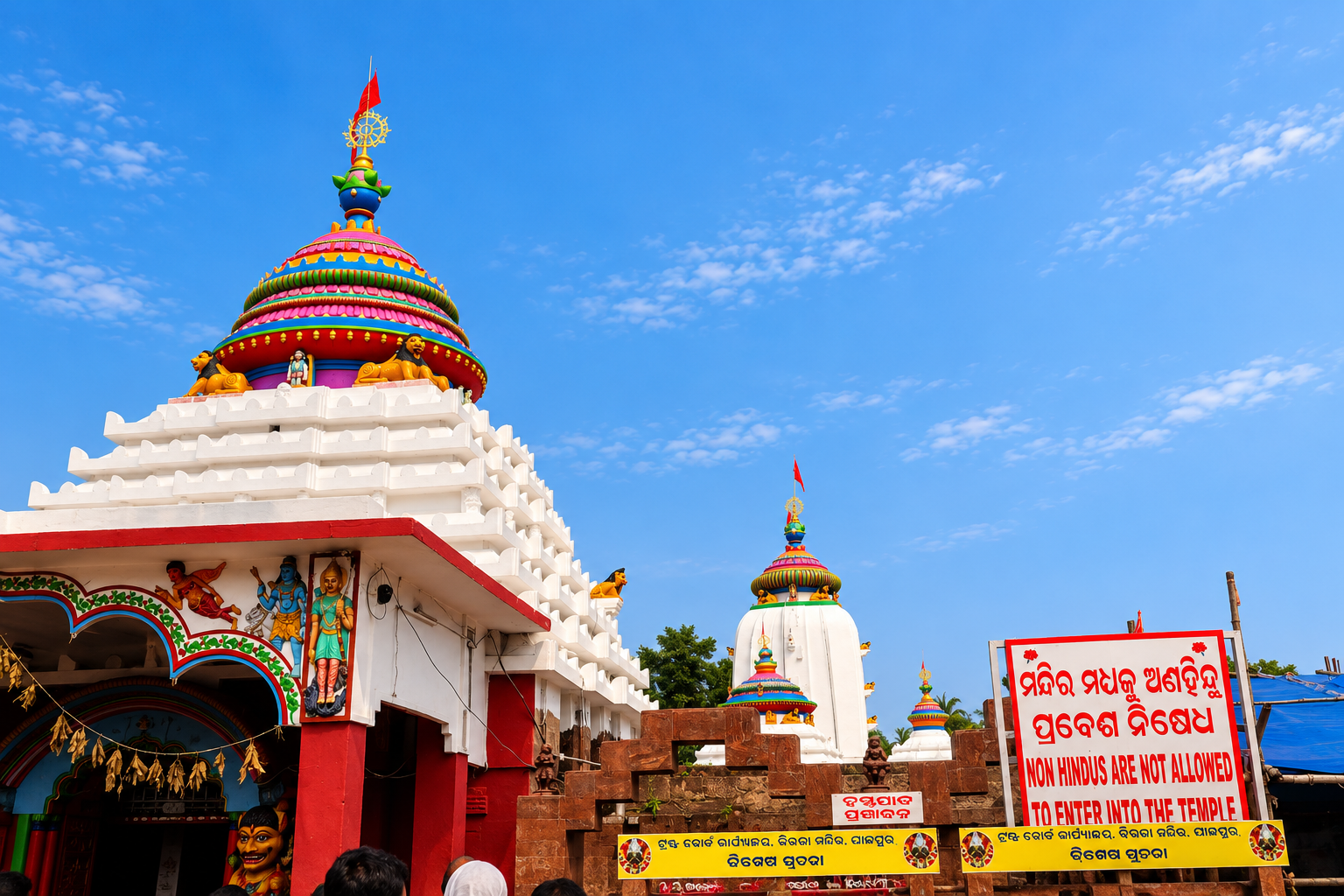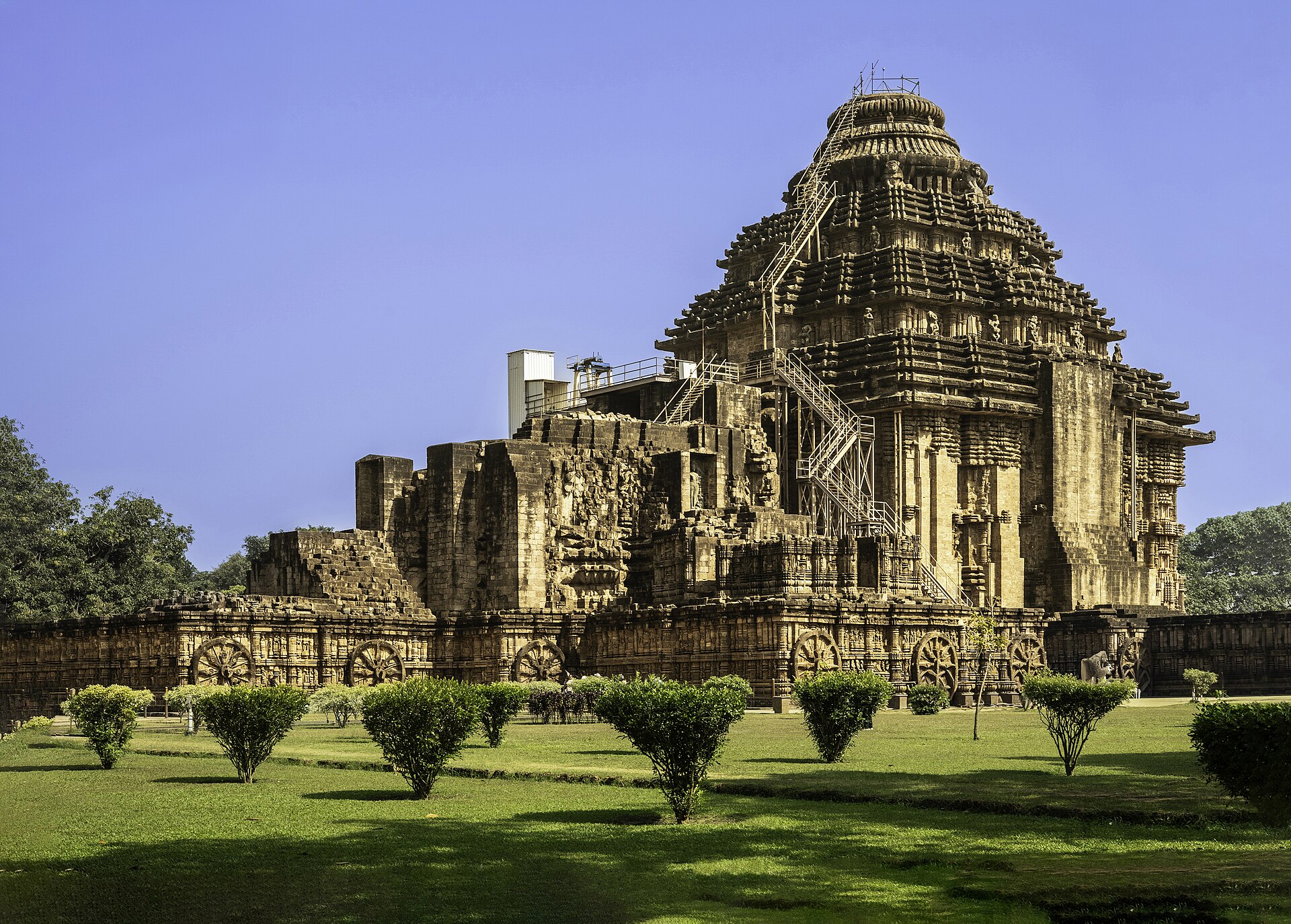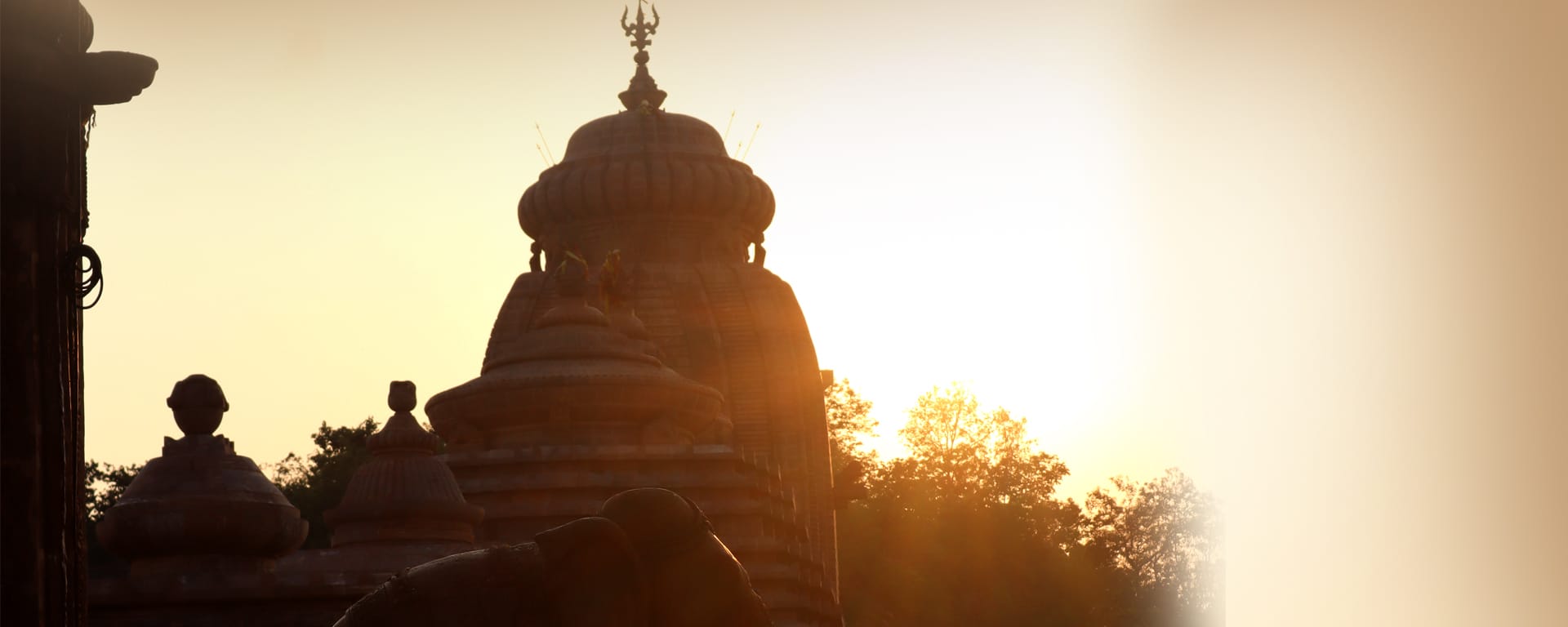
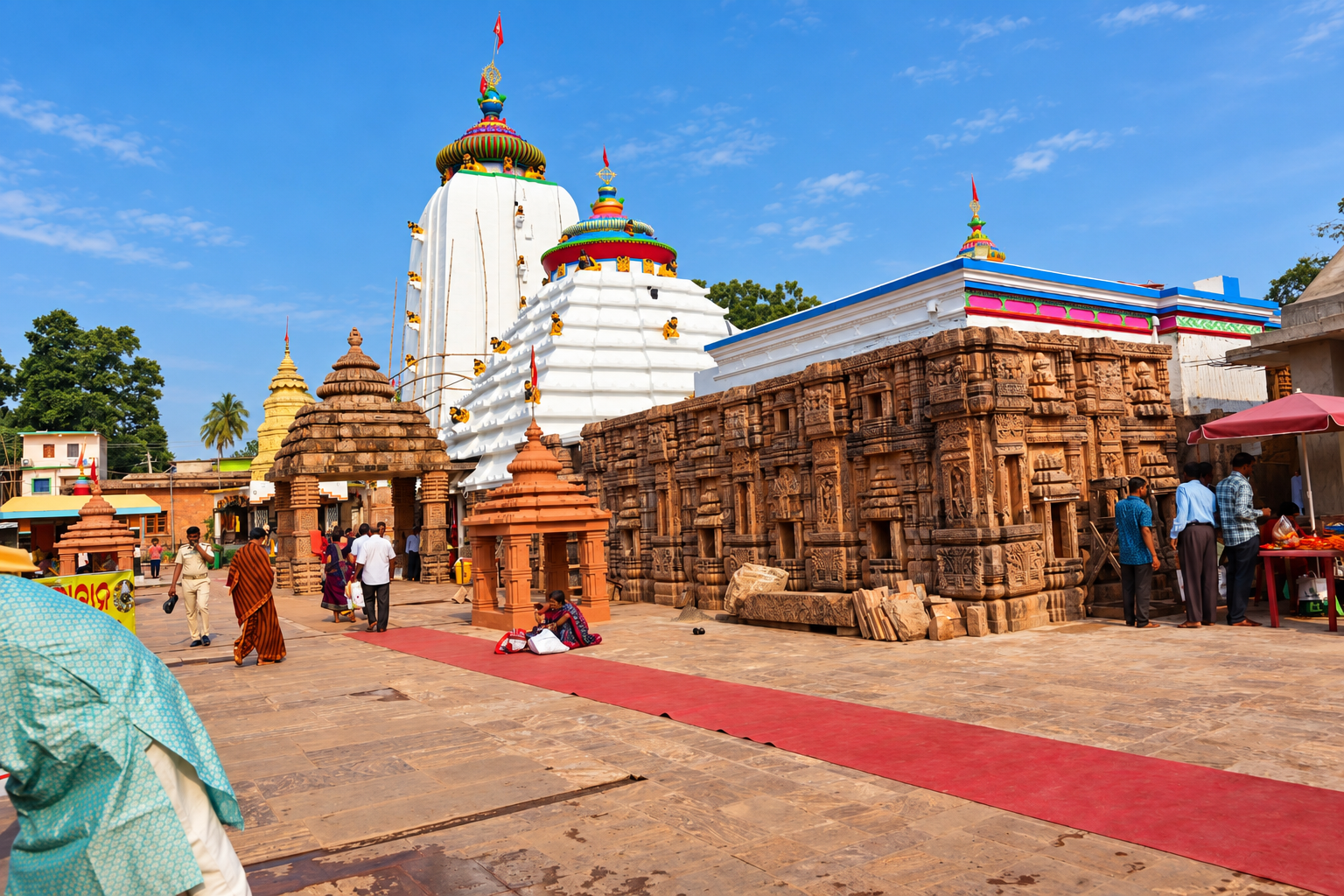
Nabhi Gaya Jajpur is one of Odisha’s holiest places for ancestral rites. Nabhi Gaya is a sacred well inside the Maa Biraja Temple in Jajpur, Odisha. Hindus believe that offering pinda daan here brings liberation (mukti) to the souls of their ancestors. That is why Jajpur is often called the “Gaya of Odisha”. Every year, and especially during Pitru Paksha, thousands of families travel here to perform shraddha rites for their forefathers.

If you are planning a pinda daan at Jajpur, or simply want to understand why this small well is so important, this guide covers the legend, the ritual, the best time to go and how to reach.
1. What Is Nabhi Gaya Jajpur?
Nabhi Gaya is a circular well within the Biraja temple complex. The word nabhi means navel. Devotees drop their pinda offerings into the well after the rites are complete, and many believe the well has no visible bottom.
Jajpur itself is known as Biraja Kshetra and Nabhi Gaya Kshetra. Together with Puri, Bhubaneswar and Konark, it is counted among the great pilgrimage centres of Odisha.
2. The Legend of Gayasura
According to the Puranas, Gayasura was a demon who became a great devotee of Lord Vishnu. His penance made his body so pure that anyone who touched it was freed from sin. To restore balance, the gods asked Gayasura to lie down so that a great yajna could be performed on his body.
Gayasura’s body is said to have stretched across India:
- Head: at Gaya in Bihar (Shira Gaya)
- Navel: at Jajpur in Odisha (Nabhi Gaya)
- Feet: at Pithapuram in Andhra Pradesh (Pada Gaya)
Lord Vishnu blessed these three places, declaring that ancestral rites performed there would free souls from the cycle of rebirth. This is why a pinda daan at Nabhi Gaya Jajpur is considered as sacred as one at Gaya.
3. A Shakti Peetha and a Pitru Tirtha in One Place
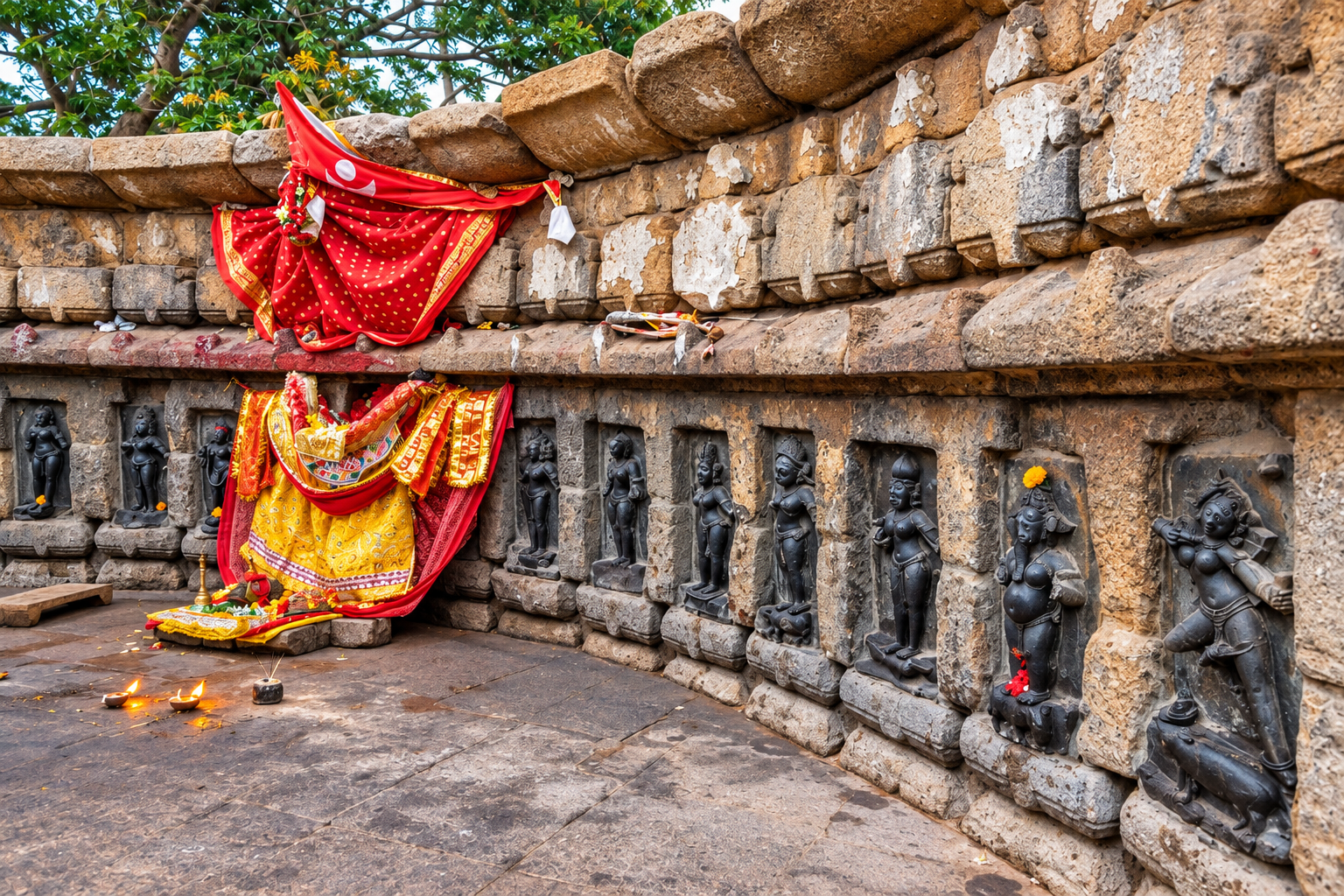
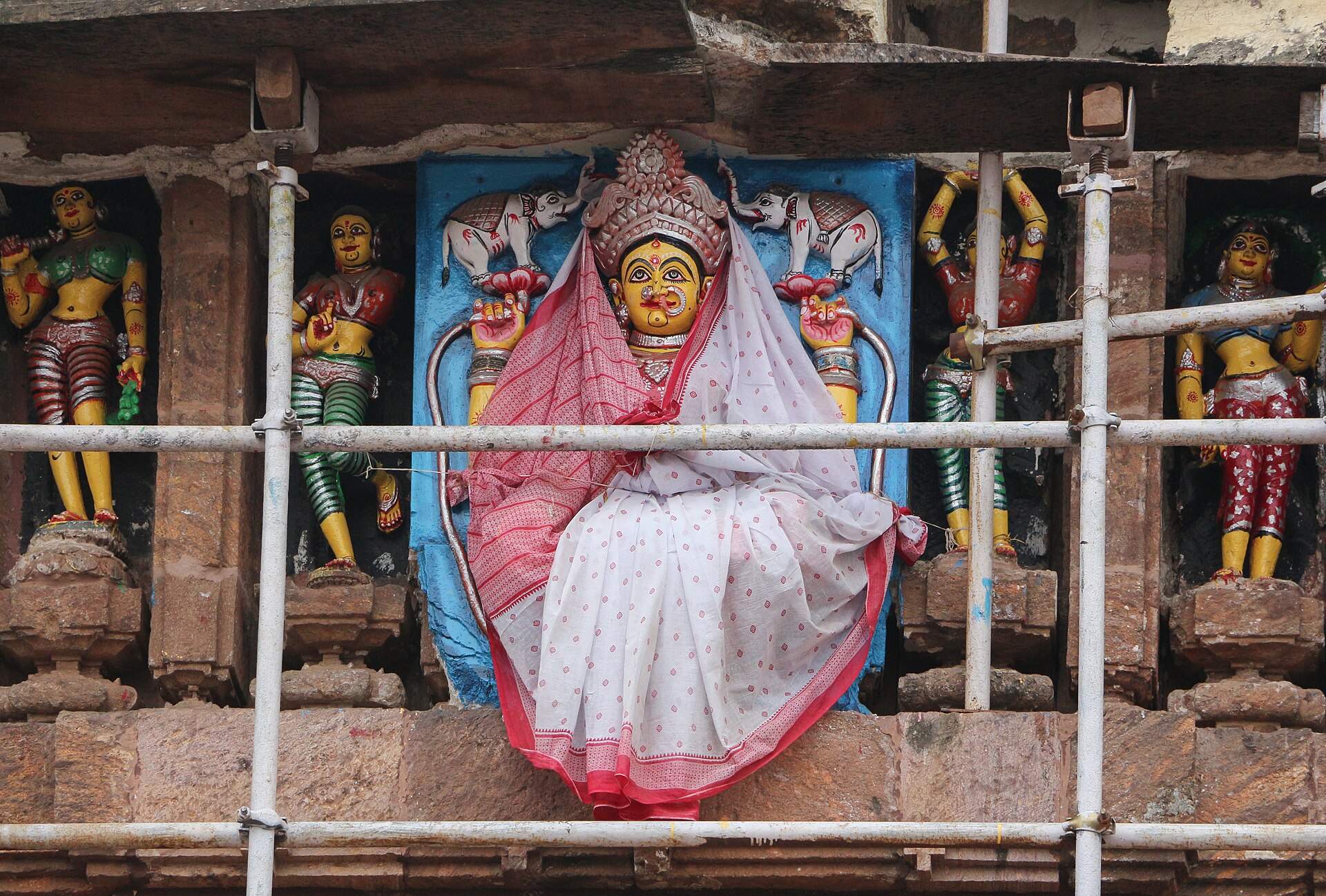
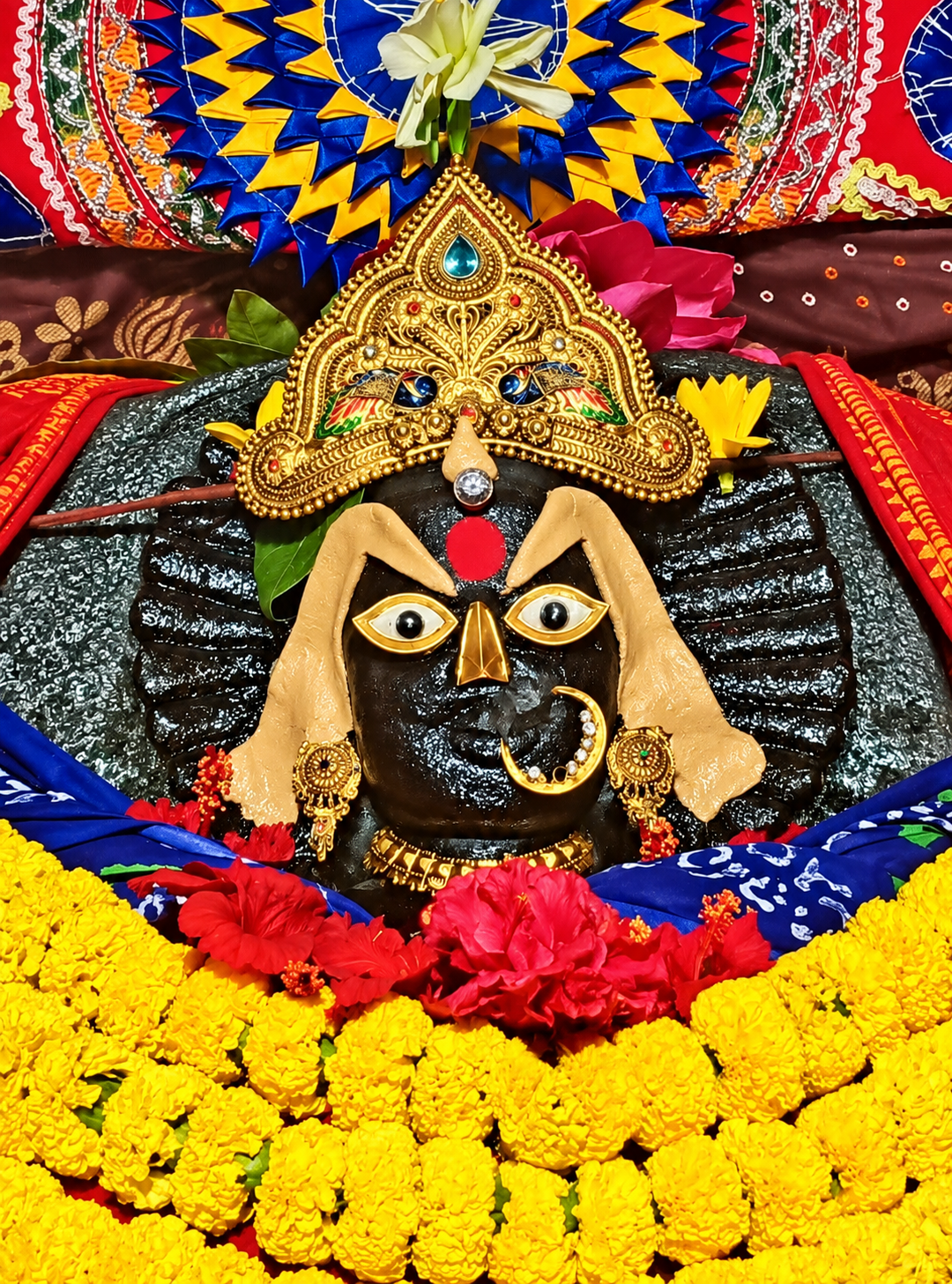
Jajpur is unusual because it is sacred to both Shakti worshippers and Vaishnavas. Maa Biraja is one of the Shakti Peethas, where the navel of Goddess Sati is believed to have fallen. The same spot also holds the navel of Gayasura. Pilgrims usually take darshan of Maa Biraja and then perform the pinda daan at Nabhi Gaya on the same visit.
The goddess here is a two-armed form of Durga as Mahishasuramardini. With one hand she spears the demon Mahishasura, and with the other she pulls his tail. You can read more about the temple’s history and architecture in our Biraja Temple guide.
4. How Pinda Daan Is Performed at Nabhi Gaya Jajpur
The ritual is guided by local priests (pandas) attached to the temple. The exact steps vary by family tradition, but a typical pinda daan includes:
- A purifying bath, traditionally in the Baitarani River at Dashashwamedha Ghat
- Sankalpa (a vow) with the names and gotra of the ancestors
- Making pindas, small balls of cooked rice or flour mixed with sesame, honey and ghee
- Offering water, sesame and kusha grass with mantras for each generation
- Placing the pindas into the Nabhi Gaya well
- Darshan of Maa Biraja and offering daan (charity)
Most families finish the ritual in two to three hours. It is usually done by a son or male relative, though practice varies by family.
5. Dashashwamedha Ghat on the Baitarani
Many pilgrims begin their rites at Dashashwamedha Ghat on the Baitarani River in Jajpur. Legend says Lord Brahma performed ten Ashwamedha yajnas here, which is how the ghat got its name. The Baitarani is itself linked with the journey of souls in Hindu belief, which adds to the importance of performing ancestral rites in Jajpur.
6. Best Time to Visit Nabhi Gaya Jajpur
Pinda daan can be performed at Nabhi Gaya Jajpur on any day of the year. These periods draw the biggest crowds:
- Pitru Paksha (Mahalaya Paksha): The 15 lunar days before Mahalaya Amavasya, usually in September or October. This is the most popular time.
- Amavasya (new moon) days throughout the year
- Death anniversary (tithi) of the ancestor
For a quieter visit, choose a weekday outside Pitru Paksha and reach the temple early in the morning.
7. Biraja Durga Puja and the Simhadhwaja Rath Yatra
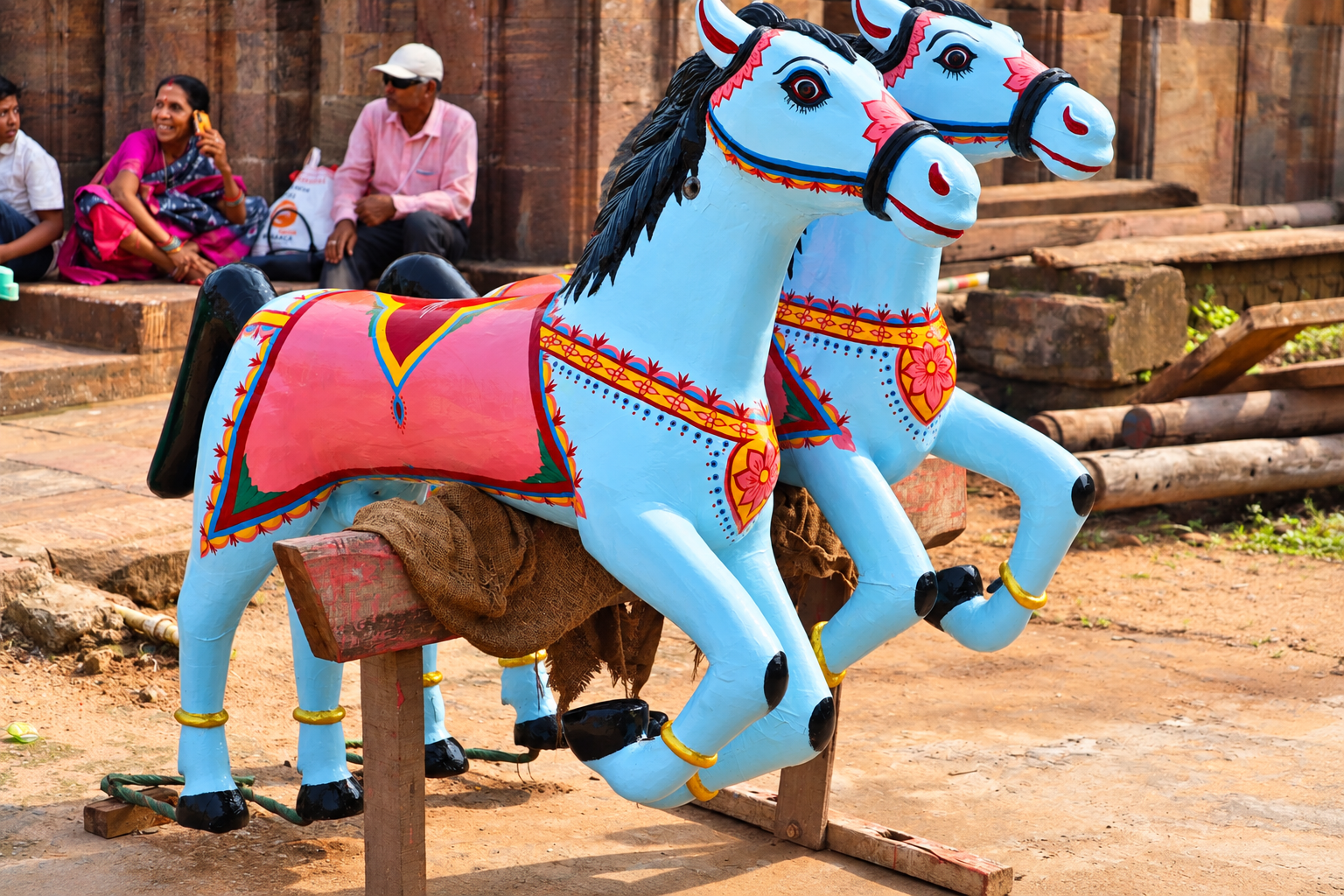
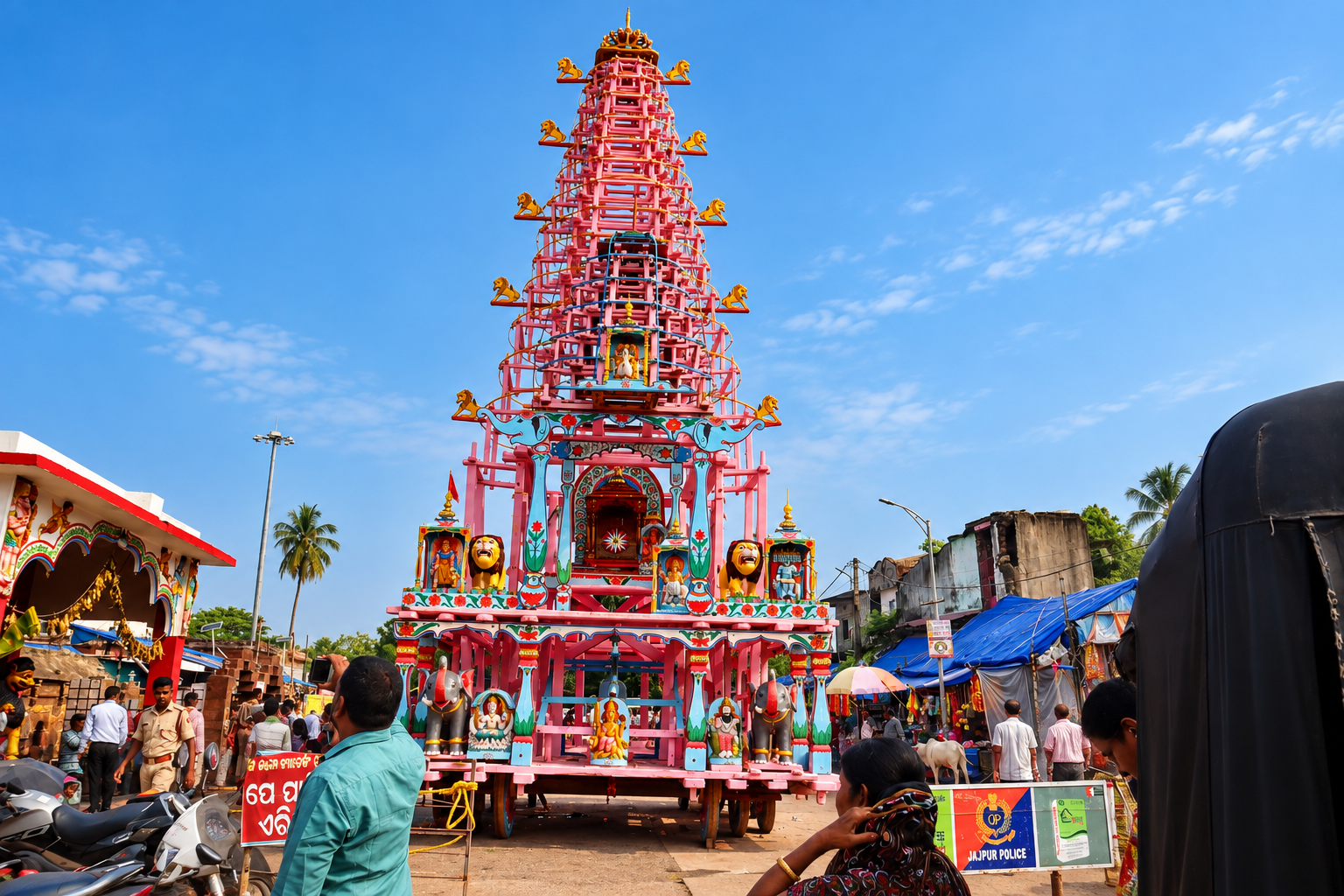
Maa Biraja’s Sharadiya Durga Puja is one of the longest in India. Known as the Shodasha Dinatmaka Puja, it lasts 16 days. It begins on Krishna Paksha Ashtami of Ashwin, during Pitru Paksha, and ends on Shukla Navami. During the festival, the goddess rides the Simhadhwaja Rath, a chariot whose flag bears a lion.
Because the puja overlaps with Pitru Paksha, many families plan one trip to perform pinda daan at Nabhi Gaya and also witness the goddess’s chariot festival.
How to Reach Nabhi Gaya Jajpur
- By air: The nearest airport is Biju Patnaik International Airport, Bhubaneswar. Jajpur is roughly 100 to 125 km away by road, depending on the route, about 2.5 to 3 hours by car.
- By train: The nearest railway station is Jajpur-Keonjhar Road, about 30 km from the temple. Autos and taxis are available outside the station.
- By road: Buses run regularly from Bhubaneswar and Cuttack to Jajpur town. From the bus stand, the temple is a short auto ride away.
Travel Tips for Nabhi Gaya Jajpur
- Agree on the priest’s dakshina and the cost of ritual materials before the pinda daan starts.
- Carry the names and gotra of the ancestors you are offering pinda to.
- Wear simple traditional clothes. Men usually wear a dhoti for the ritual.
- Reach early during Pitru Paksha and Durga Puja, when queues can be very long.
- Photography is not allowed inside the sanctum. Keep phones away during the rites.
- Temple timings can change on festival days, so confirm locally before you travel.
Frequently Asked Questions
Where is Nabhi Gaya Jajpur located?
Nabhi Gaya is a sacred well inside the Maa Biraja Temple complex in Jajpur town, Jajpur district, Odisha.
Why is Jajpur called the Gaya of Odisha?
According to legend, the navel of Gayasura lies at Jajpur, just as his head lies at Gaya in Bihar. Pinda daan here is therefore believed to be as meritorious as at Gaya.
Can pinda daan be done at Jajpur on any day?
Yes. It can be done throughout the year, though Pitru Paksha, Amavasya and the ancestor’s death anniversary are considered most auspicious.
How long does the pinda daan ritual take?
It usually takes two to three hours, including the bath at the Baitarani and darshan of Maa Biraja.
How many days is the Biraja Durga Puja?
It lasts 16 days, from Ashwin Krishna Ashtami to Shukla Navami, and includes the Simhadhwaja Rath Yatra of the goddess.
Places to Visit Near Nabhi Gaya Jajpur
- Maa Biraja Temple: The main shrine. Read our full Biraja Temple guide.
- Dashashwamedha Ghat: The sacred ghat on the Baitarani River in Jajpur town.
- Maa Tarini Pitha, Ghatagaon: Another revered Shakti shrine, in Keonjhar district. See our Maa Tarini guide.
- Ratnagiri, Udayagiri and Lalitgiri: Odisha’s Buddhist “Diamond Triangle”, within driving distance of Jajpur.
A trip to Nabhi Gaya Jajpur is more than a ritual. It is a chance to honour your ancestors at one of Odisha’s oldest sacred sites, under the blessings of Maa Biraja.