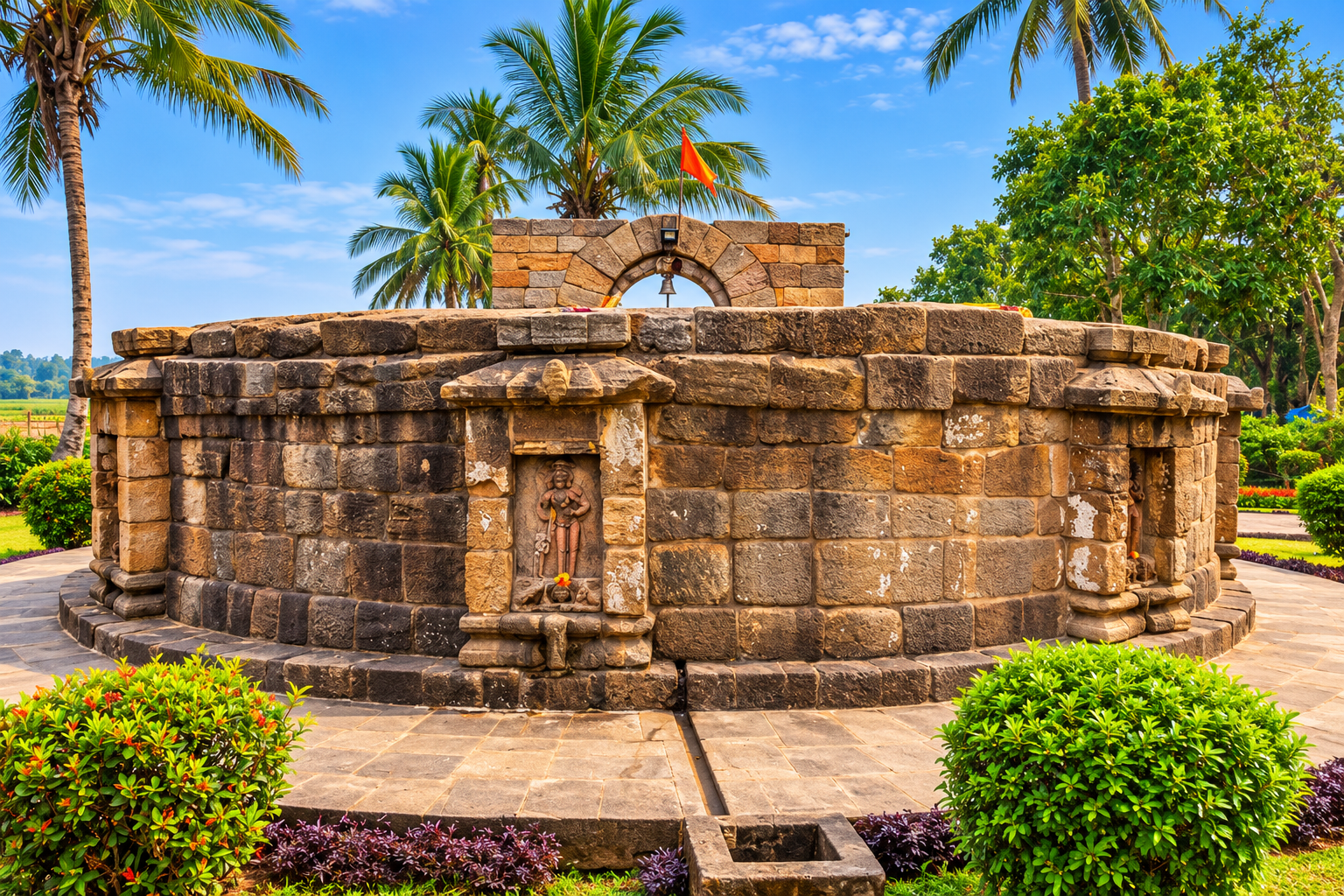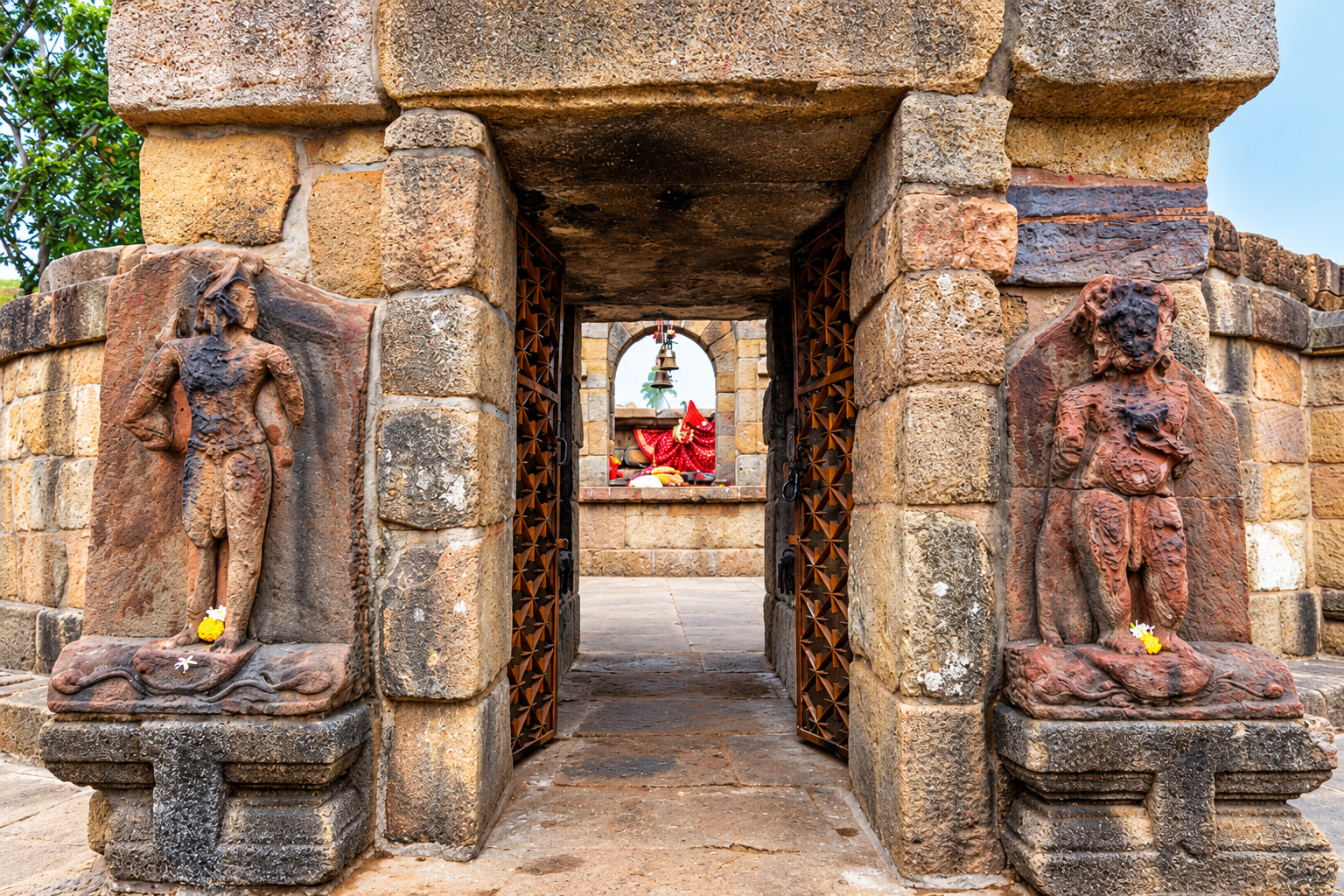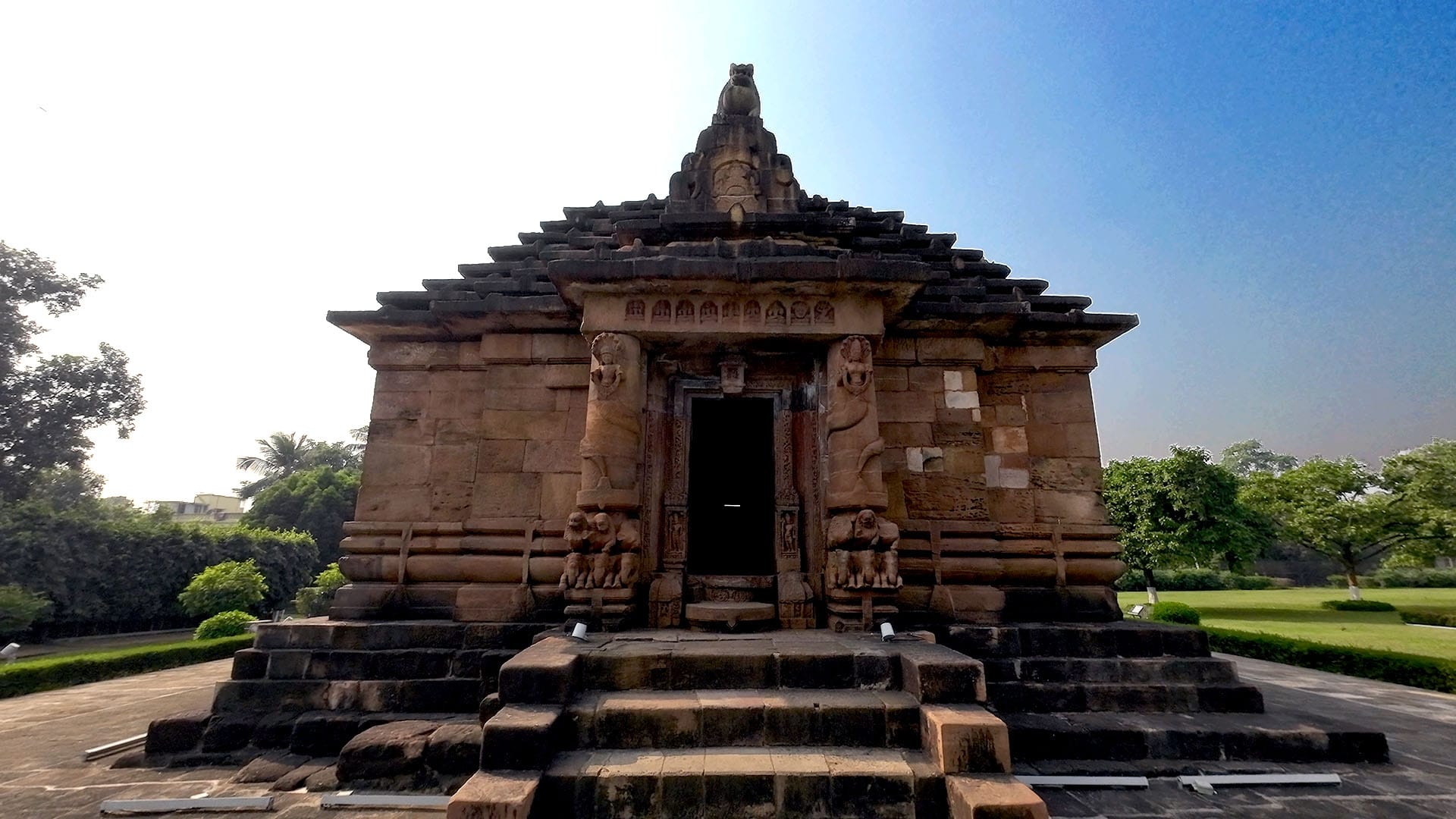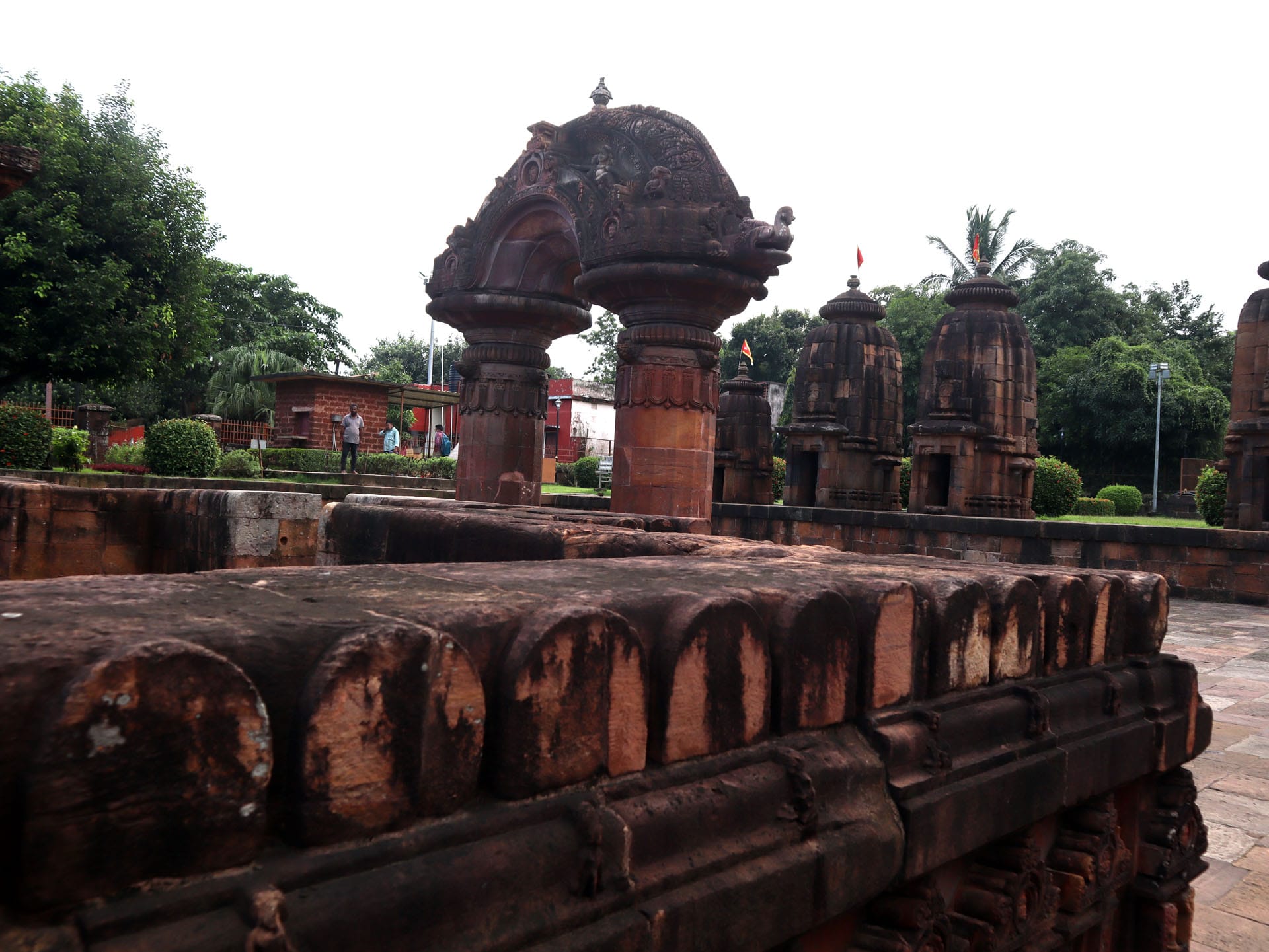
The Hirapur 64 Yogini Temple, locally called the Chausathi Yogini (or Chausathi Jogini) Temple, is a small but extraordinary shrine in Hirapur village on the outskirts of Bhubaneswar in Khordha district. Hidden among paddy fields and village ponds, this roofless circular temple is dedicated to the sixty-four yoginis, tantric forms of the goddess Shakti.
It is easy to miss on a busy Bhubaneswar itinerary, yet many travellers call it the most memorable stop of their trip. The temple is tiny, quiet and deeply atmospheric, and you can walk around every carved figure in less than an hour. If you enjoy art, history or simply peaceful places, the Hirapur 64 Yogini Temple deserves a slot on your list.
History of the Hirapur 64 Yogini Temple
According to the Bhubaneswar city tourism portal, the temple was built in the 9th century CE by Queen Hiradevi, wife of King Subhakar Deva II of the Bhauma (Bhaumakara) dynasty. The Khordha district administration also notes the tradition that Queen Hiradevi built it, and the village name Hirapur is popularly linked to her.
The Bhaumakaras were patrons of tantric worship, and yogini cults flourished across India roughly between the 8th and 13th centuries. Sahapedia describes Hirapur as one of the earliest surviving yogini shrines of that tradition.
Only a handful of yogini temples survive in India, and Odisha has two of them; the other is at Ranipur-Jharial in western Odisha. That rarity is a big part of what makes the Hirapur 64 Yogini Temple so special for heritage lovers.
For centuries the shrine stayed known mainly to local villagers. It came to wider attention in 1953, when historian Kedarnath Mohapatra, then working with the Odisha State Museum, documented it.
Architecture: A Temple Open to the Sky
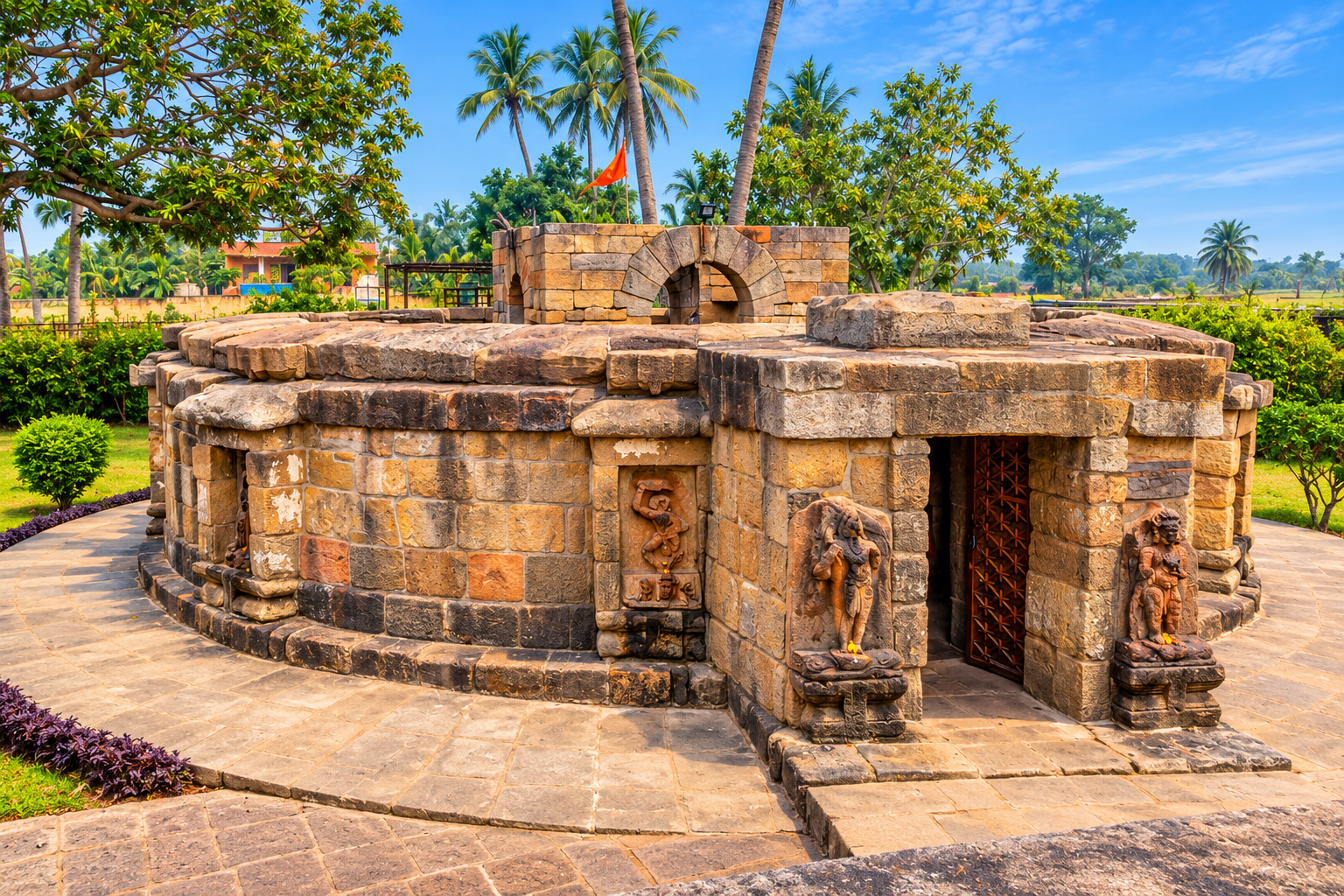
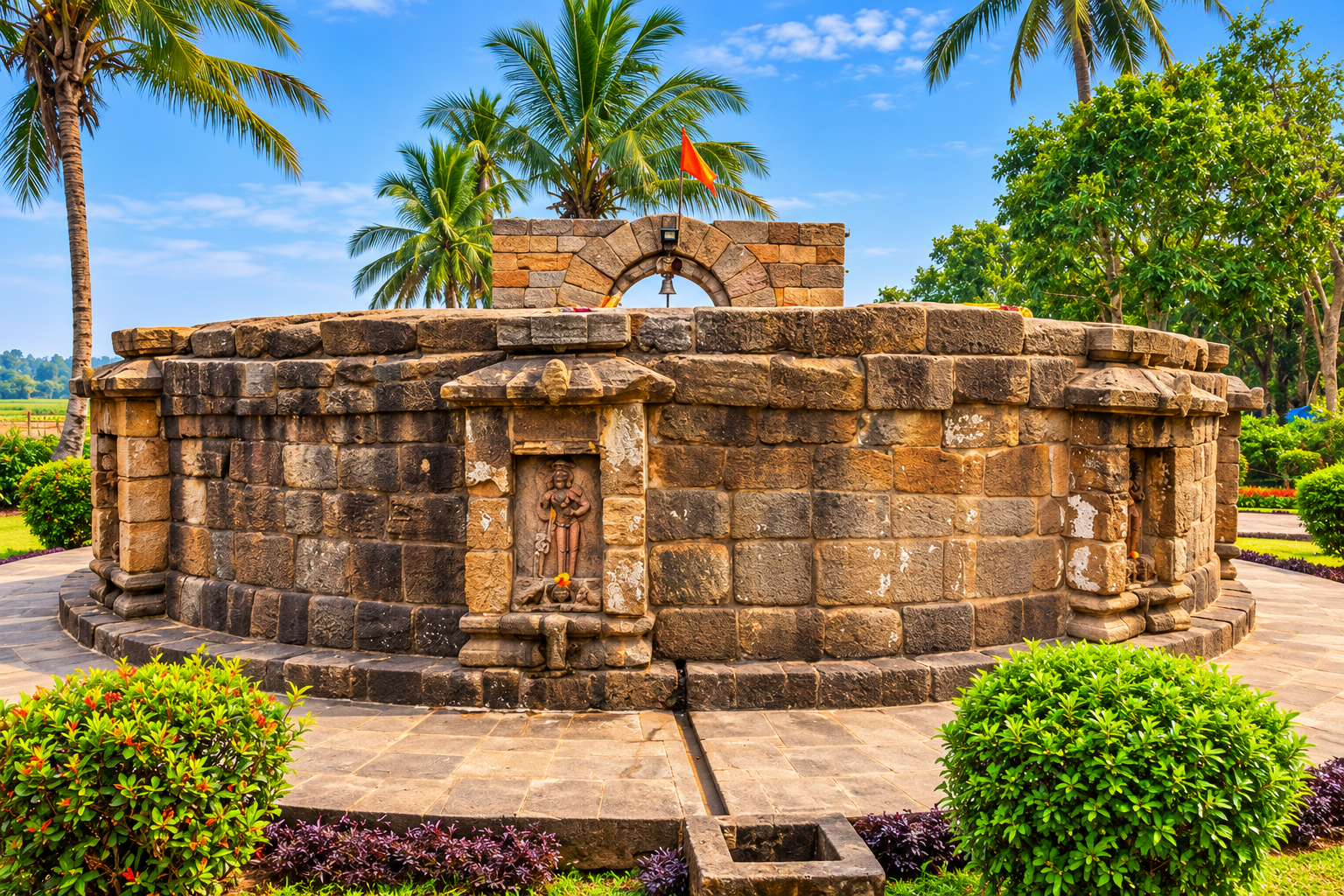
Unlike the towering deulas of Bhubaneswar, this is a hypaethral (roofless) temple with a circular plan. The design is often read as a chakra or wheel, reflecting tantric ideas about cosmic time and the elements. The Bhubaneswar tourism portal calls it the smallest yogini temple in India.
- Circular enclosure: A low sandstone wall forms the circle, with a single narrow entrance.
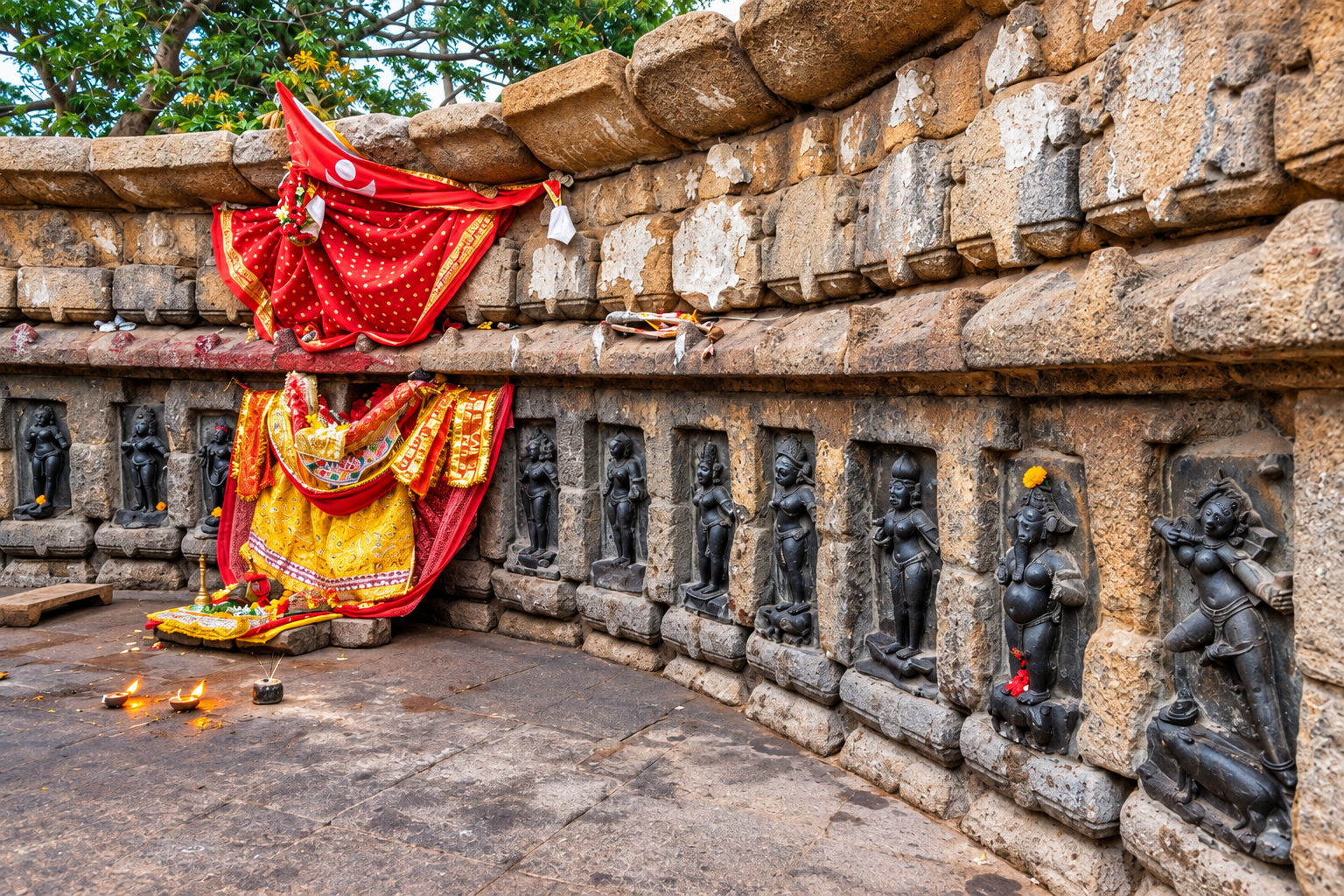
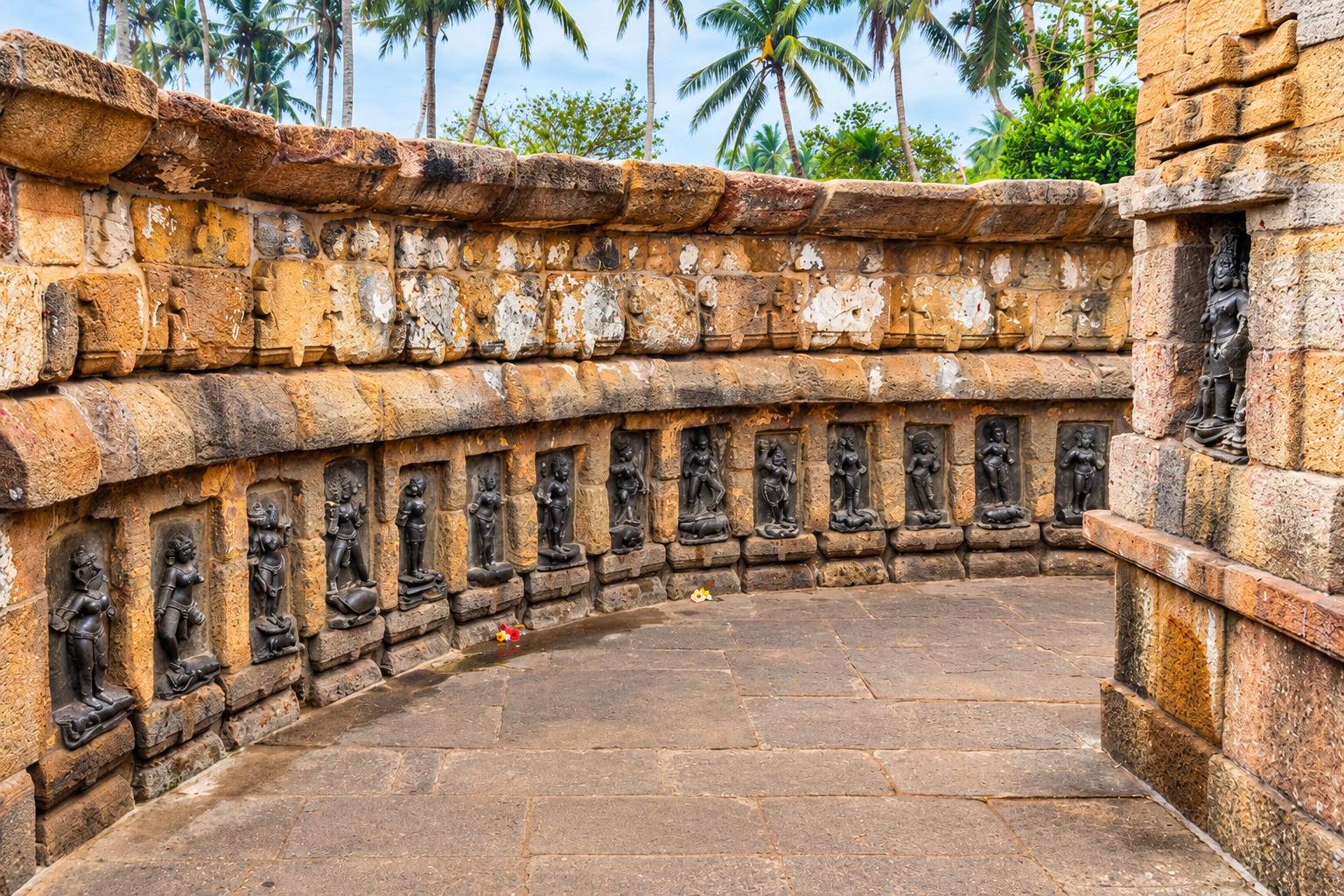
- Inner niches: The inner face of the wall holds the yogini images, each in its own niche.
- Central platform: A small shrine or mandapa stands in the middle of the open courtyard.
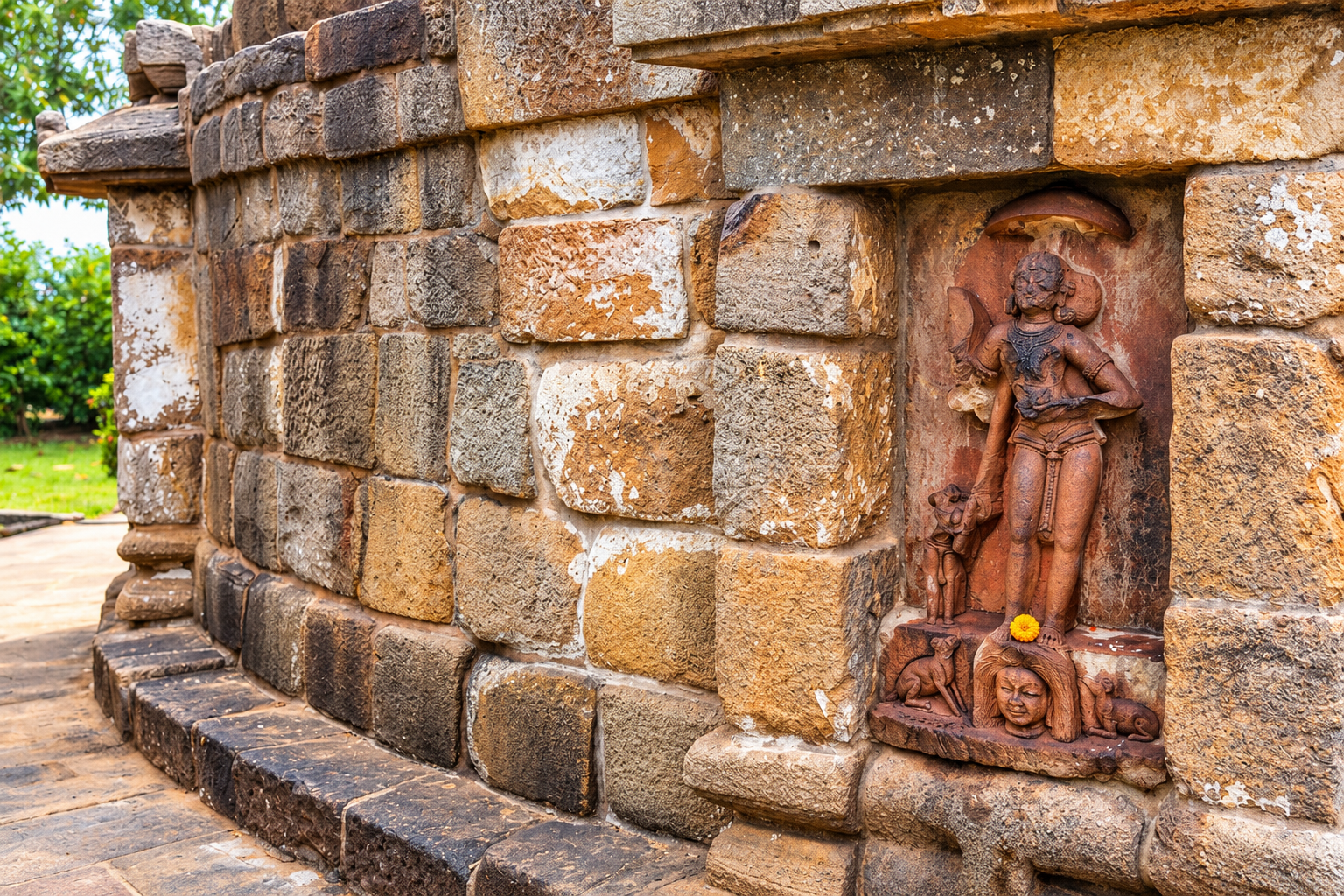
- Outer wall: The outside of the circle carries further goddess figures in niches.
What to See Inside
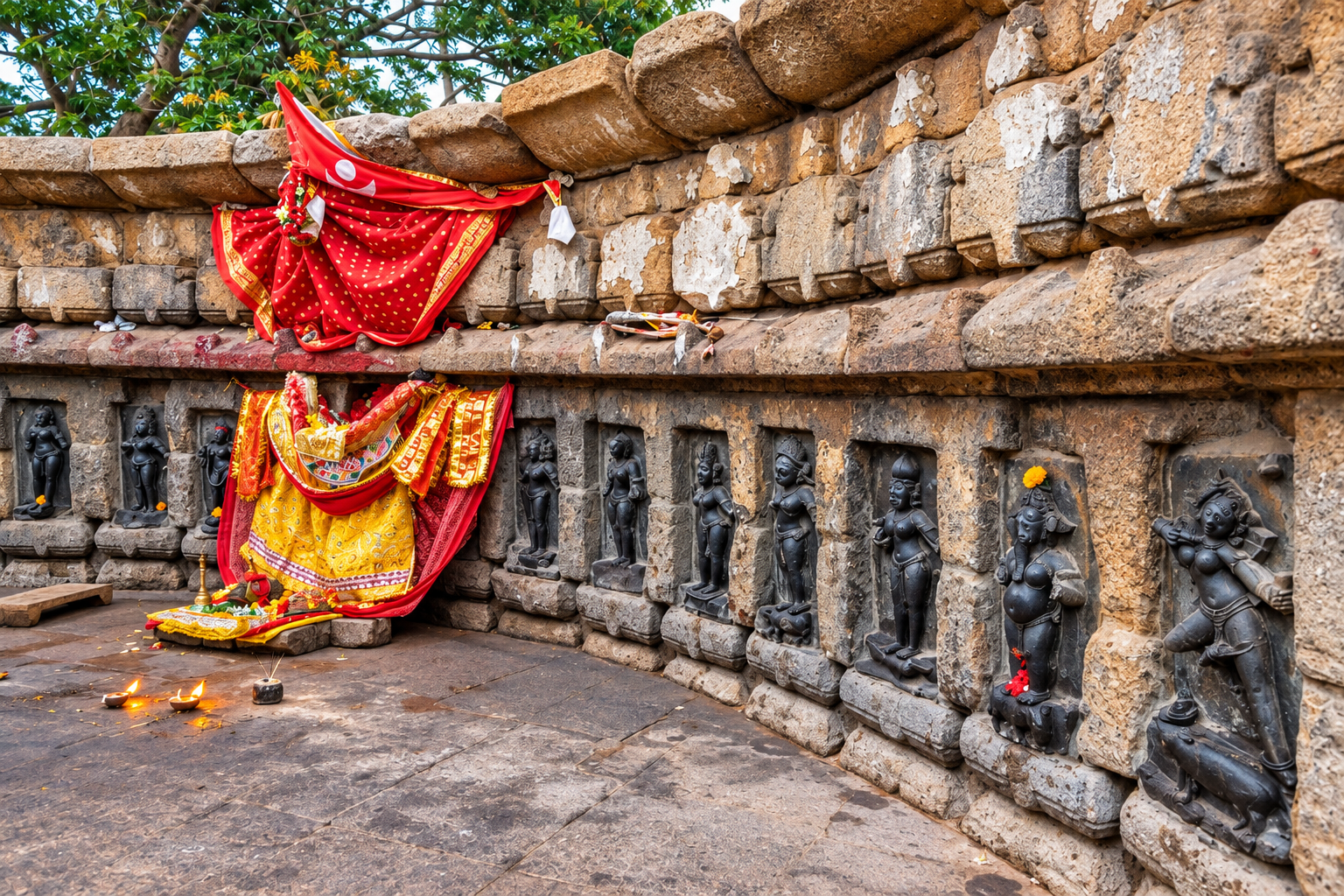
The highlight is the sculpture. The Khordha district website notes that the yogini figures are carved from black chlorite stone, and the polish and detail are still striking. Each yogini stands on a mount (a vahana such as an animal, a human figure or a demon), with different hairstyles, ornaments and expressions.
Look out for these details:
- The variety of poses: some yoginis dance, some hold weapons, others stand serenely.
- The goddess Mahamaya, regarded as the presiding deity; many locals simply call it the Mahamaya temple.
- Gaps in the circle where a few original images are missing or damaged. Although the name says sixty-four, not every figure has survived.
- The figures on the outer face of the wall, which many visitors walk past without noticing.
Things to Do at the Hirapur 64 Yogini Temple
- Slow walk around the circle: Go clockwise and study each yogini; morning light makes the carvings easier to see.
- Photography: The circular courtyard and rural setting are very photogenic. Ask the priest before photographing worship.
- Attend the Chausathi Yogini Mahotsav: An annual festival of classical music, dance and folk performances is held near the temple from 23 to 25 December, organised by a Bhubaneswar cultural group with support from Odisha Tourism.
- Village walk: Hirapur is a typical Odia village with ponds, fields and small shrines, ideal for a quiet stroll.
How to Reach the Hirapur 64 Yogini Temple
- By air: Biju Patnaik International Airport, Bhubaneswar, is the nearest airport.
- By rail: Bhubaneswar Railway Station is the most convenient railhead.
- By road: Hirapur lies roughly 10 to 15 km from central Bhubaneswar, depending on your starting point. Hire a cab or auto-rickshaw; the last stretch runs through village roads, so keep a map app handy. Public buses do not stop at the temple gate.
For more ideas on the region, see the Odisha Tourism website and our Khordha district guide.
Best Time to Visit and Timings
October to March is the most comfortable season, with mild days and clear skies. Late December is special because of the Mahotsav. Summer afternoons are very hot because the courtyard has no shade, and the monsoon can make village lanes muddy.
Early morning is the best time of day: it is cooler, quieter and the soft light shows off the black stone carvings beautifully.
The temple is an active place of worship and is usually open from early morning until evening. There is no major ticketed entry, but timings can change on festival days, so check locally. A small offering or donation to the priest is customary but not compulsory.
Travel Tips
- Remove footwear at the entrance; the stone floor gets hot by noon, so go early.
- Dress modestly and keep your voice low; it is a living shrine for local devotees.
- Do not touch or climb on the sculptures.
- Carry water and snacks; there are only a few small shops in the village.
- Combine the visit with a half-day Bhubaneswar heritage loop; the Hirapur 64 Yogini Temple pairs well with Dhauli on the same drive.
- Local guides are not always available at the site, so read up on the yoginis before you go to get more out of the visit.
Nearby Places
- Dhauli Shanti Stupa, the white peace pagoda above the Daya river.
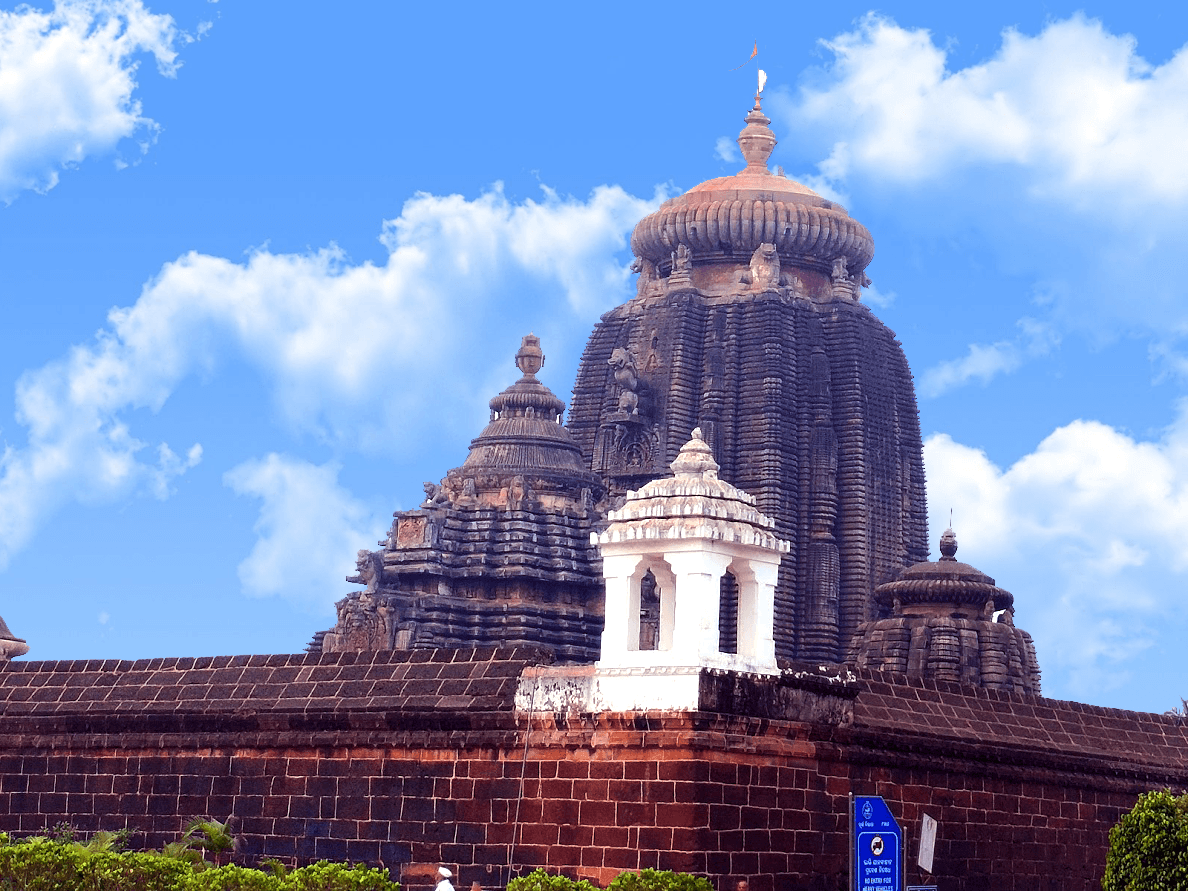
- Lingaraj Temple and the old temple town of Bhubaneswar.
- Khandagiri and Udayagiri caves, the ancient Jain rock-cut caves on the western edge of the city.
Frequently Asked Questions
Who built the Hirapur 64 Yogini Temple?
Tradition credits Queen Hiradevi of the Bhauma dynasty, wife of King Subhakar Deva II, with building the temple in the 9th century CE.
Why is the Hirapur 64 Yogini Temple roofless?
Yogini temples were traditionally hypaethral, or open to the sky. The circular, roofless form is linked to tantric beliefs about the elements and the cosmic wheel.
How much time do I need there?
Around 45 minutes to an hour is enough to see every figure, though photographers and history lovers may stay longer.
Is photography allowed?
Photography of the architecture is generally fine, but always ask the priest before photographing rituals or the main deity, and follow any signs on the day.