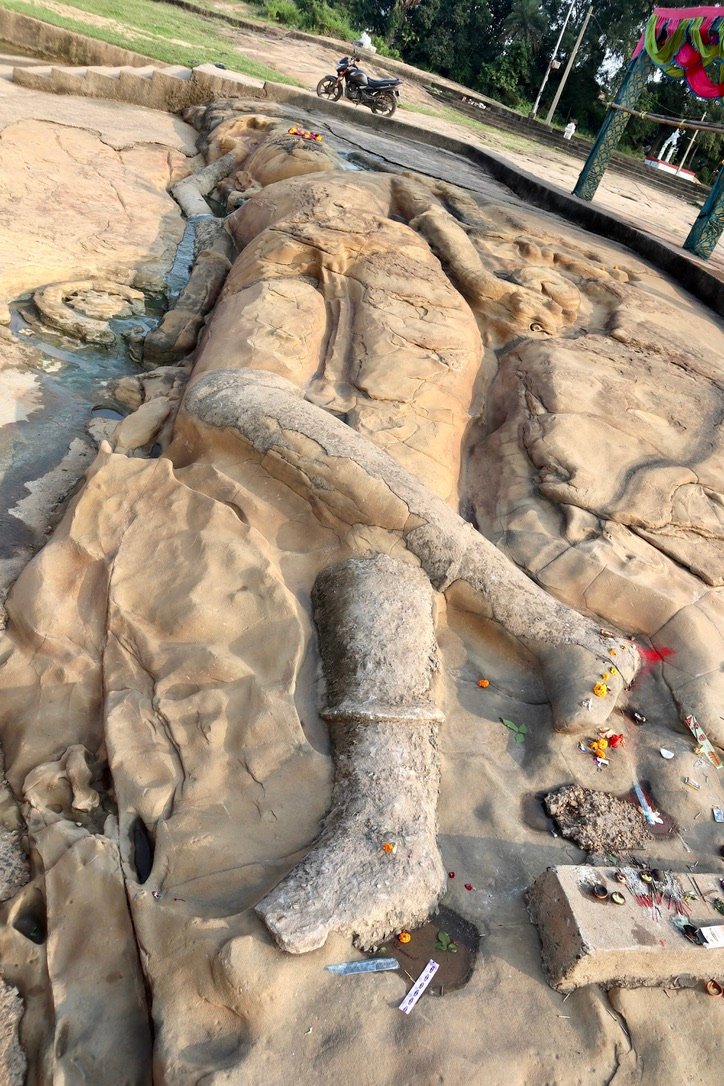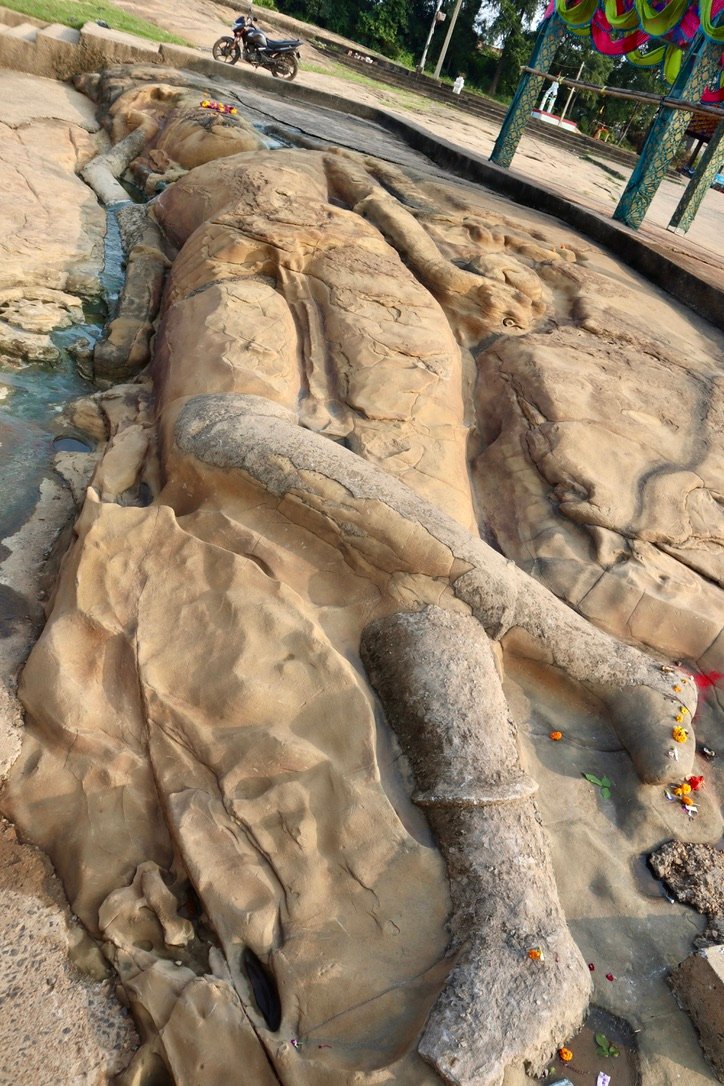
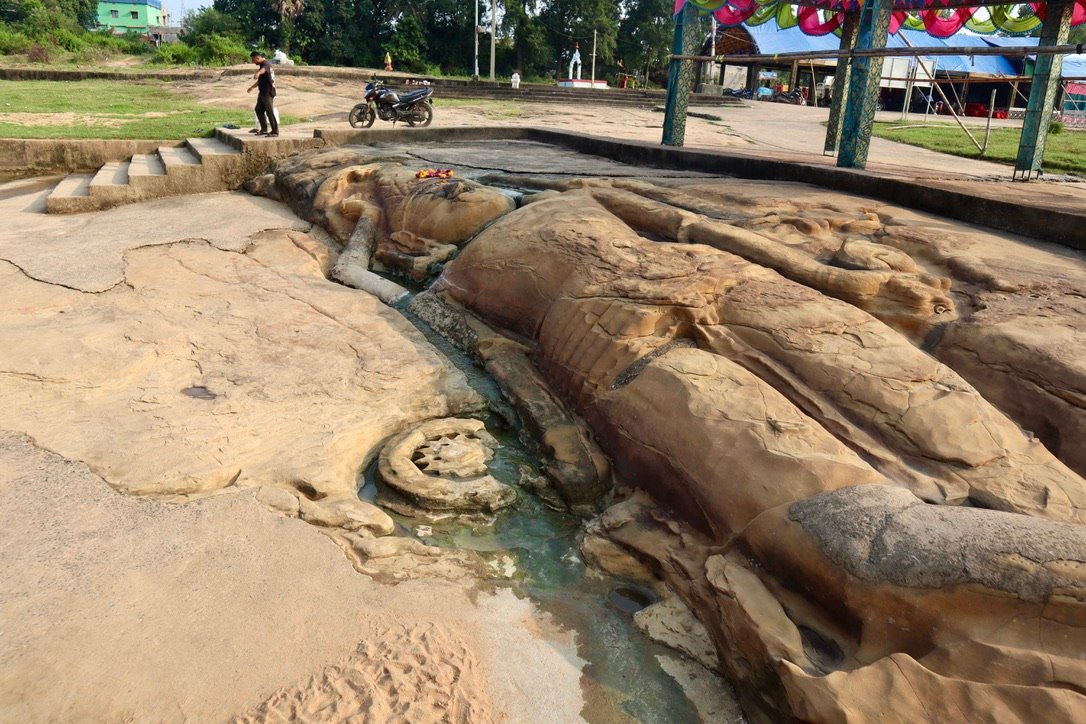
Anantasayana Vishnu at Saranga in Dhenkanal district is one of the most extraordinary ancient rock-cut sculptures in Odisha. Carved directly into a massive natural rock formation on the bank of the Brahmani River, this magnificent sculpture depicts Lord Vishnu resting on the cosmic serpent Ananta (Sheshanaga).
Measuring approximately 15.4 metres (51 feet) in length and 7 metres (23 feet) in width, the colossal sculpture is considered one of India’s largest horizontal rock-cut images of reclining Lord Vishnu.
Dating back to the early 9th century CE, the sculpture represents the remarkable artistic skills and religious traditions of ancient Odisha. Its impressive size, detailed iconography and peaceful riverside setting make it an important destination for devotees, historians, archaeologists and heritage travellers.
Locally known as Anantashayi Vishnu, the monument is situated on the left bank of the Brahmani River near Saranga village. It is a protected archaeological monument maintained by the Archaeological Survey of India (ASI).
If you are exploring Odisha’s ancient temples, historical monuments and lesser-known heritage destinations, Anantasayana Vishnu at Saranga deserves a place on your travel list.
Anantasayana Vishnu at a Glance
| Name | Anantasayana Vishnu |
| Location | Saranga village, Dhenkanal district, Odisha |
| River | Brahmani River |
| Historical Period | early 9th century CE |
| Dynasty | Bhauma-Kara period |
| Sculpture Type | Open-air rock-cut relief |
| Length | Approximately 15.4 metres (51 feet) |
| Width | Approximately 7 metres (23 feet) |
| Main Deity | Lord Vishnu |
| Religious Tradition | Vaishnavism |
| Protected By | Archaeological Survey of India (ASI) |
| Nearest Town | Talcher (about 3 km) |
| From Dhenkanal | Approximately 67 km |
| From Angul | Approximately 23 km |
| Best Time to Visit | November to February |
History of Anantasayana Vishnu, Saranga
The history of Anantasayana Vishnu is closely connected with the development of Vaishnavism and temple art in ancient Odisha.
The magnificent rock sculpture is generally dated to the early 9th century CE, with its artistic style and iconographic features associated with the Bhauma-Kara period.
During this period, several regional rulers supported Hindu religious traditions, including the worship of Lord Vishnu. The sculpture is also associated with the Nandodbhava feudatory rulers, who are believed to have patronised its creation under the broader political influence of the Bhauma-Kara dynasty.
The monument reflects the religious importance of the Brahmani River valley and the development of monumental sculpture in early medieval Odisha.
Unlike conventional temple idols carved separately and installed inside a shrine, this remarkable image was carved directly into an exposed natural rock formation. Its enormous scale and horizontal composition make it particularly significant in the history of Indian rock-cut art.
Over the centuries, the sculpture has remained exposed to natural weathering and the seasonal flow of the Brahmani River. Despite these challenges, it continues to attract devotees and visitors interested in Odisha’s ancient heritage.
What Does Anantasayana Vishnu Mean?
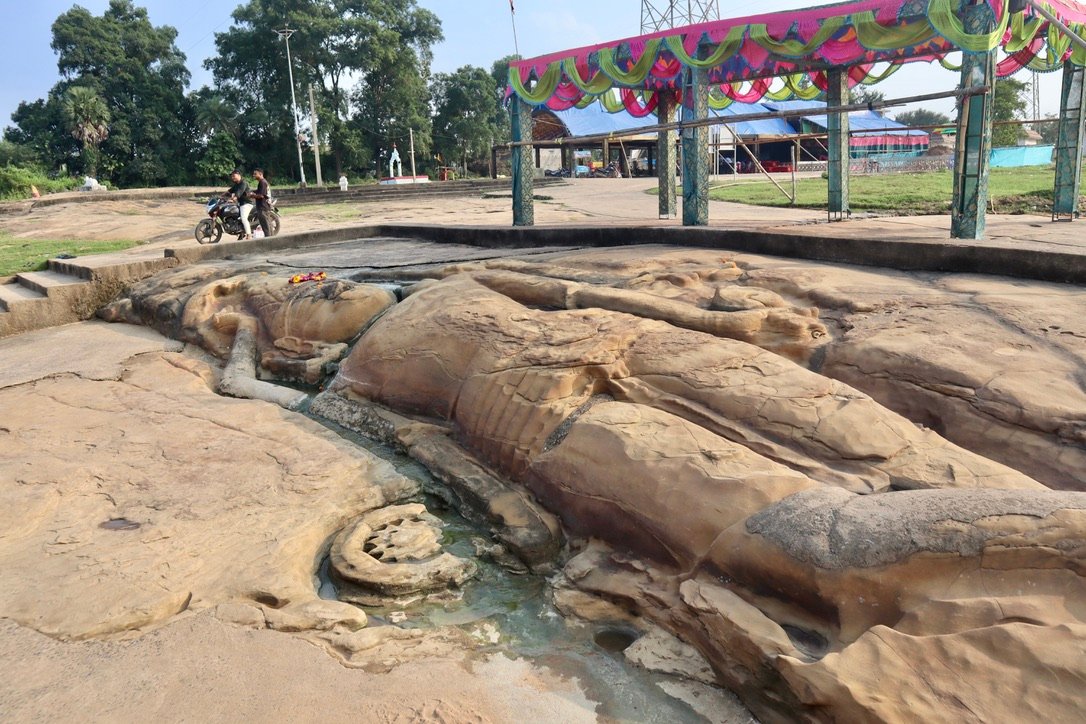
The word Anantasayana comes from two Sanskrit words: Ananta, meaning the endless or infinite one and also referring to the cosmic serpent Shesha; and Sayana, meaning resting or reclining. Therefore, Anantasayana Vishnu refers to Lord Vishnu reclining upon the cosmic serpent Ananta (Sheshanaga).
According to Hindu mythology, Lord Vishnu rests on the endless cosmic serpent in the primordial cosmic ocean. This divine posture represents the eternal nature of the universe, creation, preservation and cosmic balance.
The image is not simply a depiction of sleep. It symbolises the supreme cosmic consciousness and the eternal cycle of existence.
The Magnificent Rock-Cut Sculpture of Lord Vishnu
The most fascinating attraction at Saranga is the enormous horizontal image of Lord Vishnu carved into the natural rock bed of the Brahmani River.
The sculpture measures approximately 15.4 metres in length and 7 metres in width. Its impressive proportions make it a remarkable example of ancient Indian sculptural craftsmanship.
Lord Vishnu is depicted reclining peacefully upon the body of Sheshanaga, the divine serpent. The sculpture features four arms carrying the traditional attributes of Vishnu:
- Sudarshana Chakra: The divine discus, symbolising cosmic order and protection.
- Shankha: The sacred conch, representing the primordial sound and divine energy.
- Gada: The divine mace, symbolising strength and power.
- Padma: The lotus, representing purity and spiritual creation.
The serpent’s hood spreads above Vishnu’s head, forming a protective canopy. The sculptural composition also includes a lotus emerging from Vishnu’s navel, associated with the birth of Lord Brahma, the creator of the universe.
These details make the sculpture an extraordinary representation of the Anantasayana form of Lord Vishnu.
Religious Significance of Anantasayana Vishnu
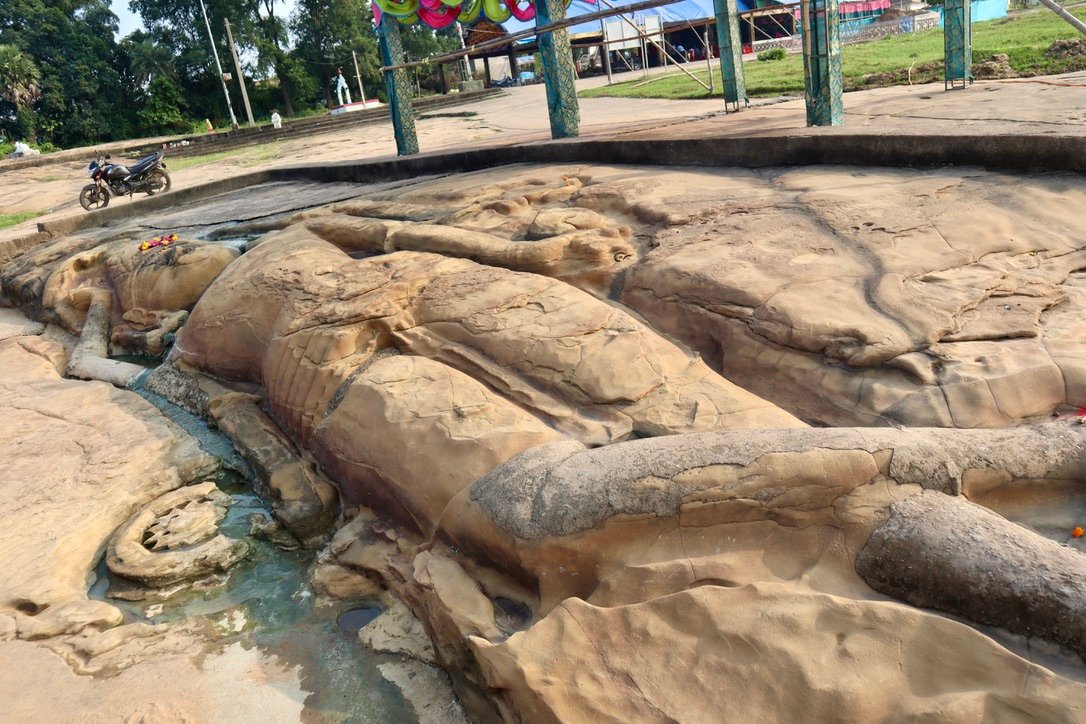
Anantasayana Vishnu holds an important place in Hindu religious tradition. The reclining form of Lord Vishnu represents the cosmic state in which the universe rests within the supreme divine consciousness. Sheshanaga symbolises infinity, while the lotus emerging from Vishnu’s navel represents the beginning of creation through Lord Brahma.
For devotees, the sculpture is a sacred representation of Lord Vishnu’s eternal presence and protective power. The peaceful surroundings of the Brahmani River add to the spiritual atmosphere of the site. Visitors can experience a unique combination of natural beauty, religious devotion and ancient artistic heritage.
The monument continues to be an important place of worship for local devotees.
Location and Natural Surroundings
One of the special features of Anantasayana Vishnu is its natural setting. The sculpture is located on the left bank of the Brahmani River, near Saranga village in Dhenkanal district. Instead of standing inside a conventional temple complex, the massive image is carved into the exposed rock bed beside the river.
The surrounding landscape creates a peaceful atmosphere, especially during the winter months when the riverbank is more accessible. During the monsoon season, rising water levels in the Brahmani River can affect access to the sculpture. Visitors should check local conditions before planning their trip.
Why Is Anantasayana Vishnu Special?
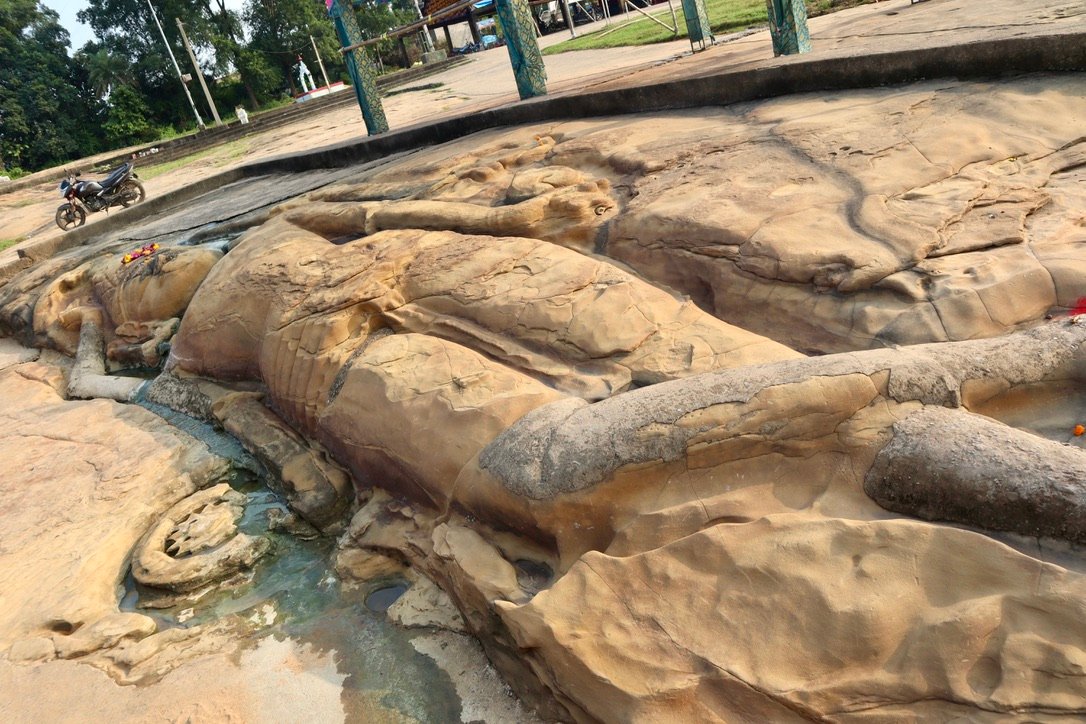
1. Extraordinary Size: At approximately 51 feet long, the sculpture is among the largest horizontal rock-cut images of reclining Vishnu in India.
2. Ancient Artistic Heritage: The sculpture demonstrates the advanced artistic and iconographic traditions of early medieval Odisha.
3. Unique Rock-Cut Construction: The image is carved directly into a natural rock formation rather than being constructed as a separate stone idol.
4. Religious Importance: The sculpture represents the cosmic reclining form of Lord Vishnu and remains a place of religious devotion.
5. Beautiful Riverside Setting: Its location beside the Brahmani River makes the monument particularly attractive for heritage photography and cultural exploration.
How to Reach Anantasayana Vishnu, Saranga
Saranga is well connected by road with nearby towns such as Talcher, Angul and Dhenkanal.
By Road
Road travel is the most convenient way to reach the monument. Visitors travelling from Bhubaneswar can take a road route towards Dhenkanal and Talcher before proceeding to Saranga.
| Starting Point | Approximate Distance |
| Dhenkanal | 67 km |
| Angul | 23 km |
| Talcher | 3 km |
| Bhubaneswar | About 150 km |
| Cuttack | About 120 km |
Distances from Bhubaneswar and Cuttack are approximate and depend on the selected route.
By Rail
Talcher is a convenient nearby railway destination. Dhenkanal and Angul railway stations are also options depending on your train route. From the railway station, visitors can hire a taxi or local transport to reach Saranga.
By Air
The nearest major airport is Biju Patnaik International Airport in Bhubaneswar. From the airport, visitors can hire a taxi or travel by road towards Talcher and Saranga.
Planning a heritage trip? Pair Saranga with Kapilash Temple in Dhenkanal, or build a full route with our free Odisha Trip Planner. For Odisha’s Buddhist heritage, see our guide to Ratnagiri in Jajpur.
Best Time to Visit Anantasayana Vishnu
The best time to visit Saranga is between November and February.
- Winter (November–February): The most comfortable period for sightseeing, photography and heritage exploration.
- Summer (March–June): Temperatures can be high, so early morning visits are recommended.
- Monsoon (July–September): The Brahmani River may rise significantly, potentially covering parts of the rock sculpture. Avoid visiting the exposed riverbed during unsafe water conditions.
Travel Tips for Visitors
- Visit during the morning or late afternoon for a comfortable experience.
- Check the Brahmani River’s water level before travelling.
- Wear comfortable footwear suitable for uneven rocky surfaces.
- Carry drinking water, especially during summer.
- Avoid walking on wet or slippery rocks.
- Do not climb on or damage the ancient sculpture.
- Respect the religious importance of the monument.
- Keep the surrounding riverbank clean.
Nearby Tourist Attractions in Dhenkanal
1. Kapilash Temple: A famous Shiva temple situated on Kapilash Hill, surrounded by beautiful natural scenery and forested hills.
2. Joranda Mahima Gadi: An important spiritual centre associated with the Mahima Dharma tradition of Odisha.
3. Saptasajya: A scenic hill destination known for its natural beauty, religious significance and peaceful surroundings.
4. Ashtasambhu Temples, Kualo: A group of ancient Shiva temples representing the rich temple architecture and religious heritage of Dhenkanal.
These destinations can help visitors explore more of Dhenkanal’s religious, cultural and natural heritage.
Frequently Asked Questions (FAQs)
Where is Anantasayana Vishnu located?
Anantasayana Vishnu is located near Saranga village in Dhenkanal district, Odisha, on the left bank of the Brahmani River.
How old is the Anantasayana Vishnu sculpture?
The sculpture is generally dated to the early 9th century CE, based on its architectural and iconographic characteristics.
How long is the Anantasayana Vishnu sculpture?
The rock-cut image measures approximately 15.4 metres (51 feet) in length and 7 metres (23 feet) in width.
Why is Lord Vishnu shown sleeping on a serpent?
According to Hindu mythology, Lord Vishnu rests upon the cosmic serpent Sheshanaga in the primordial ocean. This form symbolises infinity, cosmic balance and the eternal cycle of creation and preservation.
Which river flows near Anantasayana Vishnu?
The Brahmani River flows beside the monument. The sculpture is carved into the natural rock bed on its left bank.
Who built the Anantasayana Vishnu sculpture?
The sculpture is generally associated with the early 9th-century Bhauma-Kara period and is believed to have received patronage from the Nandodbhava feudatory rulers.
Is Anantasayana Vishnu protected by the ASI?
Yes. It is recognised as a protected monument under the Archaeological Survey of India.
What is the best time to visit Saranga?
November to February is generally the best period because of the pleasant winter weather and more favourable riverbank conditions.
How far is Saranga from Bhubaneswar?
Saranga is about 150 km from Bhubaneswar by road (about 147 km from Bhubaneswar airport).
Conclusion
Anantasayana Vishnu at Saranga is much more than an ancient stone sculpture. It is a remarkable reminder of Odisha’s rich religious traditions, artistic excellence and historical legacy.
The magnificent image of Lord Vishnu reclining on Sheshanaga, carved directly into the natural rock beside the Brahmani River, reflects the extraordinary craftsmanship of ancient Odisha.
Although many travellers know Odisha for its famous temples and Buddhist heritage sites, places like Saranga reveal another fascinating dimension of the state’s cultural history.
Sources: Odisha Tourism; Dhenkanal district administration; Archaeological Survey of India, Bhubaneswar Circle.