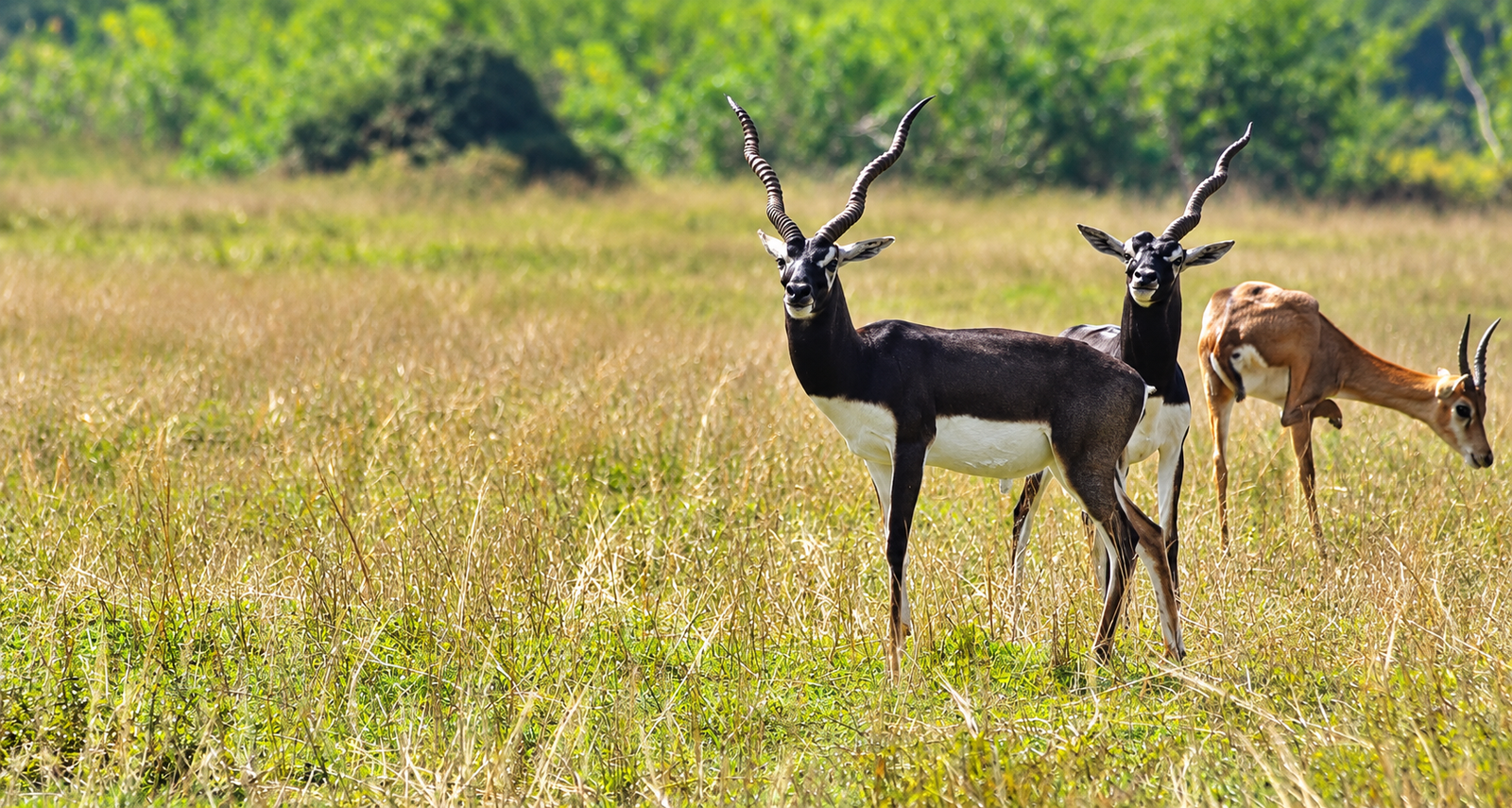
The Bhetnoi blackbuck herds of Ganjam district are one of Odisha’s finest wildlife surprises: wild antelopes grazing freely in farm fields, protected not by fences or forest guards alone but by the villagers themselves. Around Bhetnoi and Balipadar, on the stretch between Aska and Buguda, you can watch these graceful animals leap across paddy and pulse fields in full view of the road.
There is no zoo, no safari jeep and no sanctuary gate here. It is a living example of community conservation, and a visit feels very different from any national park.
The Story Behind the Bhetnoi Blackbuck
The blackbuck (Antilope cervicapra), called Krushnasara mruga in Odia, is linked with Lord Krishna in local belief. Villagers say that more than a century ago a long drought ended soon after a small herd of blackbuck appeared in the area. Since then the animals have been seen as bringers of rain, luck and prosperity.
That faith was backed by early protection. In 1918, a British officer remembered locally as “Green Saheb” and the local leader Madeshi Chandramani Dora published a notice in the Odia newspaper Prajamitra banning the killing of blackbuck. Today the species is also protected under Schedule I of the Wildlife (Protection) Act, 1972.
In the 1990s villagers formed a Blackbuck Protection Committee, later followed by a district-level committee. It received the first Biju Patnaik Award for Wildlife Conservation in 2004-05, according to news reports.
A Conservation Success Story
The results speak for themselves. Published reports put the Ganjam population at only a few hundred animals around 1990. Forest department counts since then have shown a steady rise into the thousands, and the herds now roam in and around roughly 70 villages of the Bhetnoi-Balipadar belt.
- Farmers tolerate crop damage, and the forest department pays compensation for losses.
- Injured animals are treated at the forest range office and released back to the herd.
- The species has spread from the original Ghumsur South forest division into neighbouring divisions.
- Bhetnoi was listed as a state-level finalist in the Ministry of Tourism’s best rural tourism village programme.
This is why the Bhetnoi blackbuck story is often compared with the Bishnoi community of Rajasthan, who protect the same species.
Where to See the Bhetnoi Blackbuck
The herds graze in open fields on both sides of the Aska-Balipadar road and around Bhetnoi village. Blackbuck are shy and usually keep 100-200 metres away from people, so you will mostly watch them from the roadside or field bunds.
- Watchtower: A multi-storey watchtower near Bhetnoi gives a wider view over the grasslands and fields.
- Males and females: Adult males are dark brown to black with spiral horns; females and young are fawn coloured and hornless.
- Herd behaviour: Dominant males guard groups of females and chase away rivals, so you may see short chases or sparring.
- Pronking: Watch for the high, bouncing leaps blackbuck make when alarmed. A single jump can cover several metres.
Things to Do
- Spend an early morning or late afternoon watching herds feed and move between fields.
- Talk to local villagers and committee members about how they protect the animals.
- Photograph the antelopes with a telephoto lens from a respectful distance.
- Spot birds in the open countryside, which is also home to many farmland species.
Give yourself at least two to three hours. Herds move between fields through the day, and a patient wait at one spot often rewards you with a big group of Bhetnoi blackbuck crossing open ground. Morning visits also let you see village life waking up, with farmers heading to the fields the antelopes share with them.
How to Reach Bhetnoi
Bhetnoi lies on the road between Aska and Buguda in Ganjam district.
- By air: The nearest airport is Biju Patnaik International Airport, Bhubaneswar.
- By rail: Berhampur (Brahmapur) is the nearest major railway station.
- By road: Aska is the nearest bus stand. From Aska, hire an auto or taxi towards Buguda and Balipadar. A private vehicle gives you the flexibility to stop wherever herds appear.
Best Time to See the Bhetnoi Blackbuck
December and January are the most popular months, according to local reports, when the weather is cool and the harvested fields give open views. October to February is generally comfortable. Early morning and the hour before sunset are the best times of day, as the animals are more active and the light is soft.
Summer afternoons are hot, and herds tend to rest in shade. During the monsoon, tall crops can hide the animals.
Timings, Entry and Travel Tips
There is no formal entry gate or ticket for viewing the herds from public roads. Access to any watchtower or forest facility may depend on local forest staff, so check with the forest range office or villagers when you arrive.
- Never chase, feed or try to approach the antelopes. Stress can injure them.
- Keep pets at home. Stray dogs attacking fawns are already a major threat.
- Drive slowly through the area. Road accidents are a known cause of blackbuck deaths.
- Do not walk into standing crops without permission from the farmer.
- Carry binoculars, water and a hat. Facilities in the villages are basic.
Nearby Places
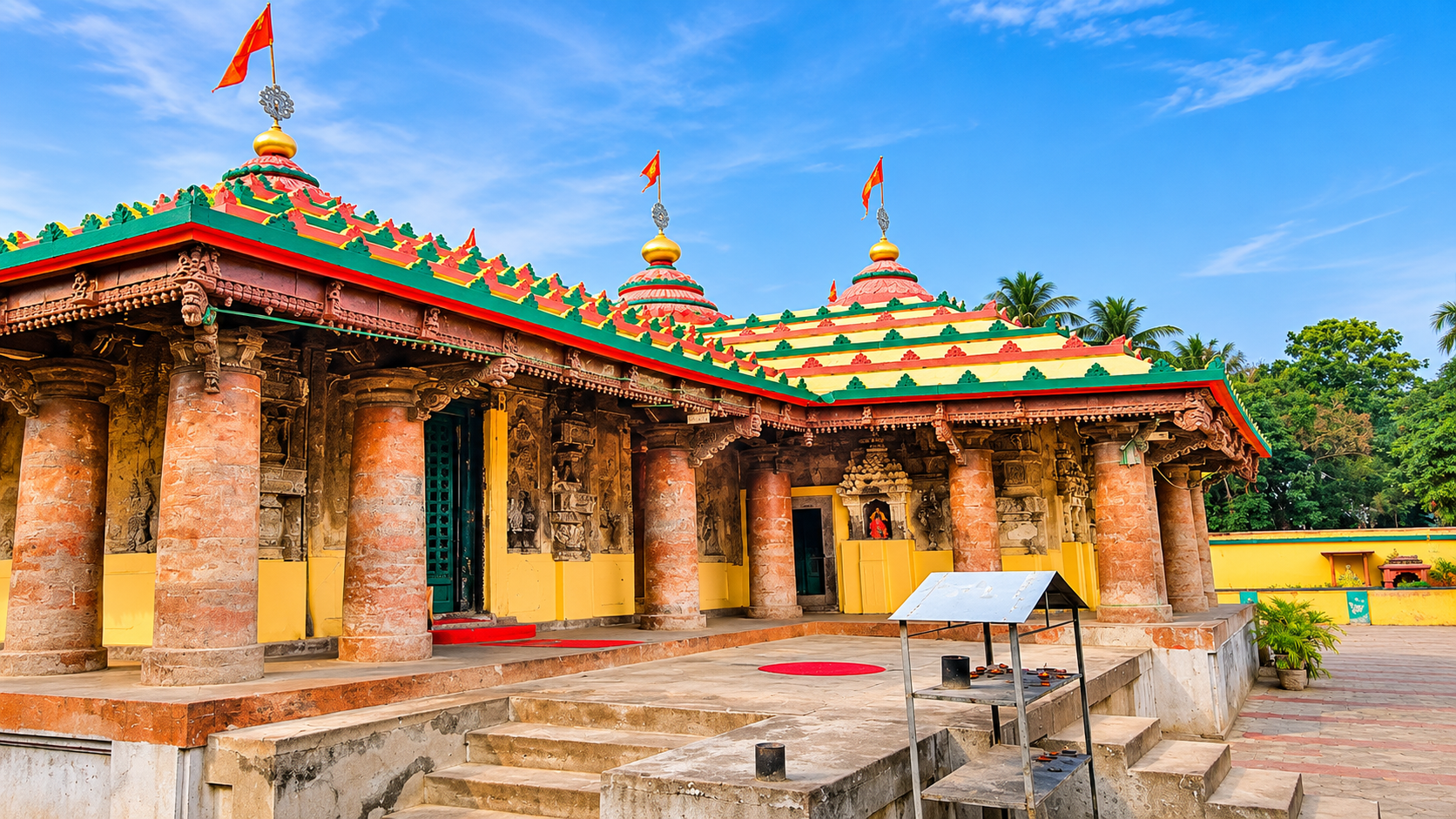
- Biranchi Narayan Temple, Buguda: An 18th-century Sun temple famous for its wooden carvings and murals, on the same route.
- Taptapani: The hot sulphur spring of Taptapani is listed among the nearest attractions to Bhetnoi.
- Aska: A busy town for meals, fuel and transport links.
Plan more stops with our Ganjam district guide and the official Odisha Tourism website.
Frequently Asked Questions
Where can I see the Bhetnoi blackbuck?
In the open farmland around Bhetnoi and Balipadar villages in Ganjam district, especially along the Aska-Balipadar road between Aska and Buguda.
Is Bhetnoi a wildlife sanctuary?
No. It is not a declared sanctuary. The blackbuck live among villages and farmland and are protected mainly by the local community with support from the forest department.
What is the best time to see the Bhetnoi blackbuck?
Winter, especially December and January, early in the morning or late in the afternoon. Harvested fields make the herds easier to spot.
Why do villagers protect the blackbuck?
Local belief links the animal with Lord Krishna and with the rains that ended a drought over a century ago, so it is seen as a sign of prosperity and is protected with great pride.