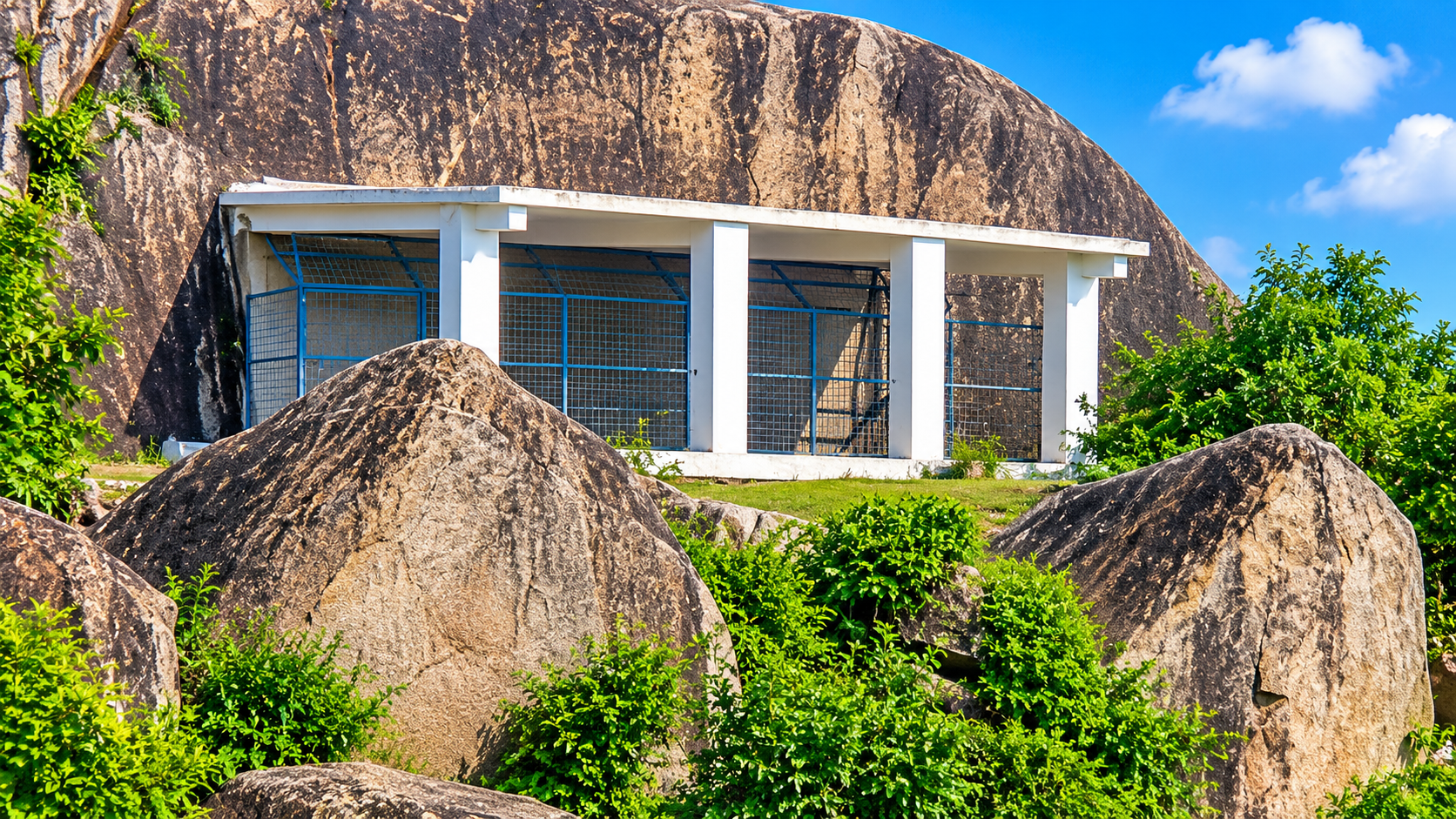
The Jaugada Rock Edict is one of only two places in Odisha where you can stand in front of words carved on the orders of Emperor Ashoka more than 2,200 years ago. It lies inside the ruins of an ancient earthen fort near Purushottampur in Ganjam district, on the northern bank of the Rushikulya River, and it remains one of the most underrated heritage stops in south Odisha.
If you have already seen the edicts at Dhauli near Bhubaneswar, Jaugada completes the story. It is quieter, rural and far less visited, which makes it a rewarding detour for history lovers travelling around Berhampur.
Jaugada Rock Edict at a Glance
| Location | Near Purushottampur, Ganjam district |
|---|---|
| Known for | Emperor Ashoka’s rock edicts inside an ancient fort |
| Age | Around the 3rd century BCE |
| Script | Prakrit in Brahmi script |
| From Berhampur | About 35–40 km |
| Best time | October to March |
History of the Jaugada Rock Edict
After the Kalinga War, Ashoka absorbed Kalinga into the Mauryan empire and ruled it through provincial centres. Jaugada served as a fortified Mauryan capital for the southern part of the province. Historians link it with ancient Samapa, the city named in the inscriptions as the seat of the officials (Mahamatras) of southern Kalinga.
The local name is often explained as “Jau” (lac) and “Gada” (fort), giving the “lac fort” or Jatugada. Folklore says the walls were coated with lac so enemies could not climb them, and some locals connect the fort with Duryodhana of the Mahabharata, though there is no recorded evidence for either story.
The site was described by J.D. Beglar in the 1870s. In 1956-57 the Archaeological Survey of India (ASI), under Debala Mitra, excavated here and found painted pottery, iron tools, beads of agate, carnelian and crystal, and punch-marked coins. Today the site is a protected monument under the ASI.
What the Jaugada Rock Edict Says
The inscriptions are written in Prakrit using the Brahmi script and date to around the middle of the 3rd century BCE. They are cut into a large rock face, roughly 30 feet long and 15 feet high, now sheltered inside the protected compound.
- Major Rock Edicts I-X and XIV: Ashoka’s general messages on dhamma, non-violence, kindness to animals and welfare of people.
- Separate Kalinga Edicts I and II: These replace Edicts XI-XIII, which deal with the conquest of Kalinga and were left out here, probably to avoid reopening old wounds among the people.
- “All men are my children”: The Separate Edicts carry this famous line, instructing officials to be fair, patient and free of anger when governing Kalinga.
The layout closely mirrors the Dhauli inscription, which is why scholars treat Dhauli and Jaugada as a pair: one for the northern and one for the southern half of Mauryan Kalinga.
What to See at Jaugada
Most visitors come for the inscribed rock, but the wider site is worth a slow walk.
- The edict rock: Look closely at the lines of Brahmi letters. Morning light gives the best contrast for reading and photographing them.
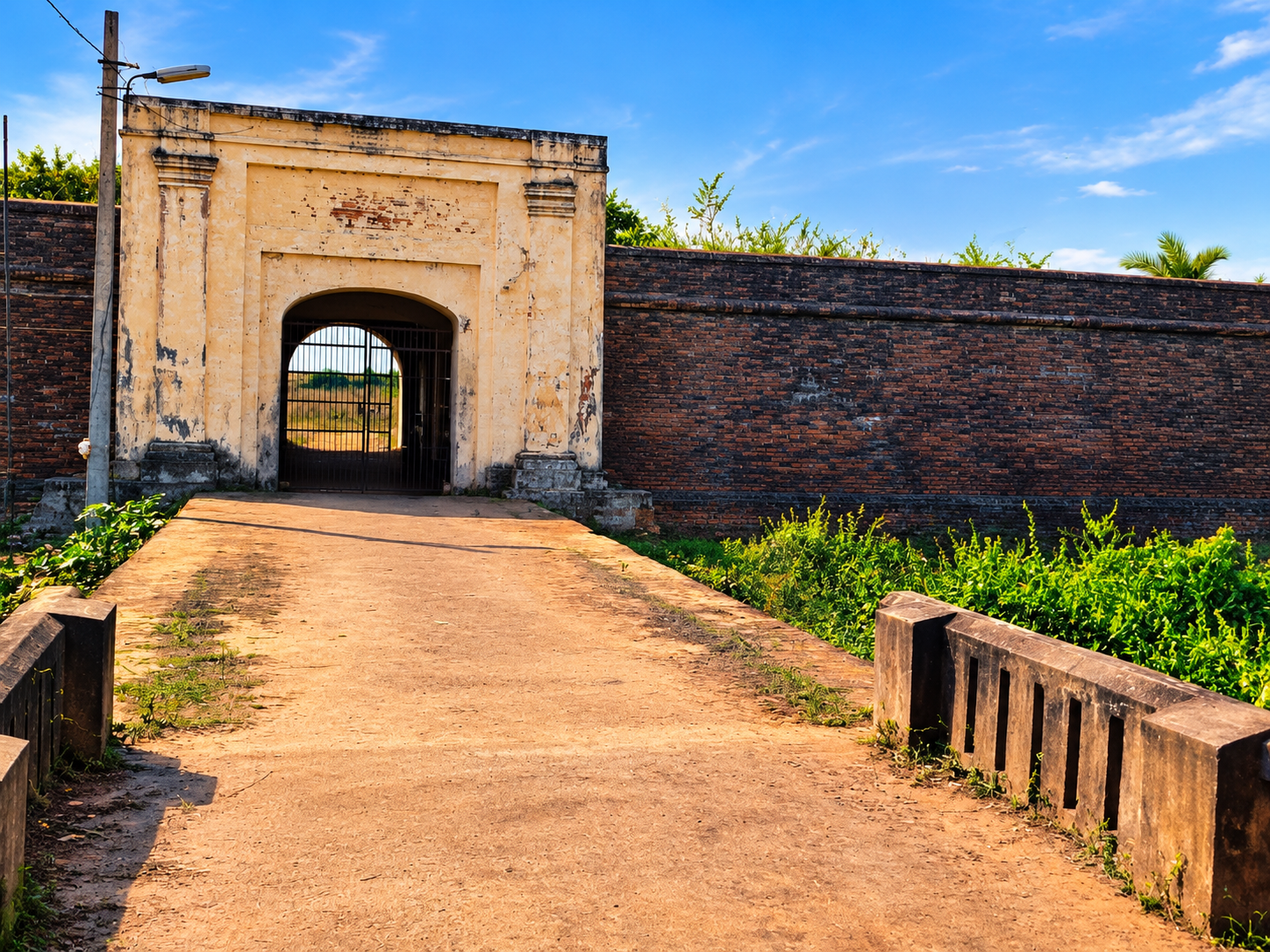
- The fort ramparts: The fort was roughly square, with earthen walls, gateways on each side and a moat. Parts of the raised rampart can still be traced across the fields.
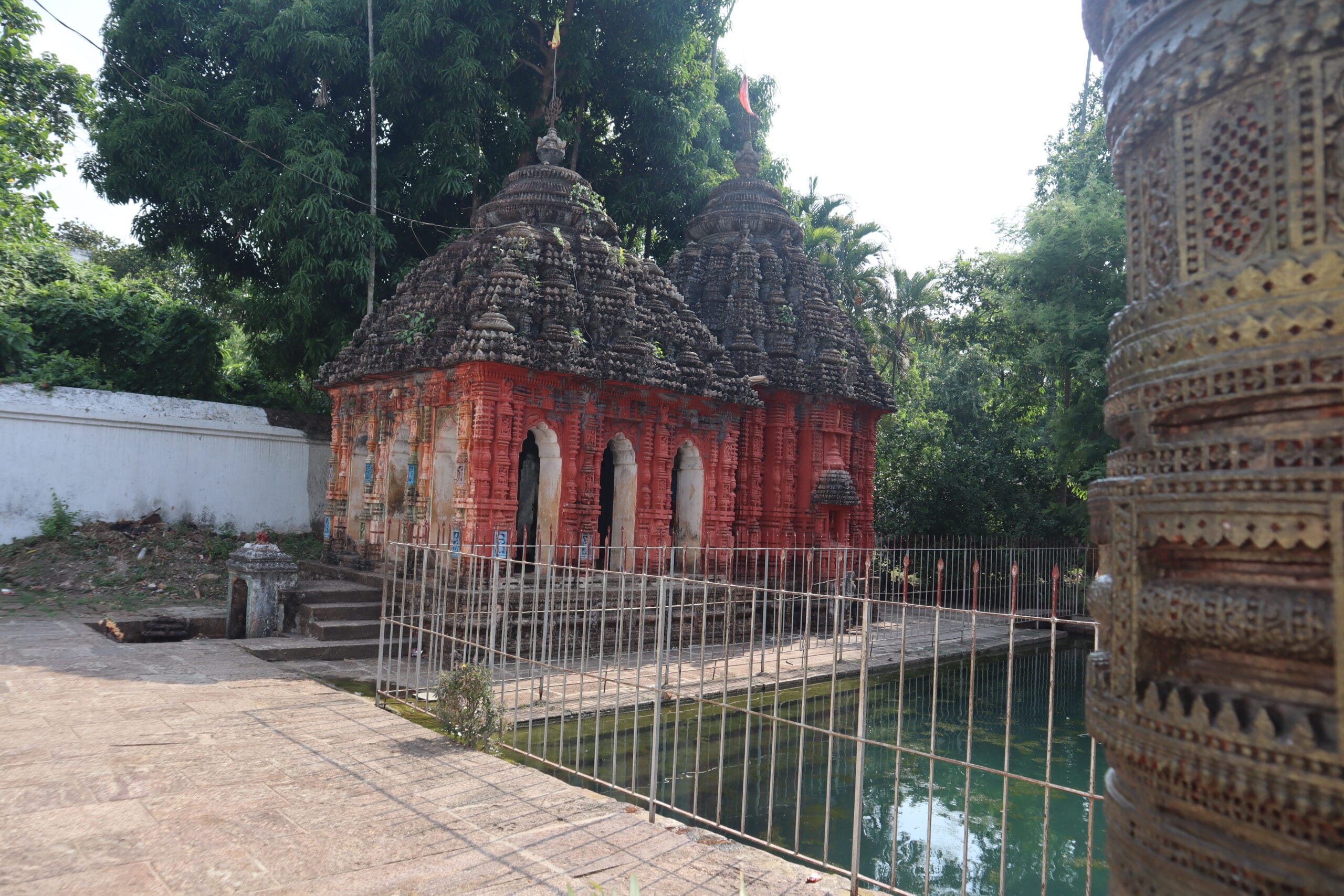
- Tanks and small shrines: There are old tanks inside the fort area, and the Kaleswar and Rameswar Shiva temples lie near the eastern gate of the north wall.
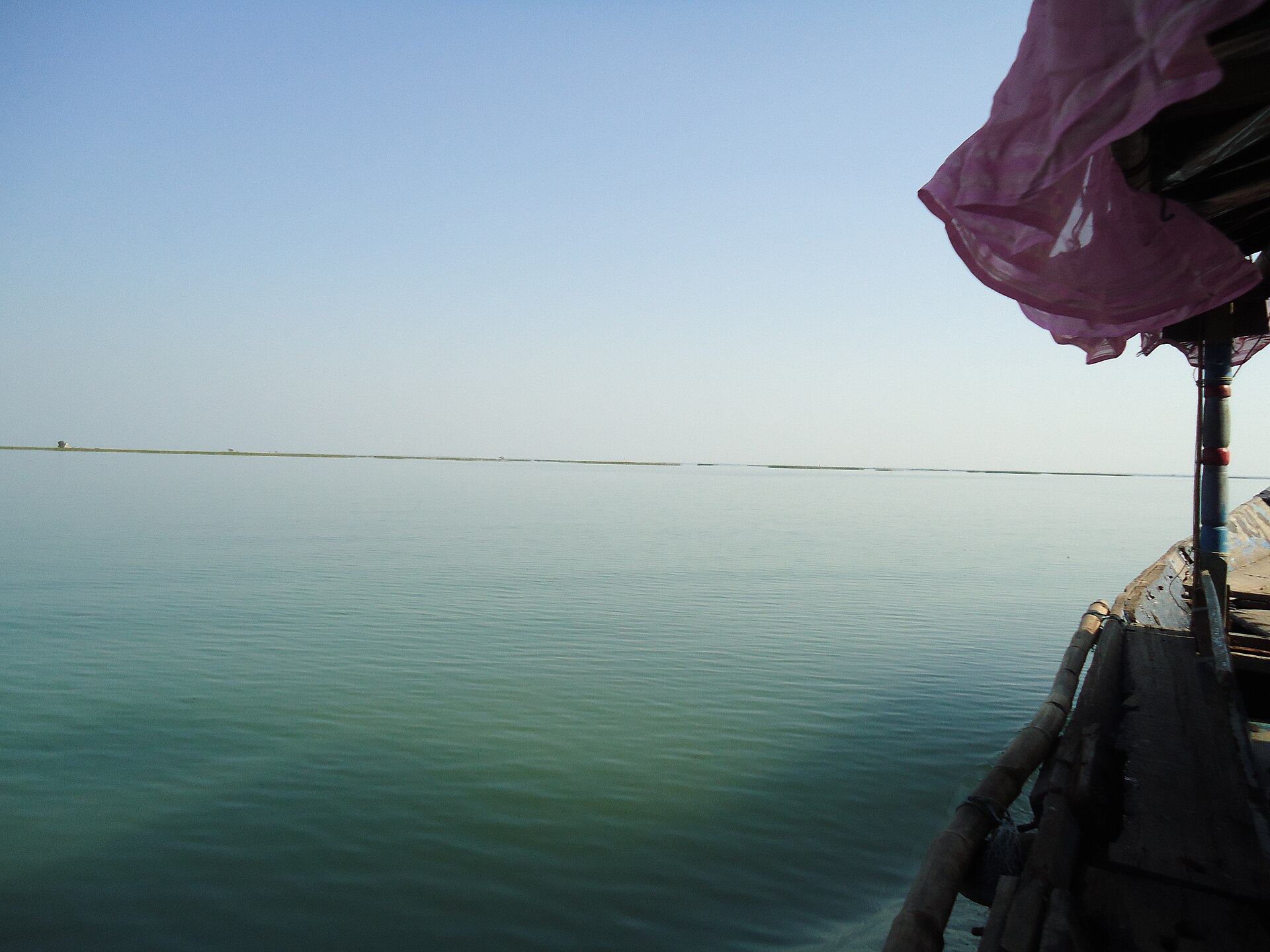
- Rushikulya countryside: Paddy fields, palm trees and village life around the river make for a pleasant, slow-paced visit.
How to Reach the Jaugada Rock Edict
The site is about 10 km from Purushottampur and roughly 35-40 km from Berhampur (Brahmapur), according to Odisha Tourism and other published sources.
- By air: The nearest airport is Biju Patnaik International Airport, Bhubaneswar, about 170 km away.
- By rail: Berhampur (BAM) is the nearest major railway station on the Howrah-Chennai line.
- By road: Drive from Berhampur towards Purushottampur and continue to Jaugada village. Public transport to the site itself is infrequent, so book a taxi or use your own vehicle.
Many travellers combine Jaugada with the hilltop Tara Tarini Temple, which is also near Purushottampur, making it an easy half-day trip from Berhampur.
Best Time to Visit
October to March is the most comfortable period, with cool mornings and clear skies. Summer days in Ganjam are hot and humid, so if you visit between April and June, go early in the morning. During the monsoon the countryside is green, but village roads can be muddy.
Timings and Entry
We could not verify official visiting hours or an entry fee for the Jaugada Rock Edict. The site is an ASI-protected monument that is usually accessible in daylight hours; the inscription shelter may be locked at times, so ask the local caretaker or villagers on arrival. Carry cash in case any small fee applies.
Travel Tips
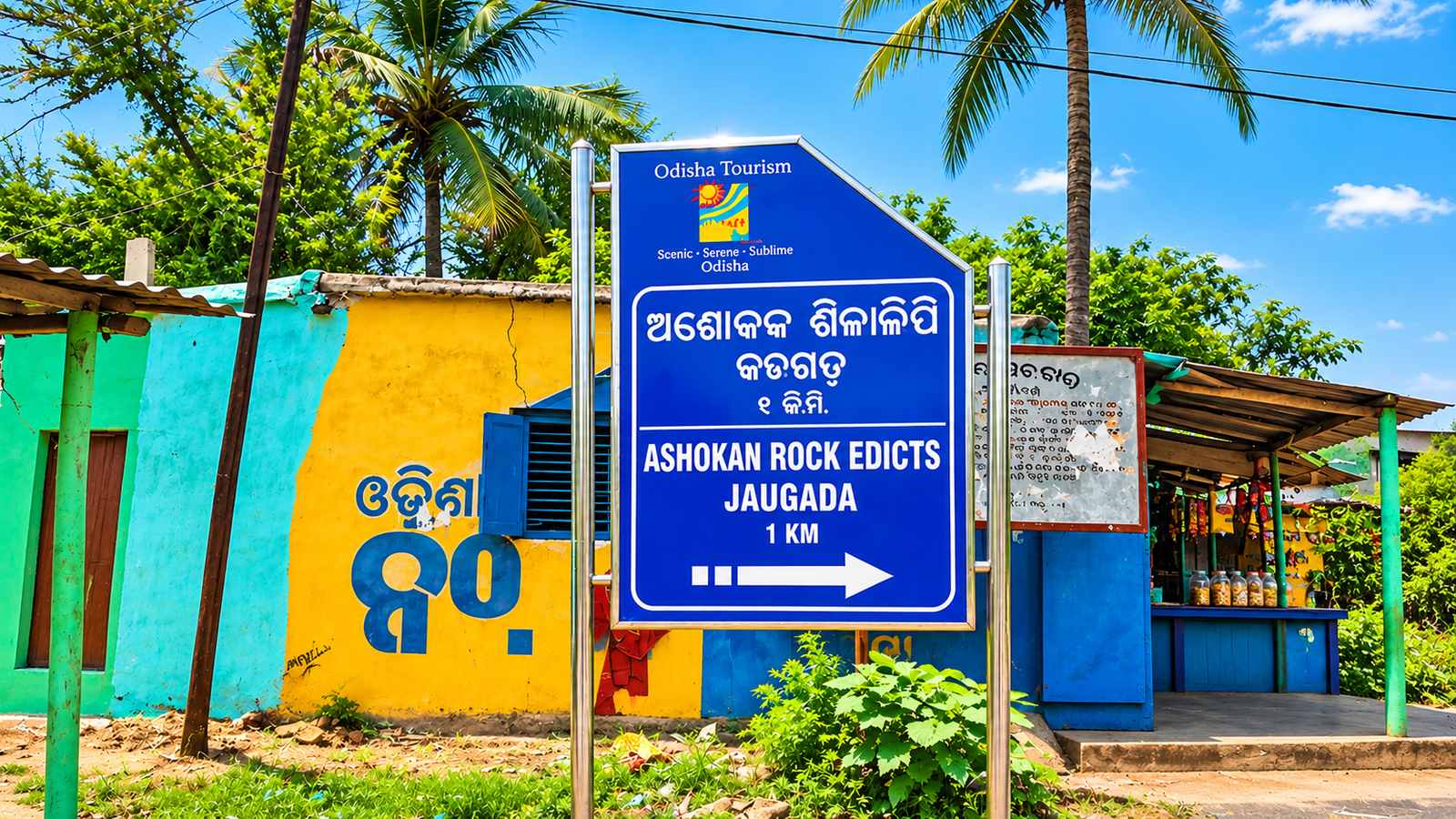
- Signboards are limited, so save the location on your phone map before leaving Berhampur.
- There are no restaurants at the site; carry water and snacks.
- Do not touch, chalk or trace the inscriptions. The rock surface is fragile and already weathered.
- Read a short translation of the Separate Edicts before you go. It makes the visit far more meaningful.
- Combine the trip with Purushottampur town for lunch and fuel.
Nearby Places
- Tara Tarini Temple: One of the most revered Shakti peethas in Odisha, set on a hill above the Rushikulya.
- Berhampur: The “Silk City”, known for Berhampuri patta sarees and street food.
- Dhauli: The sister Ashokan site near Bhubaneswar, with its rock edict and the Dhauli Shanti Stupa.
Explore more heritage and nature spots in our Ganjam district guide, or check the official Odisha Tourism page on Jaugada.
Plan more: Nirmal Jhara Khallikote · Maa Balakumari Temple Ganjam · Raja Parba
Frequently Asked Questions About the Jaugada Rock Edict
Where is the Jaugada Rock Edict located?
It is in Ganjam district, Odisha, about 10 km from Purushottampur and roughly 35-40 km from Berhampur, on the northern bank of the Rushikulya River.
Which edicts are found at Jaugada?
The Jaugada Rock Edict contains Major Rock Edicts I-X and XIV along with the two Separate Kalinga Edicts. Edicts XI-XIII are not inscribed here.
How is Jaugada different from Dhauli?
Both carry the same set of Kalinga inscriptions, but Dhauli governed northern Kalinga while Jaugada (ancient Samapa) was the seat for the south. Jaugada is also more rural and much less crowded.
Is the Jaugada Rock Edict worth visiting?
Yes, if you enjoy history. Seeing the Jaugada Rock Edict in its quiet village setting, together with the old fort ramparts, gives a rare, unhurried connection to Ashoka’s Kalinga.