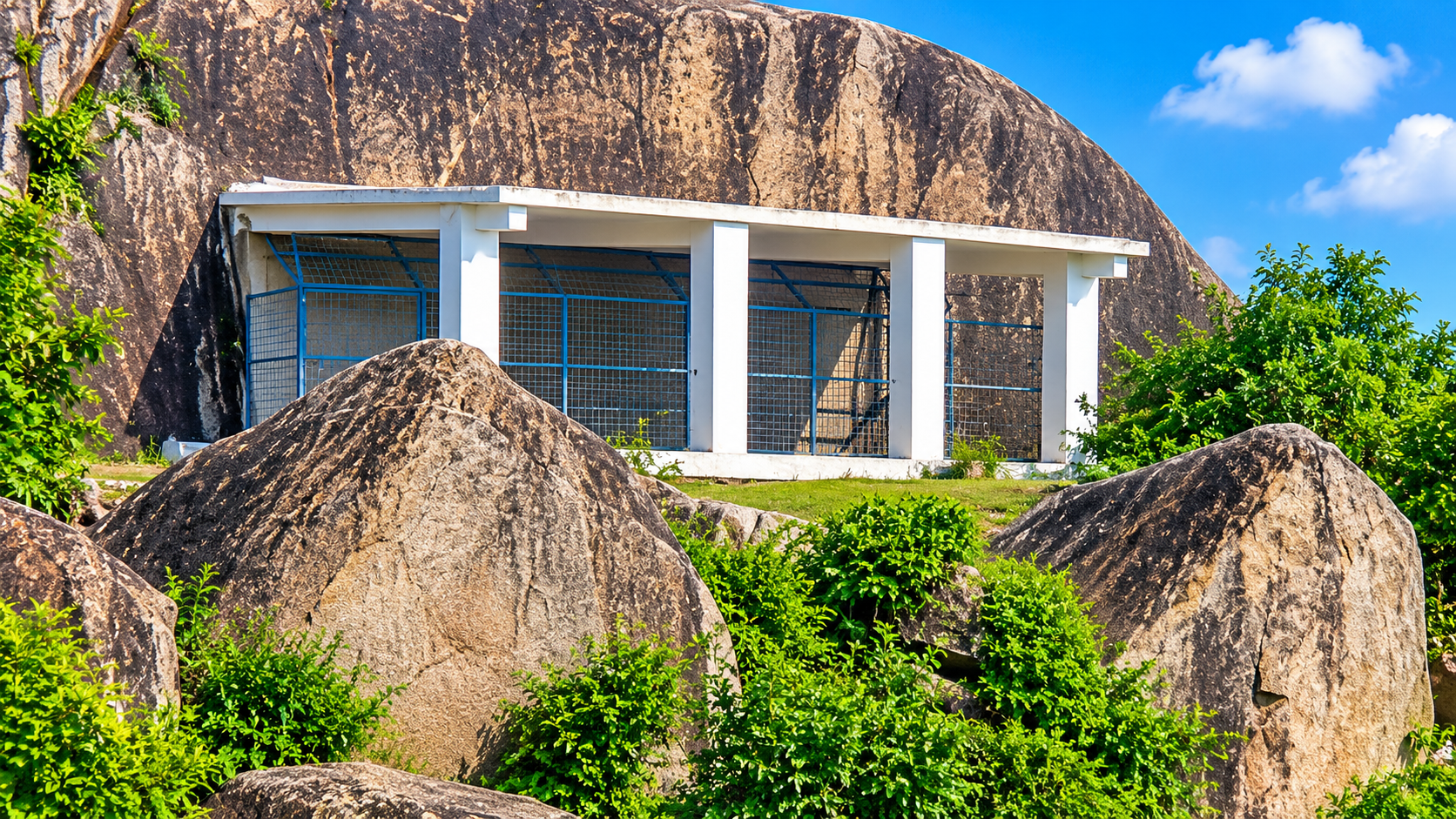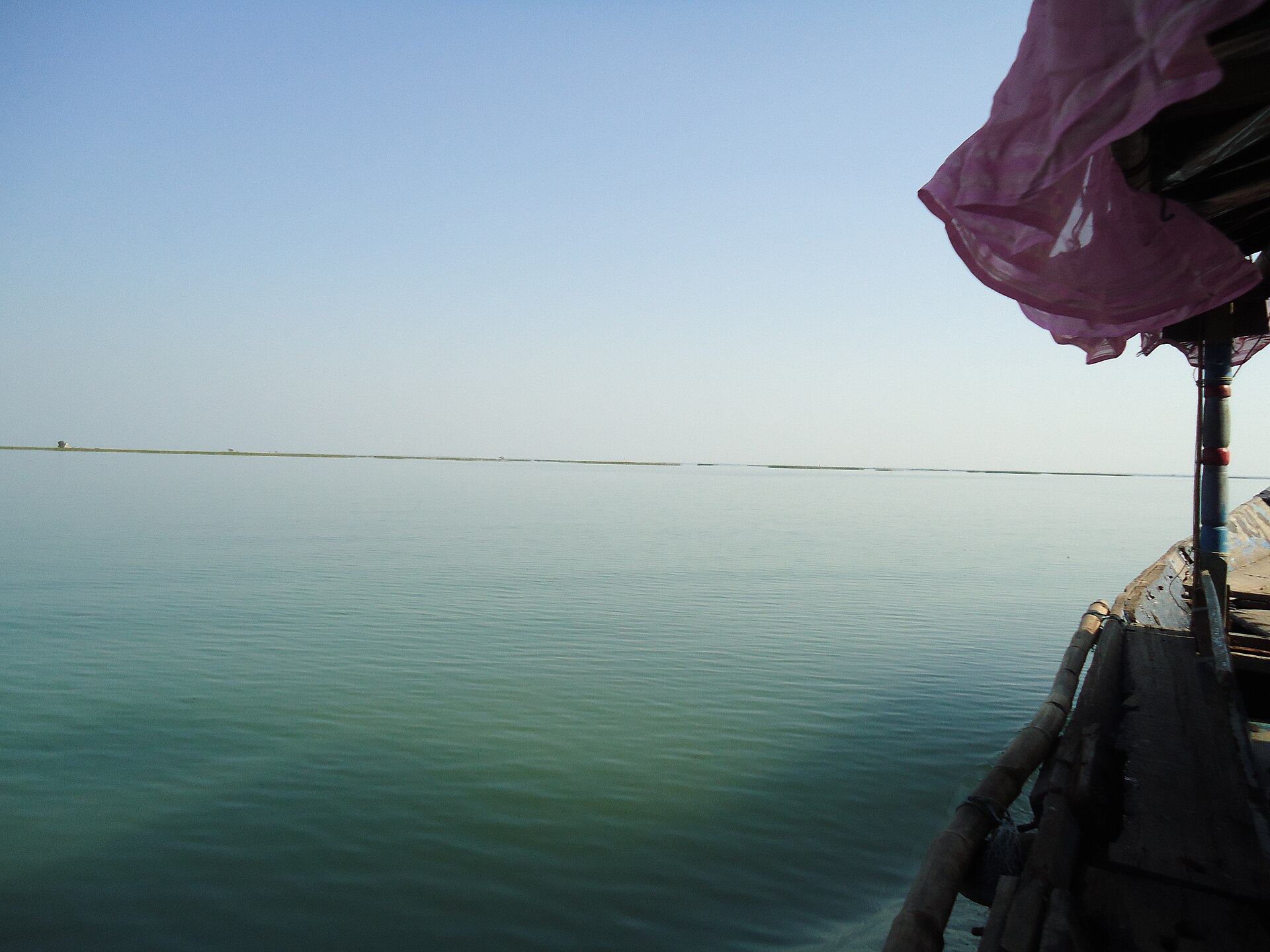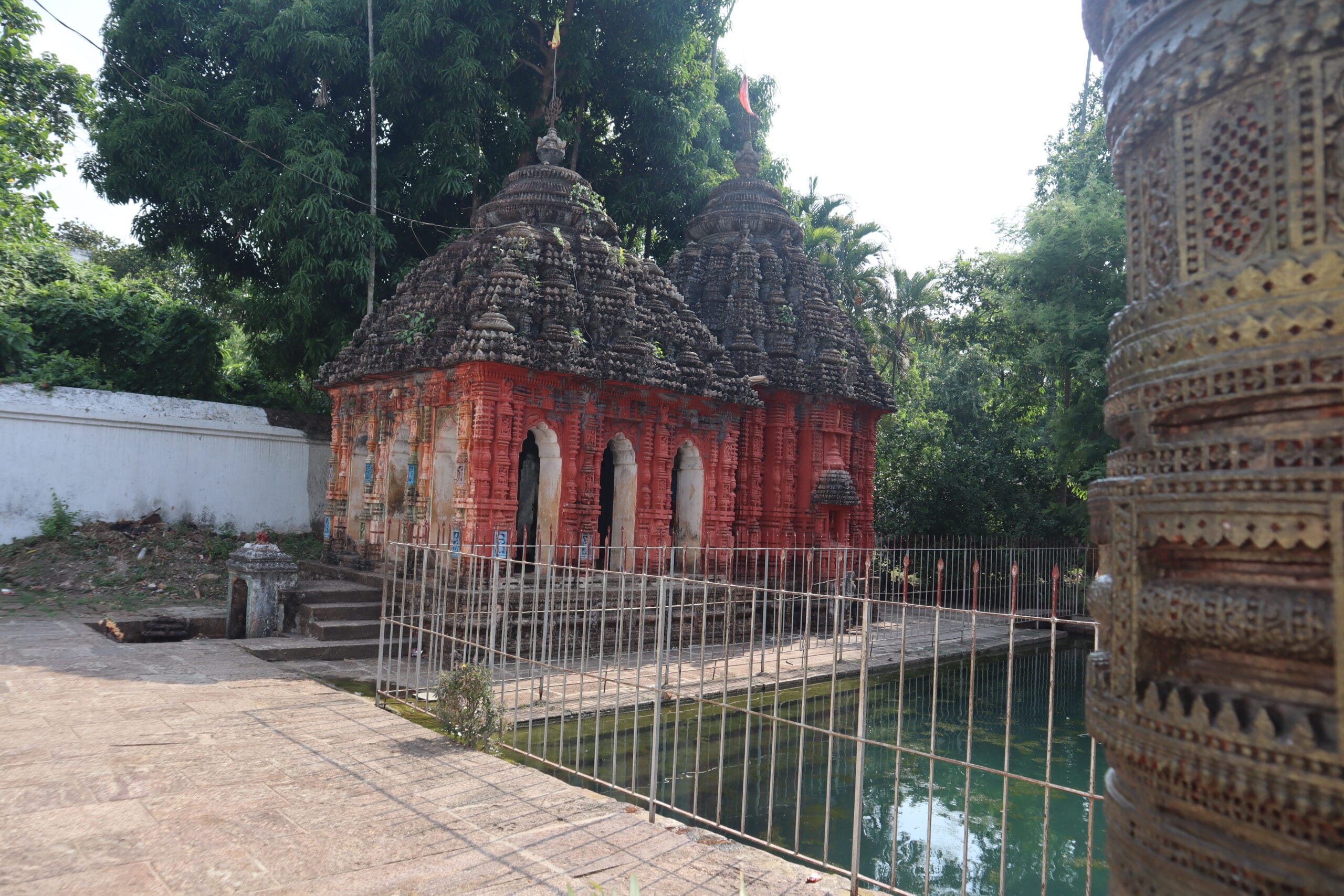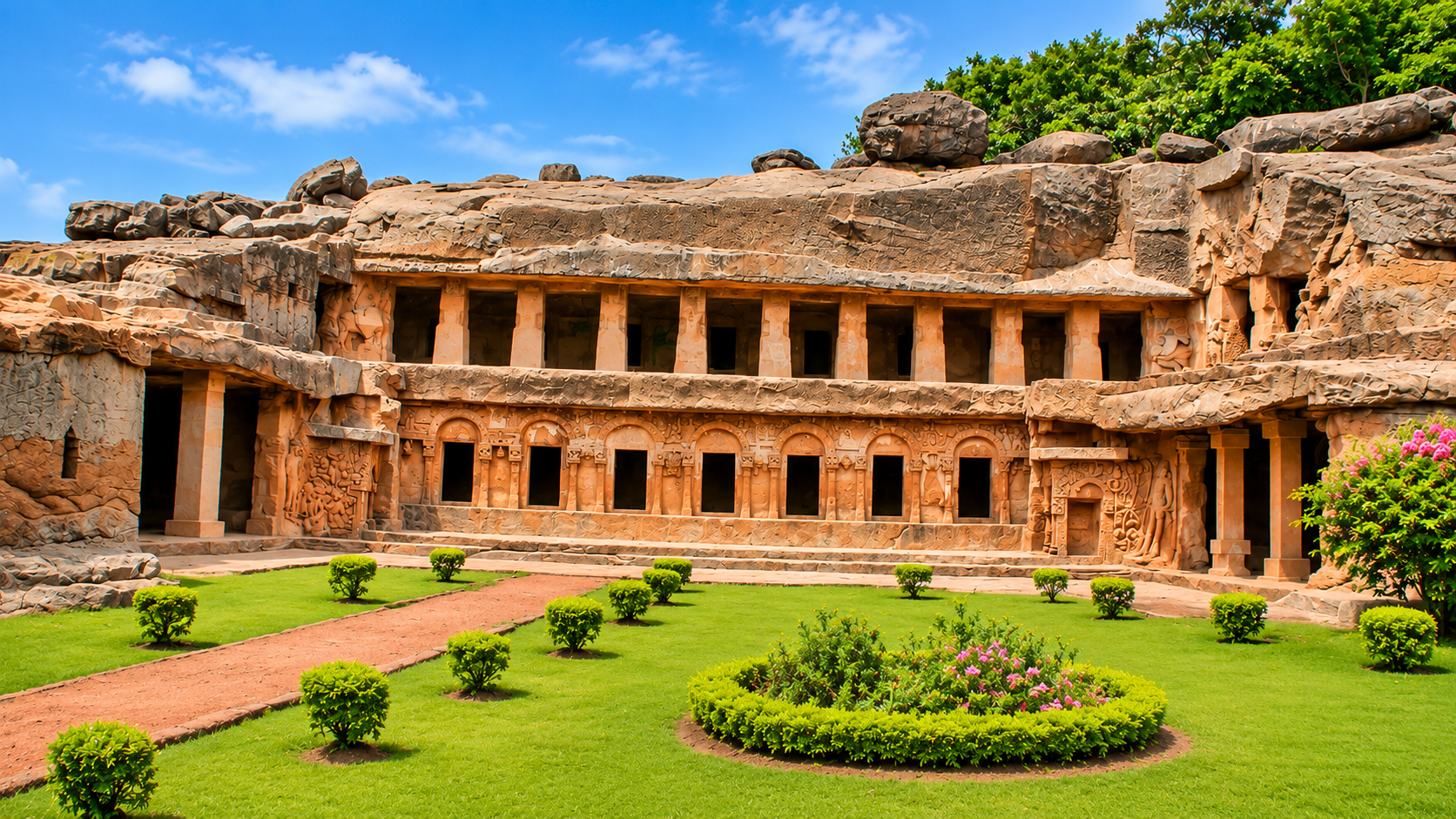
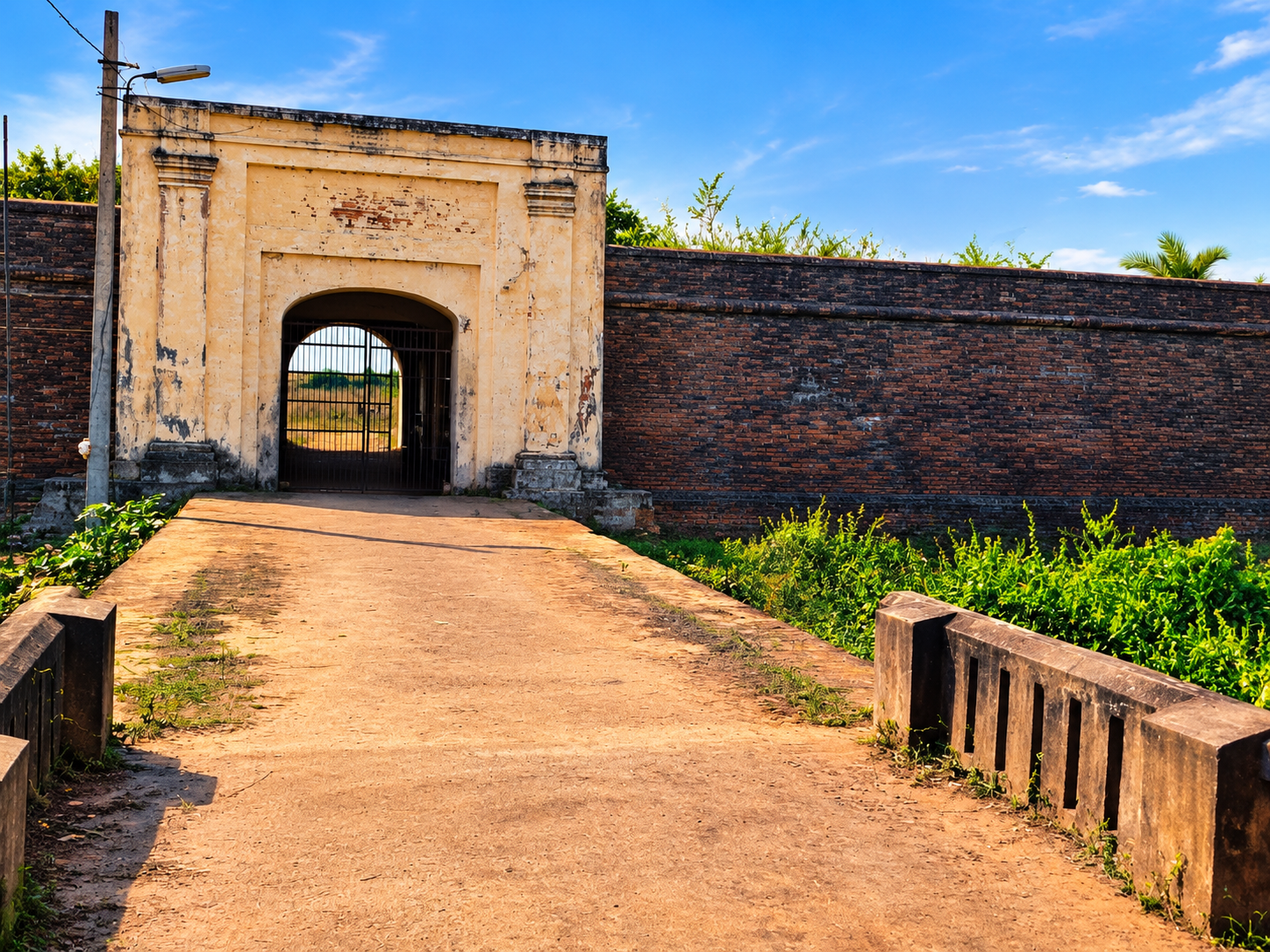
Potagarh fort, also called Potagada or the “buried fort”, lies near Ganjam town where the Rushikulya river meets the Bay of Bengal in Ganjam district. Sunk low into the earth and ringed by a moat, it once served as the seat of French and then British administration in this corner of Odisha – and it remains one of the state’s least-known historic sites.
The fort is about 2 km from Ganjam town and roughly 8 km from Chhatrapur, the district headquarters. Because most of it sits below the level of the surrounding land, you can be almost at the gate before you realise it is there.
Potagarh Fort at a Glance
| Location | Near Ganjam town, Ganjam district |
|---|---|
| Known for | Ruined coastal fort near the Rushikulya river mouth |
| From Ganjam town | About 2 km, off NH-16 |
| From Bhubaneswar | About 157 km |
| Nearby | Rushikulya olive ridley nesting (Feb–Mar, varies) |
| Best time | October to March |
History of Potagarh Fort
Ganjam’s coast was strategically important for centuries, and historians believe an earlier fort on this site was of Muslim origin. The oldest residential building inside is thought to date from that period.
- 1753: the French gained control of the Northern Circars, and Monsieur de Bussy administered Ganjam from Potagarh.
- 1765: French rule ended and the area passed to the British East India Company.
- 1768: Edward Costford, the first British resident officer of Ganjam, took direct charge, and the fort as it stands today is said to have been built under his supervision.
- 1815: the Collectorate, first housed here, moved to Berhampur, and later (1835) to Chhatrapur.
Because it was shaped by Muslim, French and British rulers in turn, Potagarh fort is often described as an architectural record of three foreign powers on the Odisha coast.
Architecture of Potagarh Fort
The fort is a cluster of structures laid out on a pentagonal, star-like plan with five bastions. A wide, deep moat surrounds the compound wall, and a tall earthen rampart helps hide the buildings from view.
- Buried design: much of the complex is set below ground level, which is why it is not visible from a distance.
- Inner buildings: office blocks, magazines, artillery and armoury stores, custom houses and residences in three distinct architectural styles.
- River passages: two passages open towards the Rushikulya on the eastern side. Local tradition says one may have been an escape route to the sea.
- Gateways: two decorative doors, one at the front and one at the back facing the river.
What to See and Do
A visit to Potagarh fort is an unhurried walk through layers of colonial history. It is not a polished monument, which is part of its charm for history lovers.
- Walk along the moat and rampart to understand the fort’s star-shaped layout.
- Look for the magazine houses and the passages leading towards the river.
- Photograph the weathered brick and lime walls, softened by centuries of salty sea air.
- Enjoy the view of the Rushikulya estuary, one of Odisha’s most important river mouths.
Take your time near the inner buildings. Their mix of styles hints at how the complex grew over the years, from an older core to colonial offices and stores. Historians believe the site may still hold artefacts that could shed more light on medieval and early colonial Odisha.
The fort is protected as a monument by the state archaeology department, which has carried out conservation work such as clearing bushes, repairing fallen sections and desilting the moat.
How to Reach Potagarh Fort
- By air: Biju Patnaik International Airport, Bhubaneswar, is about 157 km away by road.
- By rail: Ganjam railway station, on the Howrah–Chennai main line, is the nearest station. Chhatrapur and Berhampur stations are also convenient for travellers coming from farther away.
- By road: the fort is about 2 km from Ganjam town, reached by a short approach road from National Highway 16. Autos and taxis are available from Ganjam, Chhatrapur and Berhampur.
Best Time to Visit
October to March is the most comfortable time to explore the fort, as the coastal heat and humidity ease off. Mornings and late afternoons offer the best light for photographs.
If you visit in February or March, ask locally about olive ridley turtles. The Rushikulya river mouth nearby is one of Odisha’s major mass-nesting sites, and in good years lakhs of turtles come ashore over a few nights. Nesting dates vary each year and the beaches are guarded, so always follow forest department rules.
Timings and Entry
There is no officially published timing or ticket for the fort. Visit during daylight hours, generally from morning to evening, and check locally before going, since conservation work or local arrangements may affect access.
Travel Tips for Potagarh Fort
- Facilities on site are minimal – carry water, snacks and a hat.
- Wear sturdy shoes; parts of the ground are uneven and overgrown in places.
- Do not climb on fragile walls or enter unsafe underground passages.
- A local guide or knowledgeable villager can help you find the hidden corners of the complex.
- Early mornings are cooler and quieter, and the light is softer for photographs of the moat and walls.
- Combine the fort with nearby sights, as Ganjam town itself has limited accommodation; Berhampur and Gopalpur have more options.
Nearby Places
Potagarh fort fits easily into a wider trip around Ganjam district.
- Rushikulya river mouth: the olive ridley nesting coast near Ganjam town.
- Tara Tarini Temple: the famous hilltop Shakti peetha above the Rushikulya – read our Tara Tarini Temple guide.
- Aryapalli Beach: a quiet beach near Chhatrapur.
- Gopalpur-on-Sea: Ganjam’s best-known beach town, south of Berhampur.
- Taptapani: the hot sulphur springs in the hills west of Berhampur – see our Taptapani guide.
For more official travel information, visit Odisha Tourism.
Plan more: Nirmal Jhara Khallikote · Maa Balakumari Temple Ganjam · Raja Parba
Frequently Asked Questions
Where is Potagarh fort located?
Potagarh fort is near Ganjam town in Ganjam district, Odisha, at the confluence of the Rushikulya river and the Bay of Bengal. It is about 2 km from Ganjam town and around 8 km from Chhatrapur.
Who built Potagarh fort?
An earlier fort is believed to have been built by Muslim rulers. The French administered Ganjam from here from 1753, and the present structure is said to have been built in 1768 under Edward Costford, the first British resident of Ganjam.
Why is it called the buried fort?
Most of the complex lies below the surrounding ground level and is hidden behind earthen ramparts and a moat, so it cannot be seen from a distance.
Is there an entry fee for Potagarh fort?
No entry fee has been officially published. It is best to visit during daylight hours and confirm access locally.