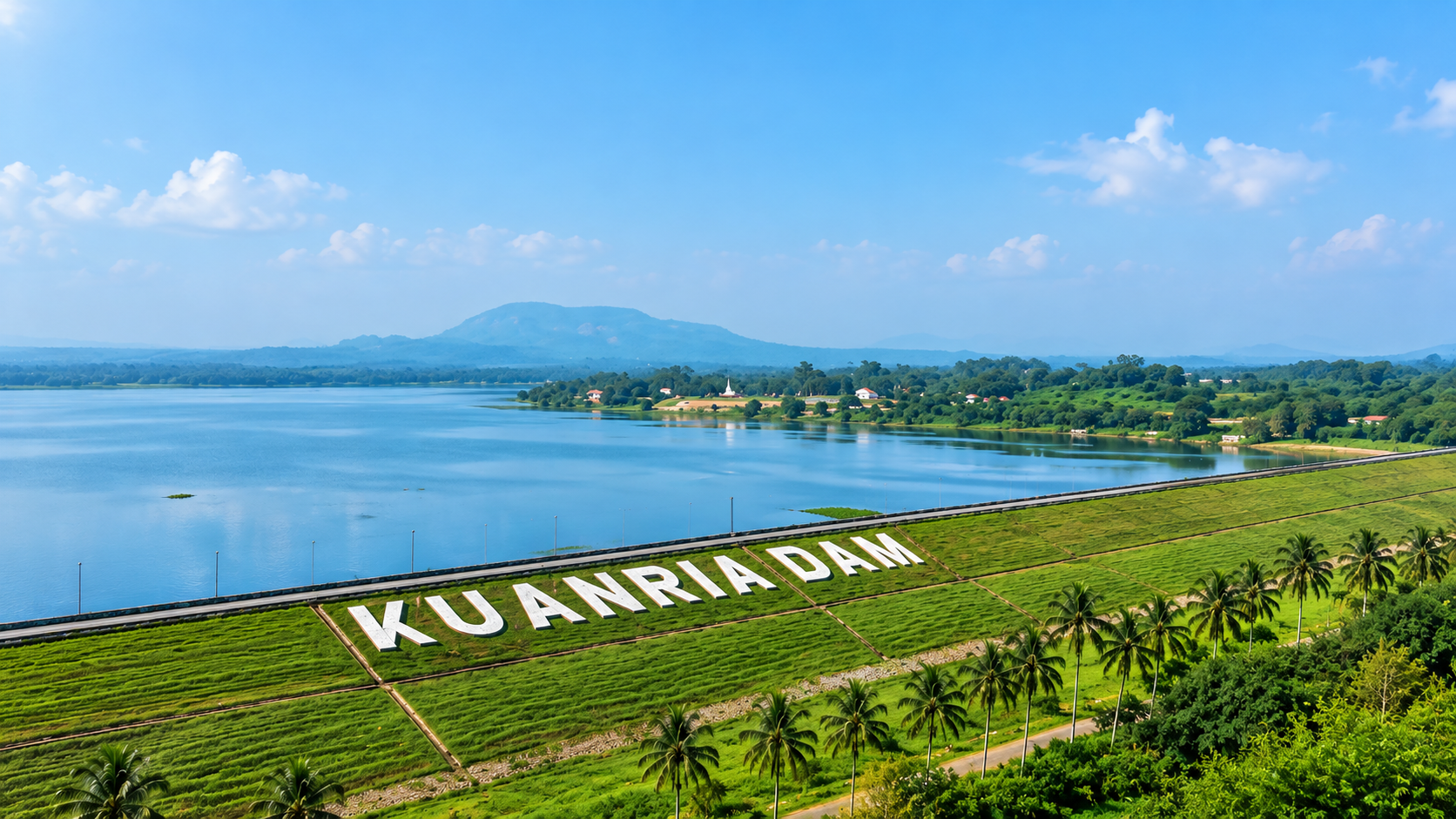
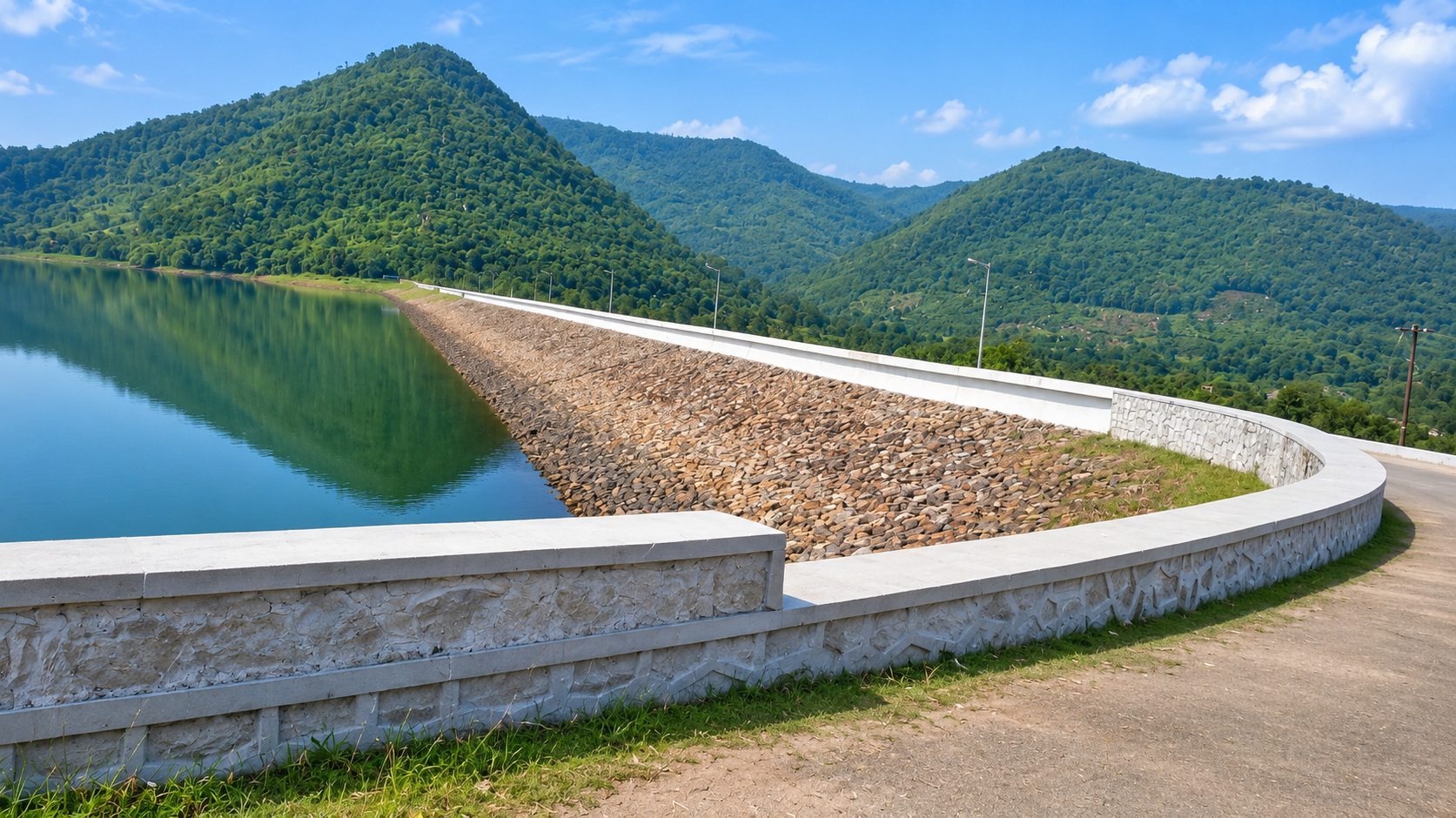
The Harabhangi Dam near Adava (also spelt Adaba) is the only large dam in Gajapati district and one of the most scenic reservoirs in the hills of south Odisha. Built across the Harabhangi river for irrigation, it holds a wide sheet of water ringed by forested hills, making it a calm escape for picnics, photography and sunset views.
Few travellers outside the region know about it, which is exactly its charm. Weekdays here are quiet, and even winter weekends feel relaxed compared to the busier dams near big cities.
About Harabhangi Dam
The Odisha Department of Water Resources lists Harabhangi as the single large dam in Gajapati district. Its main purpose is irrigation: the reservoir stores monsoon water and releases it through canals to farmland downstream, supporting agriculture in this largely rural, tribal area.
The dam lies about 6 km from Adava in the northern part of Gajapati, in the Mohana area. The surrounding landscape is a mix of forested Eastern Ghats hills, small villages and terraced fields, which gives the reservoir its striking backdrop.
We could not verify the dam’s construction year, height or exact irrigated area from official public sources, so check with the local irrigation office if you need technical details.
What to See at Harabhangi Dam
- The reservoir: A broad stretch of blue-green water that changes mood with the light, from misty mornings to golden evenings.
- Hill views: Forested hills wrap around the water on several sides, creating a framed, almost lake-like view.
- Dam embankment: Where access is allowed, the embankment and viewpoints give the widest panorama of the reservoir.
- Sunrise and sunset: Both are popular here, with reflections on the water and hills turning silhouette-dark.
- Village life: Fishermen, cattle herders and farmers around the reservoir add life to your photographs.
Things to Do
- Picnic: Harabhangi Dam is a favourite winter picnic spot for families from Adava, Mohana and nearby towns.
- Photography: Landscape and nature photographers will enjoy the reflections, clouds and hills.
- Nature walks: Short walks along the forest edges are pleasant in the cooler months.
- Birdwatching: Open water and forest edges attract a variety of birds, especially in winter.
A relaxed half day is enough for most visitors. Arrive mid-morning, walk to a viewpoint, enjoy a packed lunch in the shade and stay on for the late-afternoon light, which is the most photogenic time at the reservoir. If you are on a wider Gajapati road trip, you can pair the visit with the monastery at Chandragiri on the same day.
Swimming and boating on your own are not advisable. Irrigation reservoirs can have sudden depth changes and are not supervised.
How to Reach Harabhangi Dam
Adava is in the northern hills of Gajapati district, quite far from the district headquarters, so most visitors reach it via Mohana or Berhampur.
- By air: The nearest airport is Biju Patnaik International Airport, Bhubaneswar, roughly 270 km away according to travel listings.
- By rail: Berhampur (Brahmapur) is the most convenient railway station, about 100 km away.
- By road: Mohana, about 28 km from the dam, is the nearest bus stop. From there, hire a taxi or auto to Adava and the dam. Paralakhemundi is well over 100 km away by road.
Roads in this hilly area are winding and can be slow. Allow extra time, especially during the monsoon, and fill fuel in Berhampur or Mohana before heading into the hills.
Where to stay: accommodation near the dam is very limited. Travel listings mention guesthouse facilities, but availability is unclear, so most travellers either stay in Berhampur and make a long day trip or look for simple lodges in Mohana. Book ahead during the winter holiday season.
Best Time to Visit Harabhangi Dam
The months after the monsoon, roughly September to February, are the most rewarding. The reservoir is full, the hills are green and the weather is cool. Winter, from November to January, is the peak picnic season.
During the heavy monsoon months the scenery is dramatic, but rain can make hill roads difficult. Summer brings hot afternoons and a lower water level, so plan early morning or evening visits.
Timings and Entry
We could not verify official visiting hours or any entry fee. Most visitors come during daylight hours, and some areas of the dam structure may be restricted for safety. Follow the instructions of irrigation department staff and signboards on site.
Travel Tips
- Facilities are limited. Carry water, food and anything else you need from Mohana or Adava.
- Do not climb on sluice gates, parapets or restricted parts of the dam.
- Keep the area clean. Carry back all plastic and picnic waste.
- Mobile signal may be patchy; download offline maps before you leave town.
- Leave the reservoir before dark, as roads through the forest are unlit.
- Respect local tribal communities and ask before photographing people.
- Wear comfortable shoes; paths near the water can be muddy or uneven after rain.
- Carry a light jacket in winter, as early mornings in the hills can be chilly.
Nearby Places
- Chandragiri (Jirang): The Padmasambhava Mahavihara monastery, inaugurated by the Dalai Lama in 2010, lies in Mohana block. Read our Jirang Monastery guide.
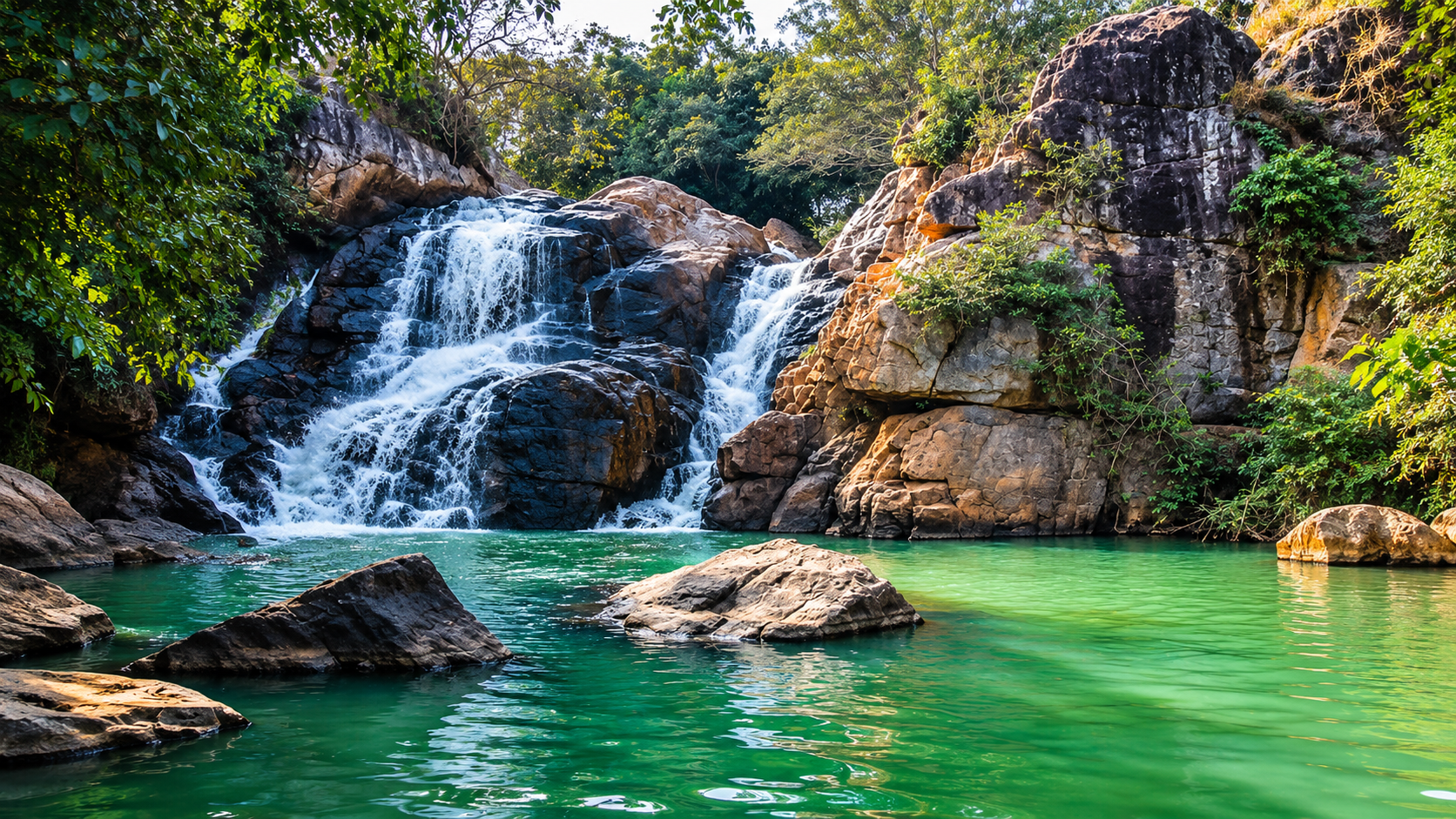
- Khasada Waterfall: A forest waterfall near Chandragiri.
- Mahendragiri: The sacred peak of the Eastern Ghats, covered in our Mahendragiri Hill post.
- Paralakhemundi: The district headquarters, with the Gajapati Palace and Brundaban Palace.
See more destinations in our Gajapati district guide and on the official Odisha Tourism website.
Frequently Asked Questions About Harabhangi Dam
Where is Harabhangi Dam located?
It is near Adava in the northern part of Gajapati district, Odisha, about 6 km from Adava and about 28 km from Mohana.
What is the purpose of Harabhangi Dam?
It is an irrigation dam. The reservoir stores water that is supplied through canals to farmland in the surrounding area.
What is the best time to visit Harabhangi Dam?
September to February, when the reservoir is full and the weather is cool. Winter weekends are the busiest picnic days.
Can I combine Harabhangi Dam with other places?
Yes. The Jirang monastery at Chandragiri and Khasada Waterfall make good additions, and Berhampur is the usual base for a wider south Odisha trip.