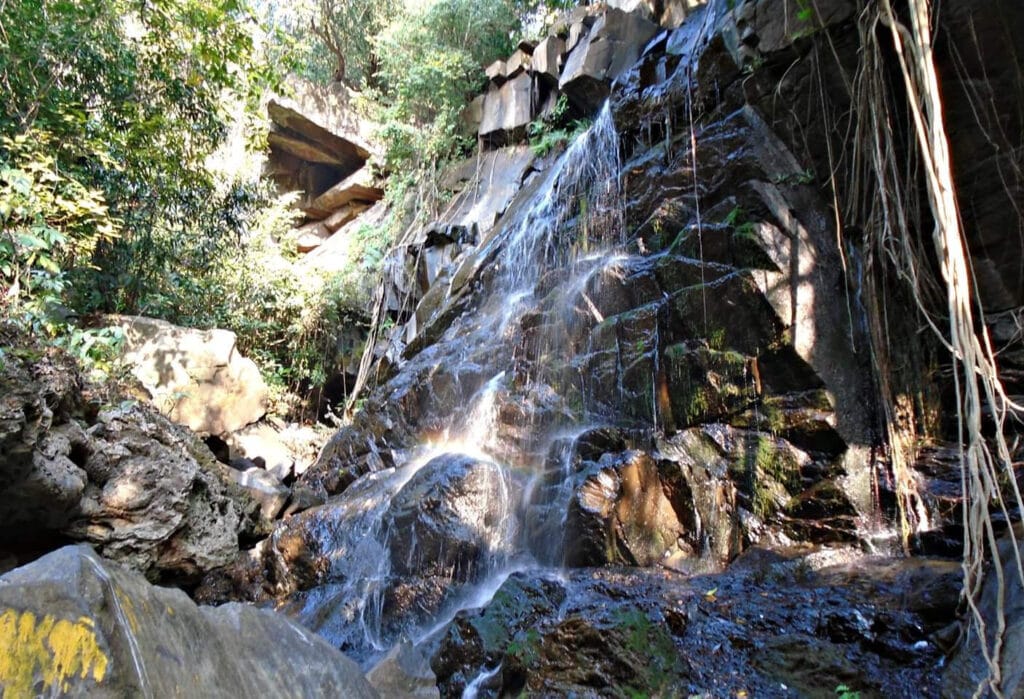
The Gandahati Waterfall is the best-known waterfall of Gajapati district, a perennial cascade hidden in thick sal forest about 27-30 km from Paralakhemundi. Fed by streams from the Mahendragiri hills, it flows through the year, which makes it a favourite picnic spot for families from south Odisha and neighbouring Andhra Pradesh.
It is not a giant waterfall, but the forest setting, the cool pool and the small shrine nearby give it a peaceful charm that is hard to find in busier spots.
About Gandahati Waterfall
According to the Gajapati district administration, the waterfall lies in Rayagada block and drops about 20 metres. The area was once one of the muthas (estates) of the old Paralakhemundi Zamindari.
The name is often explained as a reference to elephants (“hati”), suggesting large herds once roamed here. Wild elephants are still recorded in the wider forest, along with leopard, sambar, peafowl and eagles, though casual visitors rarely see them.
The stream feeding the falls is part of the Mahendratanaya river system, which rises in the Mahendragiri hills and flows past Paralakhemundi.
What to See and Do at Gandahati Waterfall
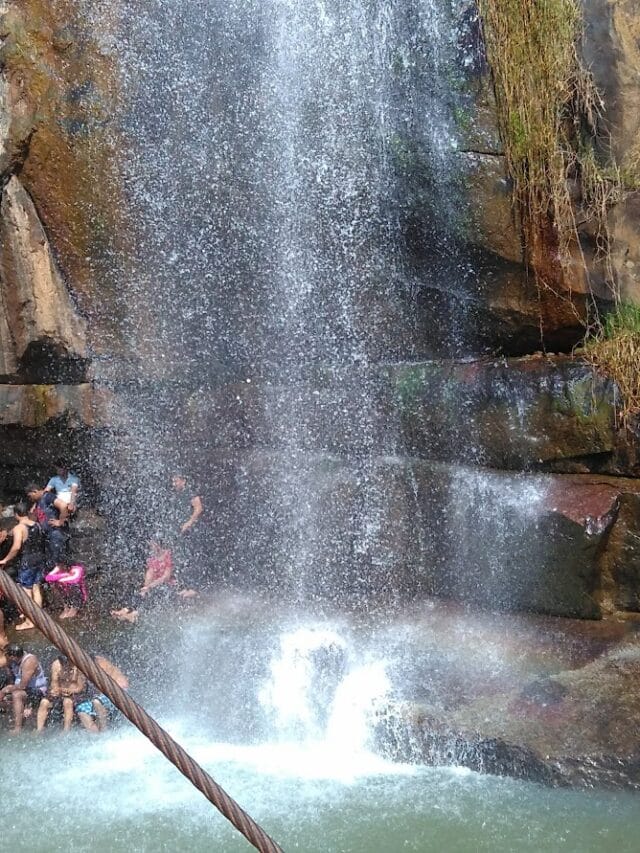
- The main cascade: Water tumbles over a rocky face into a pool surrounded by boulders. After the monsoon the flow is at its fullest.
- Forest walk: The approach passes through sal, mahua, kendu, amla, mango and jamun trees, with plenty of birdsong.
- Temple visit: A small shrine near the falls is considered sacred by locals. Wikipedia identifies it as a Santoshi Maa temple.
- Picnic: Flat rocks and shaded clearings near the falls are popular for family lunches, especially on winter weekends.
- Photography: The contrast of white water, dark rock and green forest is lovely in soft morning light.
Swimming is tempting, but the rocks are slippery and the depth of the pool changes with the season. Stay in shallow water and avoid the base of the fall itself.
How to Reach Gandahati Waterfall
Paralakhemundi, the district headquarters of Gajapati, is the base for any visit.
- By air: Visakhapatnam airport is about 170 km from Paralakhemundi and is often the most convenient. Biju Patnaik International Airport, Bhubaneswar, is roughly 280 km away by road.
- By rail: Paralakhemundi railway station is the nearest, with limited trains. Palasa in Andhra Pradesh is another option on the main Howrah-Chennai line.
- By road: Gandahati Waterfall is about 27-30 km from Paralakhemundi. There is no regular direct bus, so hire a taxi or drive your own vehicle.
Local news reports have highlighted poor road and bus connectivity, and the last stretch may involve walking on a narrow forest track. Check current road conditions in Paralakhemundi before setting out, and consider taking a local guide.
Best Time to Visit Gandahati Waterfall
Because the falls are perennial, you can visit at any time of year, but each season feels different.
- October to February: The most popular period. The flow is still good, the weather is pleasant and the forest is green.
- July to September (monsoon): The waterfall is at its most powerful, but tracks are muddy and slippery. Visit only with local advice.
- March to June: Hot days and a thinner flow, though the shaded pool is still refreshing.
Timings and Entry
We could not verify any official timings or entry fee. Plan to visit only in daylight, ideally reaching by late morning and leaving well before dusk, as the area is forested and has elephants. Any parking or eco-development charges, if collected, are usually small.
Sample Day Trip from Paralakhemundi
A simple plan works best here, since facilities around the falls are limited.
- Morning: Leave Paralakhemundi after breakfast with packed lunch and water. The drive through villages and forest is part of the experience.
- Late morning: Walk to the falls, visit the shrine and spend time at the pool while the light is soft and crowds are thin.
- Afternoon: Picnic lunch in a shaded clearing, then a short forest walk or birdwatching session nearby. The Gandahati area also has an ecological park mentioned in local reports.
- Evening: Head back to town before dusk and see the Gajapati Palace area in Paralakhemundi if time allows.
If you are coming from Berhampur or Andhra Pradesh, it is more relaxed to stay a night in Paralakhemundi and start fresh the next morning. Hotels in town are simple but comfortable, and you can try local south Odisha food with a strong Telugu influence.
Travel Tips
- Wear shoes with a good grip. Wet rocks around the pool are very slippery.
- Carry drinking water, food and a basic first-aid kit. Shops near the falls are few or absent.
- Mobile network can be weak in the forest. Share your plan with someone in town.
- Do not leave plastic or food waste behind. Carry all rubbish back with you.
- Avoid loud music. It disturbs wildlife and other visitors.
- Go in a group, especially if you plan to walk the forest track.
Nearby Places
- Paralakhemundi: Visit the Gajapati Palace and the Brundaban (B.N.) Palace on the Mahendratanaya river.
- Mahendragiri: One of the highest peaks of the Eastern Ghats, famous for its ancient temples. Read our Mahendragiri Hill guide.
- Mankadadia Waterfall: Another lovely Gajapati cascade near R. Udayagiri; see our Mankadadian Waterfall post.
- Khasada Waterfall: A forest waterfall near Chandragiri, for those who want to chase more falls.
For a full list of attractions, see our Gajapati district guide and the official Odisha Tourism website.
Frequently Asked Questions About Gandahati Waterfall
Where is Gandahati Waterfall located?
It is in Rayagada block of Gajapati district, Odisha, about 27-30 km from the district headquarters, Paralakhemundi.
How high is Gandahati Waterfall?
The Gajapati district administration lists its height at about 20 metres.
Does Gandahati Waterfall have water all year?
Yes. It is a perennial waterfall, so there is water in every season, though the flow is strongest during and just after the monsoon.
Is it safe to bathe at Gandahati Waterfall?
Bathing in the shallow edges is common, but the rocks are slippery and the pool depth varies. Avoid the main fall, never go in during heavy rain, and keep children close.